Tag: kitchen countertops

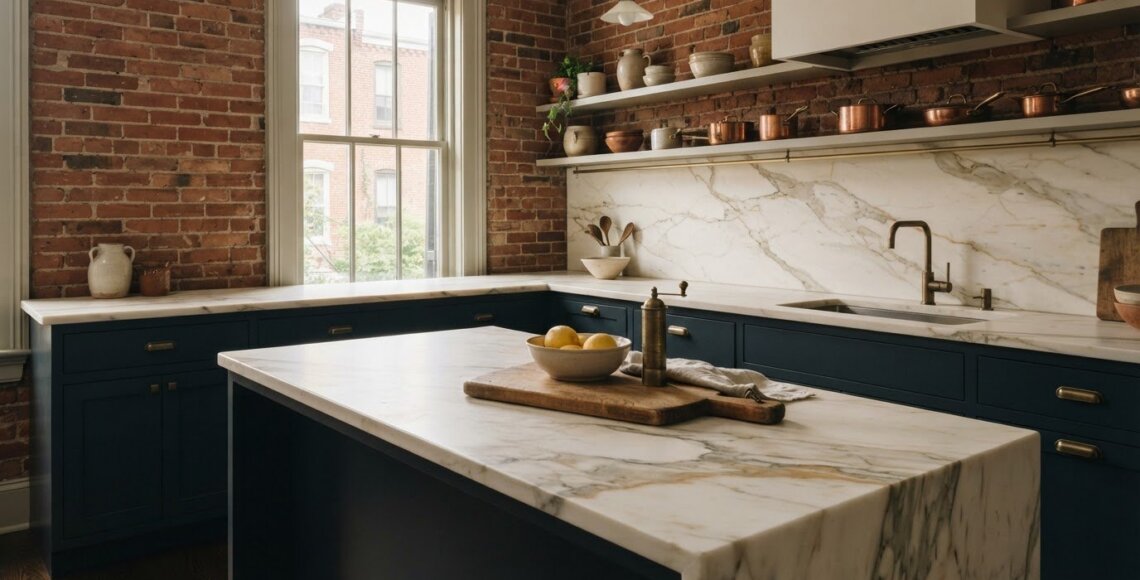
Calacatta Gold marble island and full-height backsplash in a Richmond rowhouse kitchen

Calacatta Gold Marble Countertops for Kitchens and Baths

Calacatta Gold marble countertops make a striking focal point, pairing a warm, buttery-white background with veining that ranges from deep gray to honey-toned gold. This natural pattern brings character to kitchens and bathroom vanities. But appearance is only part of the decision: marble can scratch and etch with everyday use, so the right fit depends on how you use the surface, the care you’re comfortable giving it, and the selected slab’s color and veining. This guide covers Calacatta Gold’s appearance and what to consider for a kitchen or bath, plus how to view slabs at Absolute Stone Design in Richmond. Seeing the stone in person helps you compare its pattern with your cabinets, fixtures, and overall design.

Key Takeaways

  • Match marble to how you use your kitchen or bath, and consider the care its surface needs in daily life.
  • Look at the full slab to understand how its natural pattern may flow across your countertop.
  • Plan the countertop layout, edges, and seams together so the finished surface feels cohesive.
  • Learn how measuring, in-house fabrication, and installation support a more coordinated countertop project.

Marble countertop suitability and applications

Calacatta Gold marble may suit kitchen counters, islands, and bathroom vanities when its care needs fit your routine. Consider daily use, exposure, and the surface’s role.

Countertop and Island Uses

In a kitchen, Calacatta Gold creates a distinctive surface for perimeter counters or an island. Whether it suits your kitchen depends on how you use the surface and care for it. Marble is not scratch resistant, so consider how you prepare food, handle cookware, and use the island before choosing it for a busy work area. In a bathroom, marble may be considered for a vanity, depending on the intended use and care requirements.

Stain, Etch, Scratch, and Crack Concerns

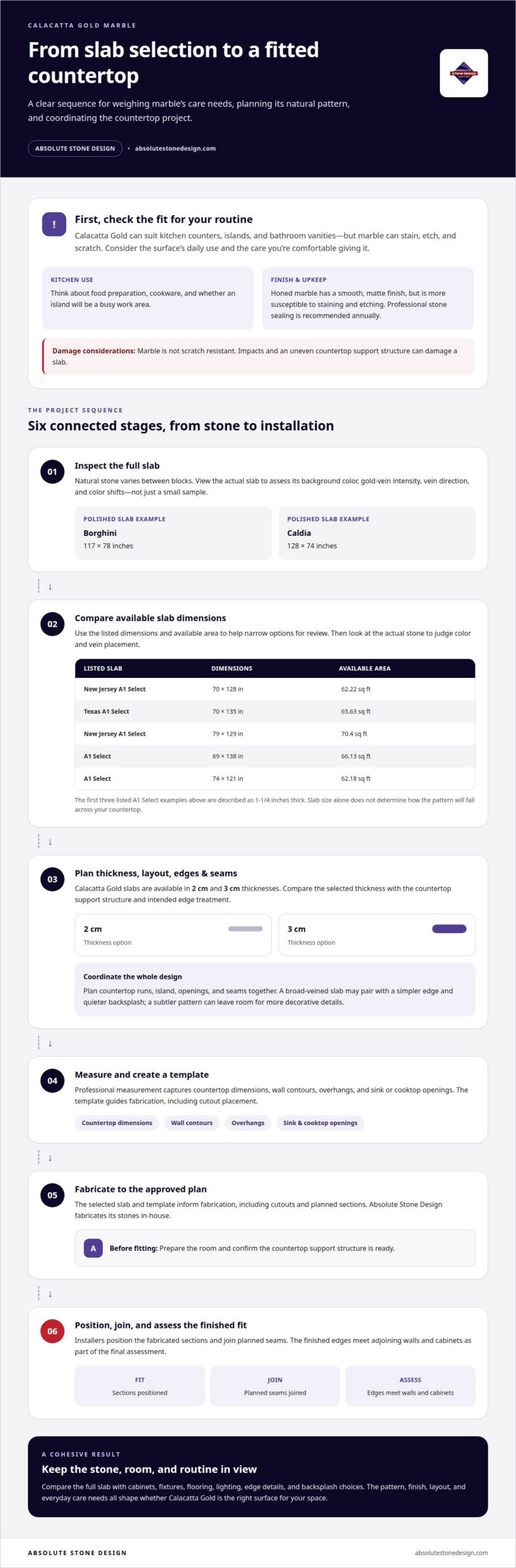
Calacatta Gold marble can stain or etch, and it can scratch because marble is not scratch resistant. Honed marble has a smooth, matte finish, but is more susceptible to staining and etching. Marble does not necessarily crack easily, though impacts and an uneven countertop support structure can damage a slab. Professional stone sealing is recommended annually, with surface restoration and protection specialists like Sealwerx highlighting the importance of regular protective treatments to guard porous natural stone against deep staining.

For a residential kitchen, weigh the visual appeal against the care involved in cooking and cleanup. A bathroom vanity may face different demands than a kitchen island, so choose the application with your daily routine in mind. A honed finish also affects how the surface responds to stains and etching, making finish selection part of the decision.

Commercial settings call for the same practical assessment. A marble reception counter may see different use from a restaurant work surface, while marble flooring requires consideration of foot traffic and maintenance. Match the stone to the setting rather than assuming one application suits every project. This helps you decide whether Calacatta Gold belongs on counters, floors, or selected feature surfaces.

Slab inventory and showroom viewing

Viewing a full slab lets you assess its color, veining, and pattern before fabrication. Calacatta Gold varies between natural stone blocks, so inspect the actual piece.

Slab Inventory and Thickness Options

Calacatta Gold slabs are available in 2 cm and 3 cm thicknesses. Thickness affects the slab profile and planned edge details. Compare the selected thickness with the countertop support structure and intended edge treatment. A fabricator can review the kitchen countertop layout and explain how the slab may be planned for counters, an island, and seams.

Listed examples include a Calacatta Gold Borghini polished slab measuring 117 by 78 inches and a Calacatta Gold Caldia polished slab measuring 128 by 74 inches. Slab dimensions help inform layout planning, but pattern placement also matters. Review how the fabricator plans to position the stone across countertop runs.

Natural Stone Variation and Slab Selection

How can a stone fabricator help you choose and inspect Calacatta Gold marble slabs? The fabricator can guide you through the slab, point out vein direction and color shifts, and discuss how those features may align with your countertop plan. Seeing the full stone helps you assess its character beyond a small sample.

Natural stone blocks can vary in appearance, and gold-vein intensity differs between quarry blocks. One slab may look warmer or more dramatic than another. Examine the entire face and consider where prominent veins will fall across long countertop runs.

Inventory details can complement a full-slab inspection. A New Jersey Calacatta Gold A1 Select marble slab is 1-1/4 inches thick, measures 70X128, and has 62.22 square feet available. A Texas Calacatta Gold A1 Select marble slab measuring 70 by 135 inches is 1-1/4 inches thick and has 65.63 square feet available. Another New Jersey Calacatta Gold A1 Select marble slab measures 79 by 129 inches and has 70.4 square feet available.

Other listed Calacatta Gold A1 Select slabs include one measuring 69 by 138 inches with 66.13 square feet available, and one measuring 74 by 121 inches with 62.18 square feet available. Comparing available area and dimensions with the countertop plan can help narrow the slabs to inspect, while viewing the actual stone lets you consider its color and vein placement.
Calacatta Gold Marble Countertops for Kitchens and Baths

Calacatta Gold marble appearance and characteristics

Calacatta Gold’s visual character depends on the scale and direction of its veining. Broad, sweeping lines can create a dramatic focal point, while finer movement may feel quieter across a long counter. Consider how the pattern will sit beside cabinet colors, hardware, and flooring. Warm cabinet finishes can echo the gold tones; cooler finishes can bring the gray veins forward.

Calacatta Gold marble is quarried natural stone, while Calacatta Gold quartz is an engineered surface inspired by marble’s appearance. Marble’s individual pattern comes from the stone itself, so the finished surface has natural variation. Other marble countertops also differ in background color and vein character. Compare the actual material with nearby finishes to decide which overall effect suits your room.

Edge profiles, surface finishes, and backsplash choices shape the design as a whole. A more decorative edge can add detail, while a restrained profile keeps attention on the stone’s pattern. For the backsplash, consider whether you want a coordinated stone surface or a contrasting material. Lighting matters, too: it can change how a polished surface reflects and how its veining reads.

Professional measurement captures the countertop’s dimensions, wall contours, overhangs, and sink or cooktop openings. A template then guides fabrication, including cutout placement. Before installation, the room and countertop support structure are prepared for fitting. Installers position the fabricated sections, join planned seams, and assess how the finished edges meet adjoining walls and cabinets.

These choices work together. A broad-veined slab, for example, may call for a simpler edge and a quieter backsplash, while a subtler pattern leaves room for more decorative details. Consider the whole room, not just a small sample, when shaping the final design.

Planning a Calacatta Gold Marble Countertop Project

Start with how the room needs to work, not just how it should look. In a family kitchen, you may want a clear prep zone separate from the area where guests gather. For a bathroom vanity, consider who shares the space and how much counter area supports your morning routine. These priorities help shape the project brief.

Next, coordinate the countertop project with the wider renovation. Cabinet changes, flooring work, and wall finishes can affect the room’s readiness and how design choices fit together. If you’re keeping existing cabinets, include that in the plan early. A new build may offer more freedom to coordinate the room’s finishes from the start.

Think through how the space will function during the work. A kitchen renovation may temporarily limit access to cooking and cleanup areas, while a bathroom project may affect a shared daily-use space. Discuss the project schedule and household needs with the team so the work can be planned around the room’s role.

For a commercial project, consider how staff and visitors use the space. A reception counter has different demands from a food-service work area, and the surrounding operation may affect access during the project. Share the intended use, cleaning routine, and any site constraints with the project team. Those details keep the design discussion grounded in the setting.

Finally, choose a clear point of contact for decisions. When homeowners, designers, and contractors are involved, shared priorities help keep selections consistent. Agreeing on the preferred balance between a striking focal point and a quieter overall room, for example, makes later choices easier to evaluate. A well-defined brief gives the team a practical direction from the outset.

Absolute Stone Design: Countertops

Absolute Stone Design manages marble countertop projects from material selection through installation. Its countertop services include precision measuring, templates, in-house stone fabrication, delivery, and installation. This connected process helps account for the slab’s natural pattern alongside the room’s dimensions and planned edges.

For a Calacatta Gold project, visit Absolute Stone Design’s Richmond showroom to view marble and discuss how its veining may suit your kitchen or bathroom. Measurements and a template translate the selected material into countertop pieces, including sink openings and an island. Reviewing the layout and design details before fabrication helps align the finished surface with your plans.

Absolute Stone Design also offers granite and quartz countertops. Each material offers a different way to coordinate your room’s surfaces, so your choice can reflect the appearance and everyday use you have in mind. If you’re comparing marble with another option, the team can discuss the materials and how each may fit your project, without treating them as interchangeable.

Whether you’re renovating a bathroom vanity or planning kitchen counters and an island, begin with the room and the decisions that shape its finished look. Absolute Stone Design manages the process from measurements through delivery and installation, with in-house fabrication keeping the stone work within one workflow. Share your design priorities with the team to discuss the next steps for your project.

Contact Absolute Stone Design to discuss your countertop project.

Frequently Asked Questions

What is Calacatta Gold marble and what does it look like?

Calacatta Gold is marble quarried in Italy, known for expressive natural patterning. Its appearance can shift from slab to slab, so the stone’s name alone does not tell you exactly what a particular piece will look like. If your room has several finishes, compare the selected stone with cabinet and flooring samples under the planned lighting.

Is Calacatta Gold marble durable and suitable for kitchens and bathrooms?

Calacatta Gold can work in either room if you’re comfortable caring for marble as a natural surface. In a kitchen, consider whether you regularly prepare food directly on counters or can use cutting boards and trivets. In a bathroom, think about how the vanity is used and cleaned. The right application depends on your routine, not just the room’s appearance.

How do you seal, clean, and maintain Calacatta Gold marble countertops?

Build a simple care routine around gentle daily use: place a cutting board under food, use trivets for hot cookware, and choose nonabrasive cleaning tools. Keep cosmetics and toiletries on trays where practical, especially near a bathroom sink. Ask the fabricator which care products suit the selected finish, then follow its guidance for maintenance and resealing.

Where can you buy Calacatta Gold marble slabs near me, and what should you ask a stone fabricator?

For homeowners in Richmond, Henrico, Glen Allen, Midlothian, and Chesterfield, Absolute Stone Design’s Richmond showroom offers a place to view slabs in person. For a large project, consider whether slabs from the same lot would help maintain a consistent look, since gold-vein intensity can vary between quarry blocks. Discuss how the team can help assess the selected stone’s overall pattern for your project.

What countertop edge profiles, finishes, and backsplash options work with Calacatta Gold marble?

A decorative edge adds detail, while a restrained profile keeps attention on the veining. A honed finish is smooth and matte, but more susceptible to staining and etching. For the backsplash, choose coordinated stone or a contrasting material; broad veining can pair well with a quieter backsplash.
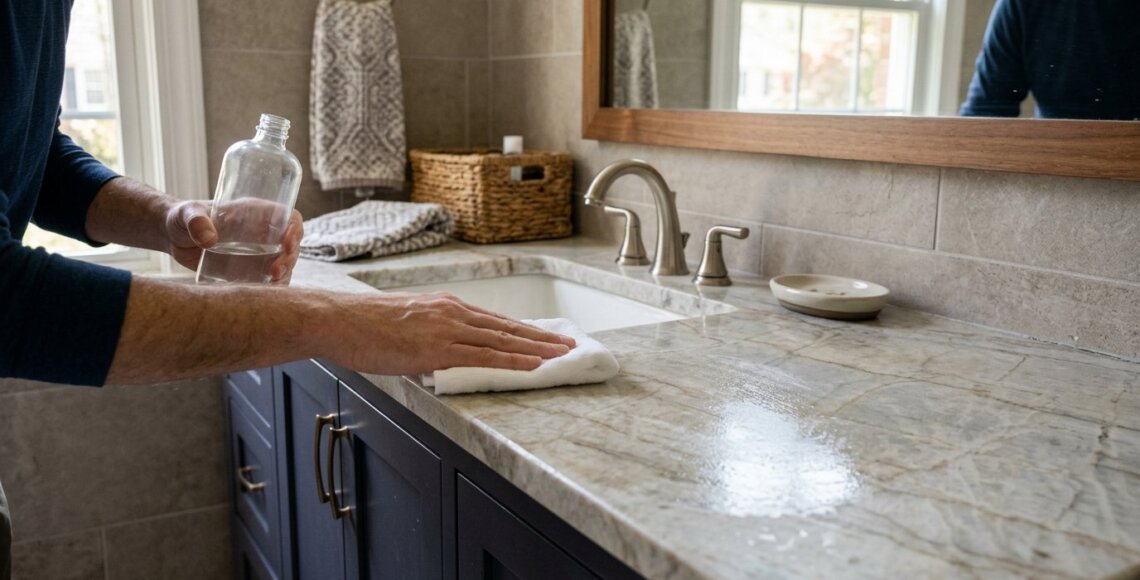

A homeowner applies sealer to a naturally veined quartzite bathroom vanity in a Glen Allen home.

Quartzite Colors, Durability, Care and Sealing Needs

Yes, quartzite generally needs periodic sealing to help protect its porous surface from stains. Wipe spills promptly and avoid harsh or acidic cleaners. To understand what quartzite is, start with its geology: heat and pressure transform quartz-rich sandstone into a dense natural stone. This differs from engineered quartz, which combines mined quartz with resin and pigments. Quartzite’s minerals create natural colors and veining, so slabs range from calm, pale backgrounds to more expressive patterns. It can bring a refined look to a kitchen or bath and offer strong everyday durability, but no natural surface is maintenance-free. This article explains how quartzite’s composition shapes its appearance and performance, how it compares with quartz, and what routine care and sealing involve, helping you decide whether its character and upkeep suit your home.

Key Takeaways

  • Learn how mineral traces influence a slab’s color and pattern, and what to look for when choosing a finish that suits your space.
  • Understand how natural stone formation differs from engineered quartz, so you can compare the materials with greater confidence.
  • Get practical guidance on everyday care and the habits that help protect a stone countertop from stains and surface damage.
  • Consider how each material’s characteristics fit your home’s style, daily use, and maintenance preferences.

Natural quartzite colors and mineral impurities

Natural quartzite often appears white, cream, or gray, with veins and patches that add movement across a slab. Iron-bearing minerals can create pink, red, or rust-colored areas, while other mineral impurities may contribute green or darker markings. The mix and distribution of minerals shape each stone’s colors, so even slabs from the same collection can have distinct patterns.

Veining can appear as soft, cloudy bands or sharper lines across the surface. A pale background with gray veining may feel quiet, while brown or gold streaks create stronger contrast. Cutting also affects how these patterns appear: the slab’s direction and the placement of cut pieces determine which veins continue across a countertop. Reviewing the full slab helps you see how its grains and markings will look in your space.

The finish also changes the look. A polished surface reflects light and can make colors seem more pronounced; honed stone has a softer, less reflective appearance. A leathered finish adds tactile texture and highlights variation in the stone. These finishes change how light meets the surface, not the minerals that give the rock its color.

Natural quartz crystals show a broader range of colors than the mostly pale appearance associated with many quartzite slabs. Clear, white, smoky, pink, and purple crystals are examples; trace elements and formation conditions influence their color. Quartzite’s appearance reflects the rock as a whole and its mineral impurities, rather than a single crystal.

Some quartzite, including Cristallo varieties, can transmit light and suit backlit designs. Transparency depends on the particular stone and its structure. In gemstone-quality material, cutting can reveal translucence or emphasize color, while a countertop slab may show cloudy areas, visible grains, or veining. Viewing the actual piece in different lighting helps reveal its colors, clarity, and pattern before you choose it.

What is Difference Between Quartz and Quartzite?

Quartzite and quartz share a mineral name but describe different materials. Their formation and composition explain key differences between the countertop options.

Composition and Metamorphic Formation

Quartzite is a natural metamorphic rock composed mainly of interlocking quartz grains. Its name describes the rock; quartz names a mineral found within it. This distinction matters when comparing quarried stone with engineered quartz. Natural quartzite forms in the earth, while engineered quartz combines mined quartz with resin and pigments. The materials therefore differ in composition and how they are made.

Geological Origins

Quartzite begins as quartz-rich sandstone buried and exposed to intense heat and pressure. During metamorphism, its original grains recrystallize and fuse, forming dense stone. This process can change the rock’s texture without making it a manufactured surface. For countertop decisions, that origin explains why quartzite is natural stone and why individual slabs can differ.

Formation from Sandstone

Quartz-rich sandstone contains 90% to 99% quartz grains. As heat and pressure act on the buried rock, the grains recrystallize and bind together, creating quartzite. The sandstone’s original structure changes, but quartz remains central to the resulting stone. This formation process helps explain quartzite’s hardness and why its natural surface can be resistant to everyday wear.

Engineered quartz follows a different path: manufacturers combine crushed, mined quartz with resin and pigments. It is about 93% quartz, while quartzite is a natural stone formed underground. That difference affects the material’s character and care. Quartzite can withstand high temperatures, while resin in engineered quartz can be damaged by excessive heat. A cutting board and prompt spill cleanup help protect either surface during daily use.

Quartzite Colors, Durability, Care and Sealing Needs

Quartzite countertop durability and maintenance

Quartzite has a Mohs hardness of around 7, making it resistant to everyday scratches. Is quartzite harder than granite? Quartzite generally ranks higher in hardness, while both natural stones resist heat and everyday wear. Formed under heat and pressure, quartzite is dense, but countertops can still chip or dent from impact. Use a cutting board, and avoid striking exposed edges with cookware.

What are the pros and cons of quartzite countertops? Their strengths include natural patterns, high heat tolerance, and hardness. The tradeoffs are periodic sealing and care to limit stains, chips, and dents. Quartzite’s porous surface can absorb spills, so wipe them promptly. Sealing helps protect against staining, but it does not make the countertop immune to damage.

Quartz countertops have different care needs because they contain resin. They’re often more stain-resistant than quartzite, but less heat-resistant; repeated exposure to temperatures over 500 degrees Fahrenheit may cause heat damage. Excessive heat can damage quartz countertops. A cutting board also helps prevent knife scratches. For routine cleaning, wipe quartz with a damp cloth. These differences matter if you regularly set hot cookware or prepare food directly on the counter.

Quartzite can suit countertops, kitchen islands, bathroom vanities, and bar tops, but each application brings different exposure to spills, heat, and daily wear. A busy kitchen island, for example, needs prompt spill cleanup and attention to its seal. An outdoor kitchen requires a separate evaluation based on the stone’s performance, local climate, and intended use. If your outdoor living plans also encompass an adjacent swimming area, industry specialists like Rod Cameron Pools provide helpful guidance on what to expect during surface restoration and maintenance. Gem-quality quartzite and countertop slabs serve different purposes: a translucent gemstone cut for light is not automatically suited to a work surface. Choose according to how you’ll use the surface, the appearance you want, and the care it requires.

Quartz and quartzite composition

Quartz is a mineral; quartzite is a metamorphic rock made mostly from quartz. That difference explains why a quartz crystal and a quartzite slab have distinct textures, even though both contain the same mineral. Quartzite is composed of more than 90% quartz, while the remaining minerals can vary. Those differences influence the stone’s color, veining, and other visible characteristics.

Heat and pressure transform quartz-rich sandstone into quartzite. Its grains recrystallize and become tightly interlocked, creating the stone’s crystalline texture. Mineral impurities, such as iron oxide, can add color, while a purer quartz-rich composition may look more uniform. The mineral mix varies from piece to piece, helping explain why natural stone slabs rarely have identical patterns.

Quartz has a crystalline structure and a chemical composition distinct from the full rock. In quartzite, quartz crystals are part of a larger mineral arrangement rather than a single specimen. This matters when comparing a crystal’s clarity with a slab’s overall appearance: other minerals and the arrangement of grains affect the stone’s color and texture.

For gem-quality quartzite, measured characteristics include a density of 2.64 to 2.69, a refractive index of 1.544 to 1.553, and birefringence of 0.009. These values describe how gemstone material behaves with light and measurement. They don’t explain every countertop’s appearance, since mineral variety and grain structure also shape each slab.

Composition can help explain what you’re seeing: a pale field with darker veins may reflect differences in mineral content, not a surface coating. Compare the whole slab under consistent lighting, then consider how its pattern will fall across your planned countertop. This gives you a clearer sense of the stone’s natural characteristics before choosing a particular piece.

Absolute Stone Design: Quartz

Absolute Stone Design can help you compare quartzite and quartz when planning countertops in Richmond, Henrico, Glen Allen, Midlothian, or Chesterfield. When weighing natural stone’s distinctive patterns against engineered quartz’s composition, start with how you use the space, the look you want, and the care each surface needs.

The team handles the process from measuring through delivery and installation, with stone fabrication completed in-house. This connected approach carries your material choice through to the finished countertop. Granite is also available if you’re considering another natural stone for your project.

Contact Absolute Stone Design to discuss your countertop plans.

Choose a Surface That Fits Your Home

Understanding what quartzite is gives you a helpful starting point. Next, picture how the surface will work with the room’s lighting, cabinetry, and daily routines. A striking slab may look different beside your existing finishes, so consider the whole space as you shape your plans.

Absolute Stone Design offers quartzite, quartz, granite, and marble countertops for projects in Richmond, Henrico, Glen Allen, Midlothian, and Chesterfield. The team can help you think through your design direction and which material suits your needs. Bring your priorities, from the look you want to how you use the room, into the conversation.

Ready to take the next step? Contact Absolute Stone Design to discuss your countertop plans and move your project forward with confidence.

Frequently Asked Questions

Does quartzite need to be sealed?

Yes. Sealing is part of caring for a quartzite surface, but it should not be treated as a one-time finish. Before applying sealer, make sure the countertop is clean and dry, and choose a product intended for natural stone. Follow its label directions, including guidance on application and curing, to avoid affecting the finish.

Where Does Quartzite Come From?

Quartzite is quarried from natural deposits found in several countries, including the United States. In the U.S., deposits occur in the Appalachian Mountains, which extend through 13 states. That broad geological region means domestic quartzite can come from different locations, with natural variation from deposit to deposit. The origin may help explain why slabs vary in appearance, even within a similar color family.

What is quartzite and how does it form?

Quartzite is a natural metamorphic rock formed from quartz-rich sandstone. One useful way to understand its classification is through the British Geological Survey’s standard: a metamorphic rock is quartzite when it contains at least 80% quartz by volume. This threshold distinguishes quartzite from some quartz-rich rocks that may look similar but have a different geological identity.

How can you tell quartzite from marble or quartz?

Color and veining alone cannot reliably identify a slab, since quartzite and marble can look alike. For a renovation, use the material identification provided with the stone rather than relying only on a sample’s appearance. Compare the full slab with the selected sample, too, since natural patterns can vary. Clear material identification helps you match care expectations to the surface you choose.

Is quartzite heat-resistant and scratch-resistant?

Yes, quartzite resists heat and everyday scratching, but it is not immune to every kitchen hazard. Avoid sliding gritty cookware or small appliances across the surface, since trapped particles can abrade the finish. Place hot cookware carefully rather than dropping it onto the countertop. These habits help preserve the polished appearance without treating the stone as damage-proof.

Does quartzite need to be sealed, and how often?

Yes, but no single calendar interval suits every quartzite countertop. Follow the sealer’s care directions and note the product and application date so you can plan maintenance consistently. A sink area may encounter water more often than a lightly used counter section. Differences in use can affect when resealing is needed.

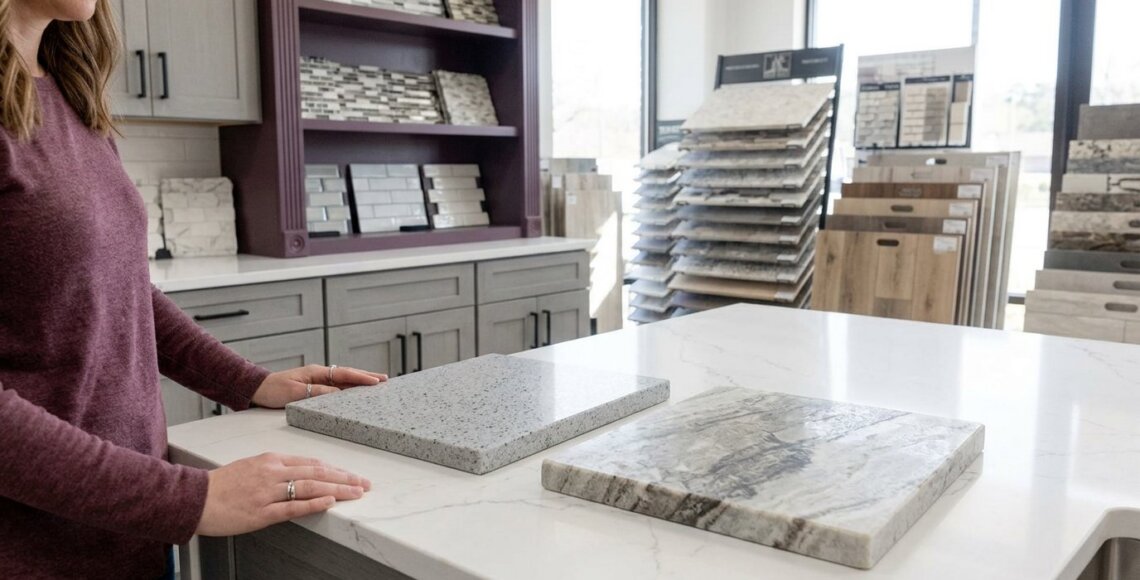
A homeowner compares engineered quartz and naturally veined quartzite countertop samples in a Richmond showroom.

Quartz vs Quartzite: Which Countertop Should You Choose

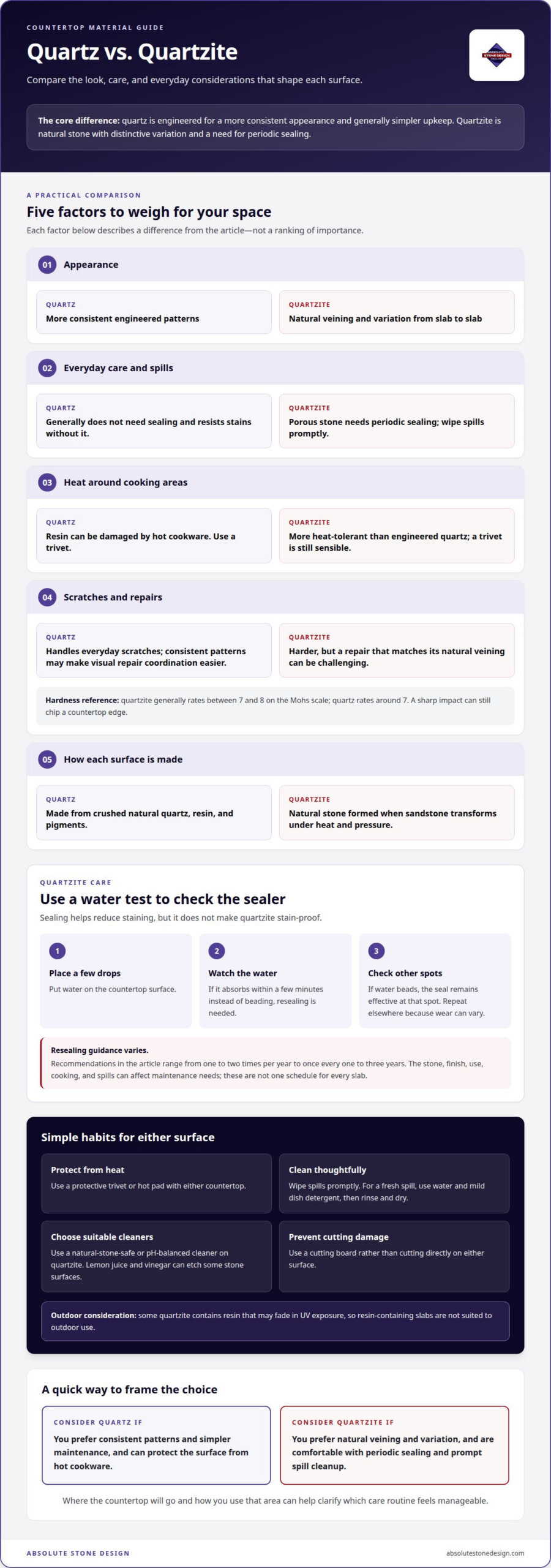
The most natural-looking countertop isn’t always the one that asks the most of your care routine. In the quartz vs quartzite decision, quartz is an engineered surface that generally doesn’t need sealing, while natural quartzite needs periodic sealing to help resist stains.

Both can bring lasting beauty to a kitchen or bathroom. The right fit depends on what matters most in your home: a more consistent appearance and simpler upkeep, or the natural veining and variation of stone. Weigh everyday care alongside the look you want, especially for a busy kitchen.

Learn how the materials are made, how their appearance and everyday care differ, and what quartzite sealing involves, including how to tell when it may be time to reseal. These practical details can help you choose a countertop that suits your space and routine.

Key Takeaways

  • Choose based on the look and upkeep you prefer: engineered quartz has a more consistent appearance, while natural quartzite has distinctive veining and variation.
  • Understand how each surface responds to heat so you can build practical habits around cooking and countertop care.
  • Quartzite needs periodic sealing, and a simple water test can help indicate when it’s time to reseal.
  • Learn how each material is made to better understand the differences you’ll see in your finished countertop.

Quartz vs Quartzite: What’s the Difference and Which Should You Choose?

Quartz is an engineered countertop material made with crushed quartz, resin, and pigments; quartzite is natural stone formed from sandstone. That difference affects appearance and care: quartz usually has more consistent patterns and generally doesn’t need sealing, while quartzite has natural variation and needs periodic sealing to help resist stains. Both can suit a kitchen, but their upkeep differs.

What are the pros and cons of quartz versus quartzite countertops? Quartz offers a consistent look and simpler care, but hot cookware can damage its resin, so use a trivet. Quartzite offers natural veining and greater heat tolerance, but its porous surface needs sealing and prompt spill cleanup.

Which countertop is easier to maintain and repair? Quartz is usually simpler to maintain because it generally doesn’t need sealing. Repair depends on the type and location of damage. Matching a repair to quartzite’s natural veining can be challenging, while quartz’s more consistent patterns may make visual coordination easier.

How can you tell genuine quartzite from mislabeled or soft quartzite? Apply lemon juice to a sample or offcut for several minutes; true quartzite shouldn’t develop an etched, dull spot from acid. Don’t test an installed countertop, since another material could be damaged.

Countertop Appearance Care Kitchen consideration
Quartz More consistent engineered patterns Generally no sealing Protect from hot pans with a trivet
Quartzite Natural veining and variation Periodic sealing; clean spills promptly More heat-tolerant, but porous

Choose quartz if consistent patterns and simpler maintenance fit your priorities. Choose quartzite if you prefer natural variation and are comfortable with sealing and prompt cleanup. Before deciding, consider where the countertop will go, how you use that area, and which surface’s care needs feel manageable for your household.

Quartzite vs Quartz: What are Quartzite Countertops?

Quartzite begins as sandstone, then forms under heat and pressure over millions of years. Its natural colors and veining vary from slab to slab, unlike the more consistent patterns often found in engineered quartz. That natural character is part of its appeal, but the surface also needs care suited to natural stone.

Which is harder and more durable, quartz or quartzite? Quartzite generally ranks between 7 and 8 on the Mohs hardness scale, while quartz rates around 7. Both resist everyday scratches, but quartzite is harder; granite also stands up well to scratches, heat, and general wear. Marble is softer than quartzite and more likely to scratch.

How resistant are quartz and quartzite to stains, scratches, heat, and UV light? Quartz resists stains without sealing and handles everyday scratches, but its resin can be damaged by high heat. Porous quartzite can stain if spills penetrate, yet it offers strong scratch and heat resistance. Some quartzite contains resin that may fade in UV exposure, so resin-containing slabs aren’t suited to outdoor use.

Heat tolerance matters beside a range or on a kitchen island. Quartzite tolerates heat better than engineered quartz, whose resin can be damaged by hot cookware. Granite also resists heat, but using a protective trivet is sensible with any countertop. According to Cambria, use a closed-weave hot pad or solid trivet to protect quartz and quartzite surfaces.

Quartzite’s hardness doesn’t make it immune to damage. A sharp impact can still chip a countertop edge, and acidic foods can affect some natural stones. Wipe up lemon juice promptly, for example, and use a cutting board instead of cutting directly on either surface.

For a material choice that balances natural veining with everyday kitchen routines, explore quartzite countertop options and consider how heat, spills, and sunlight affect your space.

Quartz vs Quartzite: Which Countertop Should You Choose

Does quartzite require sealing and how often?

Yes. Quartzite is porous, so liquids can enter the stone and leave stains; sealing adds protection but doesn’t make the countertop stain-proof. Sandstone transforms under heat and pressure to form quartzite, and differences between slabs and finishes affect how readily each surface absorbs moisture. That’s why sealing needs can vary, even for a premium countertop material.

Resealing guidance varies: quartzite countertops generally need resealing one to two times per year, while another typical interval is once every one to three years, depending on the stone and its use. These are different recommendations, not one schedule for every slab. A polished finish, daily cooking, and frequent spills can all affect maintenance needs.

Use a water test to judge whether the sealer is still working. Place a few drops of water on the countertop and watch what happens. If the water absorbs within a few minutes instead of beading, resealing is needed. If it beads, the seal remains effective at that spot; repeat the test elsewhere, since wear may differ across the counter.

For daily cleaning, wipe spills promptly and choose a natural-stone-safe or pH-balanced cleaner. Lemon juice and vinegar can etch some stone surfaces, so clean them up quickly rather than letting them sit. For a fresh spill, start with water and mild dish detergent, then rinse and dry the area.

Sealing helps reduce staining, but routine care still matters. Coffee left on a porous section can penetrate despite a sealer, while a promptly wiped spill is less likely to linger. Avoid harsh, acidic cleaners, which can affect the surface or sealer. Follow the care directions for your countertop, and repeat the water test if absorption suggests protection has weakened.

How engineered quartz and natural quartzite are made

Engineered quartz countertops are made by combining ground natural quartz aggregate with resin and pigments, then forming the mixture into slabs. Many engineered surfaces contain about 90 to 95 percent quartz aggregate; the rest includes resin and colorants. This process lets manufacturers create patterns with a more consistent appearance than natural stone. For example, repeated slabs can offer similar color and veining across a kitchen.

Natural quartzite forms when sandstone undergoes heat and pressure over millions of years. The pressure transforms the original rock into a hard, quartz-rich natural stone. Its composition and color depend on the minerals present as the sandstone forms. Quartzite slabs are typically more than 90 percent quartzite, and some can reach 99 percent. Each slab develops its own pattern rather than following a manufactured design.

The distinction between quartz and quartzite is clear in their patterns. Engineered quartz can offer repeatable colors and visual movement, which helps when coordinating multiple countertop areas. Natural quartzite has veins and color variation shaped by its geological formation. Even slabs sold under the same stone name can look different, so a large kitchen may show noticeable variation between pieces or seams.

Production also influences everyday care. The resin in engineered quartz helps create a nonporous surface that resists stains without sealing, while quartzite’s natural pores can absorb spills and benefit from stone sealing. Pigments and resins give engineered surfaces their selected appearance, but high heat can damage the resin. Quartzite’s natural composition tolerates heat better, though its veining and slab-to-slab differences call for thoughtful layout planning. To compare how these materials may look across your kitchen, explore quartz and quartzite countertop options before choosing a surface.

Absolute Stone Design: Quartz

Absolute Stone Design serves homeowners in Richmond and nearby communities with quartz and quartzite countertops, helping you choose between a consistent engineered pattern and the natural variation of stone. The team can help you consider how each material’s appearance and care needs fit your kitchen. Granite is another option to compare if you’re considering natural stone.

Once you’ve chosen a direction, Absolute Stone Design handles measuring, fabrication, delivery, and countertop installation for homes in the Richmond area. The team can help translate your material choice into a surface tailored to your space, including the kitchen layout and details that shape the finished look.

For help planning a quartz or quartzite countertop in Richmond or a nearby community, contact Absolute Stone Design.

Plan a countertop that fits your home

In the quartz vs. quartzite decision, picture the surface in its finished setting. Consider how its colors will work with your cabinets, backsplash, flooring, and natural light. Viewing a sample beside those elements can help you decide whether the overall look feels calm, coordinated, or more expressive.

Think, too, about the routines around the counter. A busy cooking area, a frequently used island, or a bathroom vanity may each call for different priorities. The Absolute Stone Design team can help connect your design goals with a practical countertop selection. If you’re also weighing natural-stone alternatives, the company offers granite and marble countertops.

Give yourself room to consider the full design, not just the slab on its own. The right choice should feel at home in your space and suit the way you use it. Contact Absolute Stone Design to talk through your countertop plans and explore service for your Richmond-area project, then take the next step with confidence.

Frequently Asked Questions

What does quartzite look like compared to quartz?

Quartzite’s appearance can shift noticeably from one slab to another, while quartz offers more predictable patterning. If you’re planning several countertop runs, look at the actual slabs and consider how their visual movement will carry across the room. A small sample may not show the full pattern, so assess the larger surface before deciding how it fits your design.

How do you plan quartzite seams in a large kitchen?

Plan seam locations as part of the kitchen layout, especially where long runs meet an island or turn a corner. Natural veining may not line up across separate pieces, so seam placement can affect how continuous the surface appears. Considering the overall pattern before fabrication helps you decide which areas should draw attention.

Is Quartz or Quartzite Better for Your Kitchen?

Choose according to the kitchen’s design priorities and your care preferences. If you want a coordinated look across separate work areas, consider how closely the selected surface can match from one run to another. If the countertop is a focal point, decide whether you prefer a uniform pattern or the distinct character of natural stone. Your routine matters, too.

What should you compare when viewing countertop samples?

Look at color, pattern, and how the surface relates to fixed elements such as cabinet fronts and flooring. For a kitchen with perimeter counters and an island, consider whether you want the surfaces to coordinate closely or create contrast. Reviewing the material in the context of your design can make the choice more intentional.

Quartz vs. Quartzite vs. Granite: Which is Best?

There isn’t one best surface for every kitchen. Think about whether you prefer engineered consistency or natural variation, then weigh the care each material requires. Granite adds another natural-stone option to compare. Narrow your choices by considering the look you want across the full countertop layout, rather than judging a small section in isolation.

What is the difference between quartz and quartzite countertops?

The key distinction is how each countertop material is made: quartz is engineered, while quartzite forms naturally. That difference can guide design decisions, particularly when matching surfaces across several areas. For instance, a homeowner coordinating a long counter and an island may prioritize a predictable pattern, while someone seeking a one-of-a-kind focal surface may prefer natural variation.

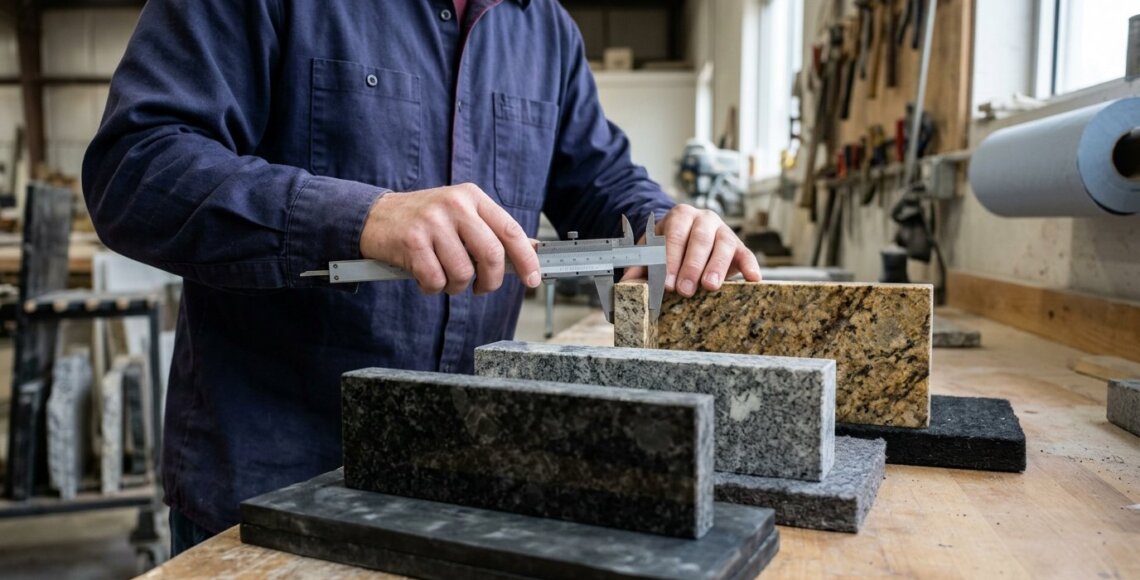
A fabricator checks granite slab thickness beside charcoal, gray, and gold-brown granite offcuts.

Types of Granite Compared by Color, Grade, and Slab Thickness

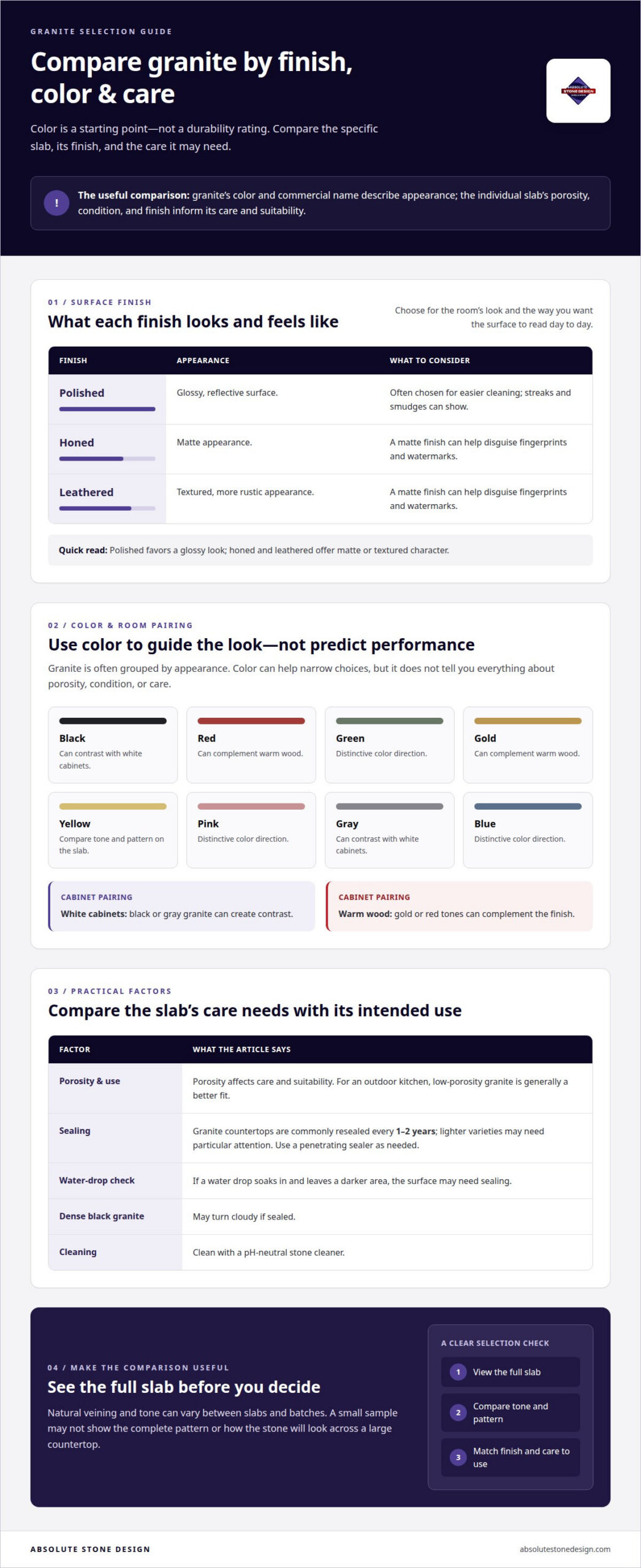
No granite color is automatically the most durable. The right choice depends on the specific stone and how its slab will suit the countertop. Types of granite are often grouped by appearance, including black, red, green, gold, yellow, pink, gray, and blue. Geologically, granite is defined by its mineral composition: feldspar, quartz, mica, and hornblende. Color can guide the look of your kitchen or bathroom, but it does not tell you everything about performance. Grade labels and slab thickness offer additional points of comparison, but neither is a stand-alone measure of durability. This guide explains how color, grade, thickness, and granite’s geological meaning fit together to help you make an informed selection. Viewing the full slab matters too: natural veining and tone can vary, and the stone may look different across a large surface than in a small sample.

Key Takeaways

  • Learn why a commercial grade label and a geological classification describe different things about a slab.
  • Compare slab thickness thoughtfully, instead of assuming a thicker option or higher grade automatically means greater durability.
  • See how regional names can help you make sense of granite varieties and narrow your material choices.
  • Explore popular kitchen selections and weigh appearance alongside practical factors such as porosity and intended use.

Does the granite’s strength differ between granite colors?

Color alone doesn’t determine how durable a granite countertop will be. Black, red, green, gold, yellow, pink, gray, and blue describe appearance, while a stone’s porosity and condition affect its care and suitability. For an outdoor kitchen, low-porosity granite is generally a better fit. Compare the available colors with the room’s needs and the stone’s care requirements.

Cabinet color can help narrow your choices. Black or gray granite can contrast with white cabinets, while gold or red tones can complement warm wood. Green, pink, and blue varieties add distinctive color, so consider how their patterns will work with cabinet finishes and other surfaces. Granite colors and textures can vary between batches. View the full slab, because a small sample may not show its complete veining or tone.

Granite, quartzite, and engineered quartz are different materials: granite and quartzite are natural stones, while engineered quartz is manufactured. Granite’s geological makeup includes feldspar, quartz, mica, and hornblende, but a stone’s name or color doesn’t reveal its porosity. For a natural-stone project, assess the specific slab rather than assuming every dark or light variety performs alike.

Polished granite has a glossy surface and is often chosen for easier cleaning, though streaks and smudges can show. Honed granite has a matte look, while leathered granite has a textured, more rustic appearance. Matte finishes can help disguise fingerprints and watermarks, making them worth considering for busy countertops.

For maintenance, clean granite with a pH-neutral stone cleaner and use a penetrating sealer as needed. Granite countertops are commonly resealed every 1-2 years; lighter varieties may need particular attention. A water drop that soaks in and leaves a darker area can indicate that the surface needs sealing. Dense black granite may turn cloudy if sealed.

Natural granite comes in varied colors, veining, and textures, giving each slab its own look. Its porosity is an important care consideration, and sealing may be part of upkeep. Compare the slab’s appearance, finish, and care needs together. That gives you a more useful basis for choosing than color alone.

Commercial and geological definitions of granite

“Granite” can mean different things in a geology book and a countertop showroom. Geologically, granite is a natural igneous rock identified by its mineral composition and coarse-grained structure. In commercial stone, the label may describe a broader category of durable, polishable natural stone. So a slab marketed as granite may not fit the narrow geological definition.

For geological classification, mineral content matters more than a slab’s color or trade name. Granite includes feldspar, quartz, mica, and hornblende, and its visible crystals contribute to its natural texture. A geologist evaluates composition and structure, while homeowners typically encounter commercial labels that help distinguish materials during selection.

That difference matters when you compare samples. A product tag reading “granite” is useful when shopping, but it doesn’t tell you every detail about mineral proportions, porosity, or appearance. Looking closely at the slab can reveal crystal size, veining, and color variation that a category name alone can’t convey.

Commercial names also help organize choices by appearance. Two slabs sold as granite may have very different patterns and tones, even though both are natural stone. In a bathroom, one homeowner might prefer a quiet, consistent look, while another might choose pronounced movement as a focal point. The geological label can’t decide which appearance suits the room.

Use each definition for its purpose: geological classification describes what the rock is, while commercial terminology helps identify materials for a project. When reviewing a slab, consider its actual appearance and intended use alongside its sales label. That distinction can make conversations about natural stone clearer and help you compare options with confidence. For a closer look at granite material options, focus on the slab’s visible character and how it will work in your space.

Types of Granite Compared by Color, Grade, and Slab Thickness

What are the main types of granite?

Granite is often grouped by color or variety name, rather than by one universal classification. Common color groups include black, red, green, gold, yellow, pink, gray, and blue. These labels help you start comparing appearance, but they don’t capture every detail of an individual slab. Patterns, crystal distribution, and tone can differ even within one color group.

Variety names offer another way to describe granite. They identify specific commercial options, often with names that suggest a color or visual character. Examples include Absolute Black, Black Galaxy, New Kashmir White, Vizag Blue, Steel Grey, and Imperial Gold. Names can help organize your choices, but they don’t replace seeing the stone itself.

Other named varieties include:

  • New Imperial Red and Jhansi Red
  • Crystal Yellow and Alaska White
  • Blue Dunes, Platinum White, and Rajasthan Black

These labels provide a starting point for narrowing your selection by broad appearance. For example, Steel Grey suggests a different color direction from Imperial Gold, while Blue Dunes points to another palette. The names alone don’t establish how much veining, contrast, or variation a particular slab will have. Natural stone can differ from slab to slab.

Use color groups and variety names to organize your options, then compare actual slabs for tone, pattern, and how each will look in your room. If you’re considering a kitchen countertop, view the stone alongside your cabinets and other finishes. Types of granite may be described by color or by a specific variety name. Understanding both labels helps you compare appearance without treating a name as a ranking of quality or durability.

There isn’t one universal ranking that makes a granite variety right for every kitchen. The useful question is how a candidate will work with your room’s shape and planned countertop details. A long peninsula, compact work area, and broad kitchen island each present the stone differently. Consider where you want the surface to draw attention before settling on a selection.

Countertop planning also affects how a slab becomes a finished surface. Sink and cooktop openings interrupt the stone, while seams divide longer runs into sections. A bold feature near an opening may be partly removed during fabrication, so planned cuts matter as much as the slab’s overall appearance. Mapping those details early helps you understand what will remain visible after fabrication.

  • For a long run: Consider how the visual movement carries across the usable counter area.
  • For a sink zone: Think about which parts of the pattern will remain around the opening.
  • For a kitchen island: Decide whether the surface should anchor the room or complement other design elements.

Edge selection is another design decision. A simple edge keeps attention on the stone’s surface, while a more defined profile adds detail along the counter’s perimeter. The choice can change how the countertop relates to cabinet doors, nearby trim, and the room’s overall style. Consider the edge alongside the planned shape of each countertop section.

Rather than choosing solely by a variety’s reputation, consider how the planned pieces will look after fabrication. A coordinated selection accounts for visible areas, cutouts, edges, and transitions as one design. This gives you a practical way to compare popular options based on the finished kitchen, not just a catalog label.

Ready to plan your kitchen surface? Plan your granite countertop selection around the details of your project.

Absolute Stone Design: Granite

Absolute Stone Design helps Richmond-area homeowners turn a granite selection into a countertop planned for their space. If you’re comparing colors, patterns, or slab details, the team can guide material selection and coordinate precision measuring, in-house fabrication, and installation. This is especially useful when you want the finished surface to fit your kitchen layout and complement your cabinets.

Granite is one option alongside marble and quartz, and each material brings a different look to your project. Consider your priorities, such as natural variation or a more consistent appearance, to clarify which surface suits your plans.

Contact Absolute Stone Design to discuss your countertop project.

Shape a Granite Choice Around Your Home

Your next step is to turn your preferences into a clear design direction. Decide whether the surface should feel quiet or expressive, and how it should support the room’s everyday use. This makes comparisons between types of granite more purposeful, because you’re judging each option against your space rather than an abstract ranking.

Absolute Stone Design offers granite and marble countertops, with a team that can connect material selection to your project’s design. Bring your priorities for color, pattern, and the overall feel of your kitchen or bath into the conversation. The team’s stone expertise can help shape a considered, personal direction.

Whether you’re planning a new surface or refining a renovation plan in Richmond or the surrounding area, make the choice around your home, not a passing trend. Contact Absolute Stone Design to talk through your project and take the next step with confidence.

Frequently Asked Questions

What is the most durable type of granite?

No variety name by itself establishes which slab will be most durable. Start with how you use the surface: a kitchen used frequently for food preparation has different demands from a guest bathroom vanity. Then consider how much routine care you’re comfortable providing. These practical priorities help you compare options without treating a color, label, or grade as a guarantee of performance.

Granite: What’s In a Name?

A variety name helps distinguish one marketed granite selection from another, but it shouldn’t be the only identifier in your project notes. Record the exact name alongside the slab you selected and its intended location. This can keep design discussions clear when coordinating a kitchen countertop, island, and other surfaces. The physical slab remains the reference for its particular appearance.

Which granite is best for outdoor use?

Choose a slab with the outdoor setting in mind, including the surface’s exposure and the look you want alongside nearby materials. For example, an outdoor kitchen beside stone paving may call for a different visual balance from a covered entertaining area next to wood cabinetry. Consider the whole setting and intended use together, rather than choosing based on a granite name alone.

What are the different granite colors and patterns?

Granite ranges from pale, relatively quiet appearances to darker stones with stronger visual movement. For a practical comparison, look at how a pattern reads across the full surface, then picture it around a sink or cooktop opening. Cutouts can change which parts of the design remain visible. This helps you judge the finished countertop, not just an isolated patch of stone.

How do granite types differ in hardness, durability, and porosity?

These properties represent different considerations, so don’t treat one as a substitute for another. A surface may suit your preferred appearance yet require care that doesn’t fit your routine. Think about daily use, likely spills, and how you clean your counters. These habits help you assess what performance means for your household, beyond a broad label or a single material characteristic.

Which granite types are best for indoor and outdoor use?

A slab marketed for a bathroom countertop may also work in a kitchen, but suitability depends on the specific slab and its intended use. For outdoor spaces, consider the setting and the surface’s exposure as part of your selection. Matching the slab to its location means looking beyond the room name and considering how the surface will be used and experienced there.

A Blue Kitchen with Quartz Countertops

When it comes to kitchen renovations, homeowners seek a blend of functionality, durability, and style. Absolute Stone Design recognizes this need and offers an exquisite solution: blue kitchen with quartz countertops. This combination not only enhances the aesthetic appeal of your kitchen but also promises durability and ease of maintenance.

Why Choose Blue in the Kitchen?

blue kitchen

The choice of blue as a kitchen color represents tranquility, depth, and sophistication. It’s a versatile hue that ranges from deep navy to soft pastel, easily adaptable to various design themes. Whether you’re aiming for a modern, minimalist look or a classic, vintage style, a blue kitchen can be tailored to meet your vision.

The Advantages of Quartz Countertops

Quartz, known for its durability and low maintenance, is an ideal material for kitchen countertops. It’s a non-porous material, which means it resists stains and doesn’t harbor bacteria or viruses – a crucial feature for kitchen hygiene. Moreover, quartz countertops come in a range of colors and patterns, making them a perfect match for blue cabinetry.

blue kitchen with quartz countertops

Design Ideas for Blue Kitchen with Quartz Countertops

Creating a harmonious kitchen design involves blending the right shades of blue with the perfect quartz countertop.

Navy Blue Cabinets with White Quartz

For a bold and elegant look, pair navy blue cabinets with white quartz countertops. The contrast creates a striking visual impact, while the white quartz brightens the space and adds a touch of luxury.

blue cabinets kitchen

Maximizing Functionality and Style in Your Kitchen

While aesthetics are important, functionality is key in a kitchen. Here’s how Absolute Stone Design ensures that your blue kitchen with quartz countertops is not just beautiful but also practical.

Smart Storage Solutions

Incorporating smart storage solutions is essential. Think about pull-out drawers, corner cabinets, and custom pantries that make the most of your space.

blue kitchen rva

Why Choose Absolute Stone Design for Your Kitchen Remodel?

With years of experience in kitchen design and remodeling, our team at Absolute Stone Design has the expertise to bring your vision to life. We understand the nuances of combining colors and materials to create a cohesive and appealing kitchen space.

Ready to start your project?

Absolute Stone Design | 11200 Washington Highway, Glen Allen, VA 23059 | 804-752-2001


#marble #countertops #kitchenrenovation #rva #rvadesigner #rvalocal #interiordesign #kitchenremodel #virginiahomes #richmondvirginia

Full Height Backsplash: The Ultimate Kitchen Statement Piece

In a kitchen, design and functionality blend to create a space that’s as inviting as it is practical. A key element in achieving this harmony is the backsplash. However, in the world of kitchen design, the full height backsplash is quickly becoming more than just a trend—it’s the epitome of modern elegance and clean lines. Absolute Stone Design is at the forefront of this movement, transforming ordinary kitchens into extraordinary spaces.

Why Choose a Full Height Backsplash?

Full Height Backsplash

The Aesthetics of Seamless Design

A full height backsplash offers a sleek and continuous look that can’t be matched by traditional tile work. It creates an unbroken line of beauty that elevates the entire space. The absence of grout lines means there’s nothing to distract from the smooth expanse of material—be it stone, tile, or, in our case, the stunning Compac Unique Calacatta quartz.

Full Height Backsplash is Practical and Elegant

Not only does it add a visual expansion to the kitchen, but it also boasts practical benefits. It’s easier to clean, with no grout lines where grime can accumulate, and its durability stands up to the rigors of kitchen use. This means your investment not only looks impeccable but also lasts longer.

quartz in kitchen full height backsplash

The Absolute Stone Design Approach to Full Height Backsplashes

Customized Solutions for Every Home

At Absolute Stone Design, we understand that each home and homeowner is unique. That’s why we offer tailored solutions that fit the precise measurements and style preferences of our clients. Our full height backsplashes are not one-size-fits-all—they are customized pieces of art crafted for your individual space.

Installation Excellence

Our team of experienced professionals ensures that your full height backsplash is installed with meticulous attention to detail. We pride ourselves on our craftsmanship and the high standards we maintain throughout the installation process.

Full Height Backsplash kitchen

The Centerpiece of Your Kitchen: Compac Unique Calacatta Quartz

The Unrivaled Beauty of Quartz

Compac Unique Calacatta quartz is our material of choice for creating a statement full height backsplash. Its resemblance to Calacatta marble gives it a timeless appeal, while its quartz construction offers modern durability.

Why Quartz?

Quartz is one of the hardest minerals on Earth, making it an ideal choice for a busy kitchen. It’s non-porous, which means it resists staining much better than marble or granite. And unlike natural stone, it doesn’t require periodic sealing. These qualities make it an excellent investment for the long-term aesthetics and function of your kitchen.

interior design rva

Are you ready to make a statement with a full height backsplash? Contact Absolute Stone Design, and let us guide you through the process of selecting and installing the perfect quartz backsplash for your home. Visit our showroom or call us to schedule a consultation. Embrace the blend of beauty and resilience with a full height backsplash that will stand the test of time and trend.

Ready to start your project?

Absolute Stone Design | 11200 Washington Highway, Glen Allen, VA 23059 | 804-752-2001


#marble #countertops #kitchenrenovation #rva #rvadesigner #rvalocal #interiordesign #kitchenremodel #virginiahomes #richmondvirginia

Cristallo Tiffany Quartzite: Crafting Elegance

Cristallo Tiffany Quartzite, a name synonymous with luxury and elegance, emerges as the crown jewel in modern kitchen design. Evoking the aura of Tiffany & Co., this exquisite natural stone is a testament to sophistication and an epitome of design excellence. Let’s delve into the allure of Cristallo Tiffany Quartzite, transforming kitchen spaces into pure luxury.

A Visual Feast: Colors and Patterns

Cristallo Tiffany Quartzite is known for its stunning translucent appearance and intricate veining. The stone’s play of light and colors creates a visually striking effect, reminiscent of a finely crafted art piece. Its blend of blues, greens, and greys brings a serene yet sophisticated atmosphere to any kitchen.

Strength and Beauty in Cristallo Tiffany Quartzite

The robustness of quartzite makes Cristallo Tiffany Quartzite not just visually beautiful but also incredibly practical. Its resistance to scratches and heat ensures your kitchen counters remain timeless in both style and functionality.

Versatile Applications

Transforming Kitchens into Centerpieces

Cristallo Tiffany Quartzite countertops are more than just working surfaces; they’re statement pieces that elevate the heart of your home. They provide a stunning focal point, perfect for both everyday family life and upscale entertaining.

Expanding Horizons: Bathrooms and More

Its versatility shines beyond the kitchen. Imagine the elegance it brings to bathrooms as vanity tops, or the sophistication it adds to living spaces as part of a fireplace surround or a feature wall.

countertops rva

Embracing Nature: Wood and Plants

Accentuate the stone’s natural beauty with elements like wood and indoor plants. This blend creates an inviting and balanced ambiance, rich in warmth and understated elegance.

Illuminating Beauty: The Right Lighting

Proper lighting is key to showcasing the stone’s unique features. Opt for pendant lights and strategic under-cabinet lighting to accentuate the stone’s mesmerizing patterns, enhancing the overall elegance of your space.

A Statement of Timeless Luxury

This quartzite is not just a material; it’s a celebration of enduring elegance. Incorporating it into your home, whether in new constructions or renovations, transforms your space into a haven of luxury and style.

Ready to start your project?

Absolute Stone Design | 11200 Washington Highway, Glen Allen, VA 23059 | 804-752-2001


#marble #countertops #kitchenrenovation #rva #rvadesigner #rvalocal #interiordesign #kitchenremodel #virginiahomes #richmondvirginia

The Kitchen Island Revolution: Ocean Blue Quartzite

As we delve into the heart of modern home design, the kitchen island stands out as a beacon of style and functionality. Our recent project exemplifies how a kitchen island can be more than just a feature—it can revolutionize the entire space.

The Kitchen Island: A Trend That Redefines Spaces

The kitchen island has become synonymous with contemporary design, bridging the gap between culinary workspace and social hub. It’s the cornerstone of the kitchen, around which family and friends gather, conversations flow, and meals are crafted and enjoyed.

Crafting a Centerpiece: Our Ocean Blue Quartzite Island

Our latest installation is a testament to the power of the kitchen island to transform a space. Dominating the layout is an impressive 1,200lb Ocean Blue quartzite island, meticulously chosen for its stunning hues and natural durability.

Harmonious Material Fusion

The quartzite’s blue and gray striations are in visual conversation with the sleek cabinetry and Compac Ice Zement countertops in the perimeter, proving that a kitchen island can unify a room’s design elements. This strategic choice of materials enhances the sense of openness, an essential feature in modern kitchen layouts.

Beyond Cooking: A Multifunctional Marvel

The traditional kitchen layout had a laundry room, that was open to create additional storage solutions and breathing new life into the concept of an open kitchen. This element doesn’t just stand alone—it’s part of a greater, fluid living space.

The Collaboration Behind the Scenes

This kitchen island’s flawless integration is a product of our collaboration with Curtis Home Improvement, whose artisanal approach to remodeling ensures that every detail is perfect. Their skillful work has made this kitchen island not just a place for meal prep, but a place for memories.

quartzite island

Your Kitchen Island Awaits an Update

Are you dreaming of a space that transforms your kitchen into a bastion of beauty and practicality? At Absolute Stone Design, we’re passionate about making these dreams a reality. Let us help you navigate the journey from the first sketch to the final flourish of your ideal kitchen.

Discover the transformative impact of a kitchen on your home’s aesthetic and functionality. Swipe left to view the grandeur of our latest project, and reach out to Absolute Stone Design to begin crafting your kitchen masterpiece.

Ready to start your project?

Absolute Stone Design | 11200 Washington Highway, Glen Allen, VA 23059 | 804-752-2001


#marble #countertops #kitchenrenovation #rva #rvadesigner #rvalocal #interiordesign #kitchenremodel #virginiahomes #richmondvirginia

New Construction Homes: What Type of Countertops?

Today, we’re focusing on new construction homes and the exciting journey of picking out the perfect countertops. As a stone fabricator, we have the pleasure of working with a variety of materials, specializing in natural stones and quartz. Whether you’re building your dream home from scratch or are in the process of renovating, we’re here to shed some light on the best countertop options out there.

Granite Countertops

Granite in New Construction Homes

In the realm of new construction homes, granite has stood the test of time as a top contender for countertops. Born from the depths of the Earth, this durable and unique natural stone offers homeowners a reliable and stylish surface for their kitchens and bathrooms.

Why Granite is Great

  • Durability for Days: Perfect for the hustle and bustle of home life.
  • Heat Resistant Hero: Hot pots and pans are no match.
  • One-of-a-Kind: With granite, your countertops will be uniquely yours.

Caring for Granite Countertops

  • Seal the Deal: A yearly application will keep things looking fresh.
  • Easy Cleaning: Warm water and a gentle detergent are all you need.

Considerations for Granite

  • Porous Points: Without proper sealing, granite can harbor unwanted guests.
  • Heavy Duty: Make sure your cabinets are ready to support its weight.

Marble Countertops

Marble: The Luxury Choice for New Construction Homes

When it comes to adding a touch of luxury to new construction homes, marble countertops are a popular choice. Known for their elegance and timeless beauty, these natural stone surfaces offer a cool and sophisticated touch to any space.

Marble’s Majestic Qualities

  • Elegance Unleashed: Transform your space into a high-end haven.
  • Cool to the Touch: Ideal for those who love to bake.
  • Pattern Paradise: Each slab offers a unique display of nature’s artistry.

Maintaining Marble’s Magnificence

  • Seal it Regularly: Keep that luxurious look lasting longer.
  • Gentle Cleaning: Harsh chemicals are a no-go.

Marble Considerations

  • Soft Stone: Be mindful of potential scratches and chips.
  • Stain Sensitive: Acidic substances need immediate attention.
Glen Allen countertops

Quartz Countertops

Quartz: Consistency and Convenience for New Construction Homes

As we navigate the world of countertops for new construction homes, let’s talk about quartz. This engineered stone offers a seamless and low-maintenance option, providing consistency in both color and pattern.

Why Quartz is Quintessential

  • Uniform Beauty: What you see in the showroom is what you get at home.
  • Non-Porous Power: Say goodbye to stains and bacteria.
  • Low Maintenance Living: A simple cleaning routine is all you need.

Caring for Quartz

  • Effortless Elegance: Keep things clean with just soap and water.
  • Heat Awareness: Remember to use trivets for hot items.

Quartz Quirks

  • Not an Outdoor Option: UV rays can lead to discoloration.
  • Pricier Pick: Quality comes at a cost.

Quartzite Countertops

Quartzite: A Unique Choice for New Construction Homes

If you’re looking for something a bit different for your new construction home, quartzite countertops might just be the hidden gem you’re searching for. With durability that rivals granite and a unique aesthetic, it’s a fantastic option.

Why Quartzite is Captivating

  • Durability that Delivers: Tough enough for any kitchen chaos.
  • Veining Variety: Each slab is a work of art.
  • UV Resistant: Great for indoor and outdoor spaces.

Caring for Quartzite

  • Seal and Protect: Regular maintenance keeps it looking new.
  • Simple Cleaning: Warm water and mild detergent will do.

Quartzite Considerations

  • Requires Special Tools: Make sure your fabricator is prepared.
  • Limited Color Choices: But each option is stunning in its own right.
Countertops RVA

Making the Right Choice in New Construction Homes

Finding the Perfect Countertop

Choosing countertops for new construction homes is no small feat. It’s about balancing budget, style, lifestyle, and maintenance preferences.

Smart Selection Strategies

  • Seek Professional Advice: A stone fabricator can guide you through the process.
  • Bring Samples Home: See how they look in your specific space.
  • Think Long-Term: This is an investment in your home’s future.

Granite, marble, quartz, or quartzite—whichever route you choose, make it yours and enjoy the unique beauty and functionality it brings to your new home. Happy designing, everyone!

Ready to start your project?

Absolute Stone Design | 11200 Washington Highway, Glen Allen, VA 23059 | 804-752-2001


#marble #countertops #kitchenrenovation #rva #rvadesigner #rvalocal #interiordesign #kitchenremodel #virginiahomes #richmondvirginia

Kitchen Transformation with Quartzite: Top Trends in 2023

If you’re into design like we are, you’ll know that staying current with the trends is both a passion and a challenge. We’ve spent the last decade working with natural stones and quartz, and believe us when we say, it’s a game-changer for a nice kitchen transformation. This year, we’ve seen an explosion of interest in quartzite, and it’s easy to see why.

What is Quartzite and Why the Hype?

Quartzite is a stunning natural stone that’s both durable and incredibly versatile. For those who might not be familiar, imagine the elegance of marble combined with the strength of granite in a kitchen transformation?. Got the image? Great! Now, let’s talk about its current comeback.

Quartzite Trends 2023

Bold, Natural Patterns for a True Kitchen Transformation

The unique veining and patterns of quartzite are what make it stand out. 2023 sees a trend towards bolder, more distinctive patterns, moving away from the subtler tones of previous years. The photos above? They are from our recent project, and you can see how the rich patterns in the quartzite add depth and character to the space.

Earthy Tones & Pastels

countertops in Richmond Virginia

Remember the bright, stark whites that were all the rage a few years ago? Well, this year, it’s all about earthy tones and soft pastels. Think soft greens, muted blues, and warm beiges. It brings a touch of nature indoors and gives a calming, serene vibe. The photo above captures this trend perfectly. Those soft pastels paired with the wooden cabinetry? Absolute perfection!

Mixing and Matching Finishes

Back in 2007, when we were just starting with Absolute Stone Design, we noticed that clients loved a polished finish. Fast forward to 2023, and the scene has evolved. Now, homeowners are experimenting with mixing and matching finishes – polished with honed or even leathered. The result? A space that feels layered, textured, and oh-so-contemporary.

Modern Quartzite Applications for Kitchen Transformation

Beyond Countertops

While quartzite countertops are a classic choice, designers are now thinking outside the box. Think quartzite backsplashes, accent walls, or even flooring. It’s durable enough to handle foot traffic, making it an excellent choice for statement floors.

Outdoor Use

Yes, you read that right! Since quartzite is resistant to UV rays, it doesn’t fade under direct sunlight, making it perfect for outdoor kitchens or patios.

Tips and Tricks for First-Timers for Your Kitchen Transformation

If you’re new to the world of quartzite, here are a few pointers:

  1. Seal the Deal: Quartzite is pretty low-maintenance, but it’s always good to seal it to protect against potential stains.
  2. Daily Care: Just some mild soap and water will keep it shining. Steer clear of abrasive cleaners.
  3. Match it Right: When selecting your quartzite, try to carry samples of your cabinet, paint, or tiles. It helps in visualizing how everything ties together.
countertops in RVA

Quartzite is more than just a trend; it’s an evolution in design that combines the best of durability and beauty. Whether you’re a homeowner looking to renovate or a designer seeking inspiration, quartzite offers endless possibilities. As always, if you have any questions or need advice on your next project, you know where to find us!

Ready to start your project?

Absolute Stone Design | 11200 Washington Highway, Glen Allen, VA 23059 | 804-752-2001


#marble #countertops #kitchenrenovation #rva #rvadesigner #rvalocal #interiordesign #kitchenremodel #virginiahomes #richmondvirginia