
How to Clean Granite Countertops Safely and Disinfect Them
For everyday cleaning granite countertops, use lukewarm water, mild dish soap, and a soft cloth, then dry the surface thoroughly; to disinfect, apply 70% isopropyl alcohol, let it sit for 3 to 5 minutes, rinse with water, and dry with a clean microfiber cloth. Routine cleaning and disinfection are different tasks, and choosing gentle products helps protect the granite’s sealant: acidic cleaners such as vinegar and lemon, products containing ammonia or bleach, and abrasive sponges can dull or damage the surface over time. You’ll learn how to clean up spills, choose a suitable cleaner, disinfect when needed, and spot signs that your countertop may need attention, so daily care feels straightforward and your stone stays ready for the next meal, gathering, or quiet morning at home.
Key Takeaways
- Use a water-drop test to see whether your granite may need resealing, and watch for signs that moisture is soaking in.
- For disinfection, choose an appropriate alcohol solution and follow the recommended contact time before rinsing and drying.
- Protect the sealant by avoiding acidic or harsh cleaners and choosing soft cloths over abrasive sponges.
- Clean spills promptly, use mild dish soap for routine care, and dry the surface instead of leaving standing water.
Should You Use a Special Granite-Safe Cleaner?
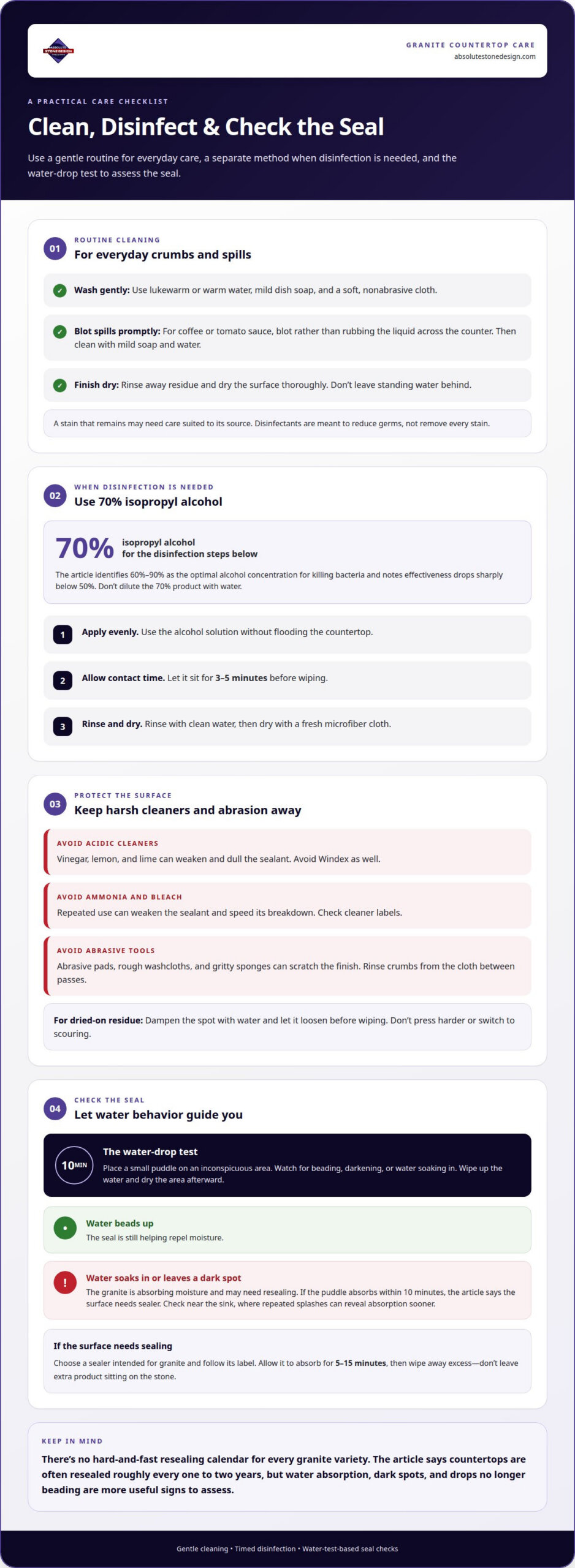
- Start by testing the seal, because cleaner choice alone can’t protect stone that absorbs spills. Place a small puddle of water on an inconspicuous part of the granite surface. Watch for darkening or water soaking in. If the stone absorbs the puddle within 10 minutes, it needs sealer. Unsealed granite can absorb spills, oils, and stains, so wipe up the test water and dry the area afterward.
- Use water’s behavior as a sign of whether the surface is sealed. If drops bead up, the seal is still helping repel moisture. If water soaks in or leaves a dark spot, the granite is absorbing moisture and may need resealing. Check near the sink, where repeated splashes can reveal absorption sooner. Granite is less porous than marble, but its seal still needs attention.
- Let the test guide your timing instead of relying on a fixed calendar. Granite countertops are often resealed roughly every one to two years, but there’s no hard-and-fast rule for every variety. If a water puddle hasn’t soaked in after 10 minutes, the stone may need only a mild sealer or none. Recheck when water stops beading or dark spots appear.
- If the surface needs sealing, choose a sealer intended for granite and follow its label. Allow the sealer to absorb for 5 to 15 minutes before wiping away excess. Don’t leave extra product sitting on the stone. Once the surface is sealed, routine cleaning usually calls for a mild approach rather than a specialized cleaner. A granite-safe cleaner can be useful, but a suitable product won’t replace sealing when water absorbs into the stone.
Use the water-drop test as a practical guide rather than relying on a fixed calendar interval: water that soaks into the surface indicates the granite may need sealing. If drops no longer bead up, assess the countertop for resealing. These signs help you evaluate the surface instead of assuming every stone behaves alike.
Dark spots around a granite countertop sink can indicate that the granite is absorbing water and needs resealing. There is no hard-and-fast rule that every variety of granite must be resealed every 1-3 years, so the visible response to water is more useful than a universal schedule. Consider the test results together with changes in beading and any darkening, then base sealing decisions on those signs.
Disinfecting granite countertops
- For a fresh stain, blot the spill promptly with a soft cloth rather than scrubbing. Clean the area with warm water and mild dish soap, then dry it thoroughly. Tomato sauce and coffee can stain granite. Disinfectants are intended to reduce germs, not remove every stain. A mark that remains may need care suited to its source.
- Choose 70% isopropyl alcohol when you need to disinfect a granite surface. Apply it evenly, without flooding the counter, and let it sit for 3 to 5 minutes before wiping. Rinse the surface with clean water, then dry it with a fresh microfiber cloth. This sequence limits lingering residue while giving the solution time to work.
- Check the concentration before applying alcohol. According to the Centers for Disease Control and Prevention, alcohol’s effectiveness at killing germs drops sharply below 50% concentration. The Centers for Disease Control and Prevention identifies 60% to 90% as the optimal alcohol concentration for killing bacteria. A 70% isopropyl alcohol product falls within that range; don’t dilute it with water.
- Keep vinegar and other acidic cleaners away from granite, even if they seem useful for stains. They can weaken the sealant, while abrasive scrubbing may damage the finish. Granite is less porous than marble, but its seal still matters: moisture can enter through an unsealed or worn area. If a mark remains after gentle cleaning, don’t switch to harsher chemicals.
- Use disinfection when the counter needs more than routine washing, such as after handling raw ingredients. For everyday crumbs or spills, mild soap and water are often the gentler choice. If you’re planning a new surface, explore granite countertop options as part of your kitchen design.
Avoiding harsh and abrasive cleaners
- Prevent damage by using a soft cloth and a gentle cleaner for routine care. Abrasive pads and rough washcloths can scratch granite, especially if grit gets trapped beneath them. For dried-on residue, dampen the spot with water and let it loosen before wiping. Don’t press harder or use a scouring pad to remove stubborn marks.
- Keep acidic cleaners, including vinegar, lemon, and lime, away from the countertop. Frequent use can weaken and dull the sealant, leaving the surface less protected. Avoid Windex as well. For a tomato sauce spill, blot first, then clean with mild dish soap and water.
- Read cleaner labels and avoid products containing ammonia or bleach. Repeated use can weaken the sealant and speed its breakdown. A product that removes grease from another household surface may be too harsh for granite. Choose a mild cleaner instead, and wipe away residue rather than letting it dry on the surface.
- Use a clean, nonabrasive cloth for each pass, especially after food preparation. A gritty sponge can drag particles across the surface and leave scratches. Rinse the cloth as it collects crumbs, then wipe again with clean water. This helps prevent debris from turning routine cleaning into abrasive scrubbing.
- Clean spills promptly, particularly coffee and tomato sauce, which can stain granite. Blot instead of rubbing liquid across a wider area, then wash with mild dish soap and water. If a mark remains, don’t reach for vinegar, bleach, or abrasive powder. Harsh liquids can dull the sealant, while scrubbing can scratch the finish.
Keep the cleaning approach consistent: use a gentle cloth rather than an abrasive sponge or washcloth, since these materials can potentially scratch granite countertops. Even when wiping away residue, avoid letting the cleaning tool itself add abrasion to the surface.
Choose cleaning products carefully. Harsh liquids can weaken and dull the sealant, and repeated use can speed its breakdown. Avoid acidic cleaners such as vinegar, lemon, and lime, as well as Windex and products containing ammonia or bleach. A mild cleaner is a gentler choice for granite.
Granite countertop cleaning do’s and don’ts
- For routine cleaning, mix lukewarm water with mild dish detergent, then wipe with a soft washcloth. Work in small sections to pick up crumbs and residue instead of spreading them across the counter. Don’t flood the granite with water. Standing moisture can enter areas where the seal has worn, so use a damp cloth rather than pouring water onto the surface.
- Dry each cleaned section thoroughly with a soft, clean cloth. This removes moisture and soap film that can leave a polished surface streaky. Pay extra attention around the sink, where splashes can collect. If the cloth becomes wet or gritty, rinse it before wiping again so debris doesn’t drag across the stone.
- Blot acidic food spills promptly, including tomato sauce and coffee. These spills can stain granite, especially if they sit on an area with a weakened seal. Lift the liquid with a clean cloth, then wash the spot with mild dish detergent and water. Avoid scrubbing hard with a sponge; abrasive surfaces can scratch the finish.
- Keep acidic cleaners such as vinegar and lemon away from granite, along with products containing bleach or ammonia. Frequent use can weaken and dull the sealant. Use a mild cleaner for everyday messes instead. If a spill leaves a mark, don’t assume a harsher chemical will remove it safely; avoid abrasive powders and pads.
- Protect the counter while cooking by placing hot cookware on a trivet or wire rack, not directly on granite. Direct contact with hot items can leave marks or cause damage. Use a protective coaster for glasses, particularly near the sink or other spots where moisture often gathers. These habits help reduce avoidable wear between cleanings.
- For a kitchen update, explore granite countertop options that suit your space and daily routine.
Absolute Stone Design: Countertops
For Richmond-area homeowners planning a kitchen update or choosing a new countertop, Absolute Stone Design provides precision measuring, in-house stone fabrication, delivery, and countertop installation. The team helps connect material selection with the finished surface in your home.
If you’re considering granite, marble, or quartz, the right choice depends on the look you want and how you use your kitchen. Discuss your layout and material preferences with Absolute Stone Design to explore a countertop suited to your space.
Have a countertop project in mind? Contact Absolute Stone Design to start planning.
Keep Your Countertop Ready for Everyday Life
A thoughtful routine for cleaning granite countertops helps keep your kitchen ready for everything from quick breakfasts to shared meals. When you’re ready for a kitchen refresh, material and design choices can be tailored to your space. Absolute Stone Design offers granite and marble countertops among its natural stone options. The team handles material selection, fabrication, and installation, connecting your chosen design with the finished surface in your home.
You don’t need to plan every detail at once. Start with the change that matters most, whether updating a worn counter or choosing a stone for a new kitchen. A conversation with Absolute Stone Design can help you explore the next step at your pace.
Contact Absolute Stone Design to discuss your countertop plans and begin shaping a space that feels right for you.
Frequently Asked Questions
Is Granite Capable of Harboring Bacteria?
Yes, bacteria can remain on granite if food residue or other contamination is left on the surface. A sealed finish doesn’t replace regular cleaning after food preparation, especially after handling raw ingredients. Remove residue with an appropriate cleaner and a clean cloth, then disinfect when needed. Keeping the counter free of crumbs and spills helps prevent food debris from lingering between meals.