Stone Worktop Supply, Fabrication and Installation
Need a stone slab for pickup or a worktop made to fit your space? Stone worktop suppliers can help with slab selection, fabrication and installation. Options include natural stone such as granite, marble and quartzite, as well as engineered quartz. Pickup depends on whether an uncut slab is available; a made-to-measure worktop follows a project-specific process.
Choosing the stone is only one part of creating a worktop that suits your home and everyday needs. This guide covers material options, what supply, fabrication and installation involve, and factors that affect the project and its cost. You’ll also see how the process moves from material selection and measurements to cutting and fitting, helping you make informed decisions.
Key Takeaways
- Compare granite, marble, quartzite, limestone, travertine, and onyx by their appearance and suitability for your project.
- Understand how slab selection, fabrication, and installation come together to create a worktop that fits your space.
- Learn what shapes slab distribution and availability, and how natural and engineered stone differ.
- Consider how stone surfaces can serve kitchens, bathrooms, and other interiors, including when bathroom tile work may suit your plans.
Granite, marble, quartzite, limestone, travertine, and onyx
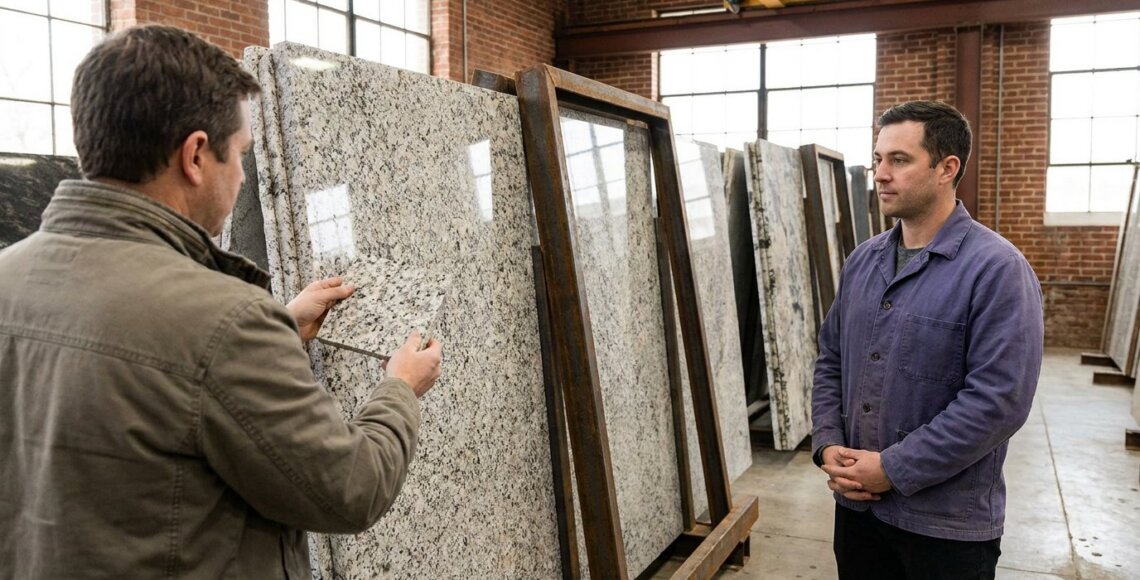
Natural stone varies from slab to slab, so the pattern matters as much as the material. Granite, marble, quartzite, limestone, travertine and onyx each have distinctive veining, color and movement. A dramatic marble vein can become a focal point, while granite’s varied patterns may suit a more understated design. View the full slab before planning custom cuts, especially if you want a feature vein to continue across adjoining surfaces.
Quartzite registers between 7 and 8 on the Moh’s hardness scale. Its natural patterns can resemble marble, making it a premium natural option for spaces where appearance guides the design. Marble offers its own recognizable veining, while granite ranges across varied patterns and colors. Limestone and travertine bring softer-looking textures; onyx can provide striking color variation. These visual differences help narrow choices before fabrication.
Other materials broaden the comparison. Dolomite and soapstone are natural stones, while quartz is engineered from stone materials. Granite, marble, quartzite, quartz and porcelain therefore differ in origin and appearance. Porcelain can have a more consistent pattern, while natural slabs show individual variation. Compare samples or slabs with cabinet colors and nearby finishes to see how each surface works in the room.
For a kitchen countertop, material selection affects the finished look and the fabrication plan. A prominent vein near a sink cutout, for example, may influence the slab’s orientation. Granite, quartz, marble and quartzite can all be used in residential spaces, but the chosen slab determines the pattern placement. Fabrication planning also accounts for edges, seams and openings.
Stone worktop suppliers can connect slab selection with a practical design. Start by comparing natural options such as granite, marble, quartzite, dolomite and soapstone with engineered quartz and porcelain. Then identify the color, pattern and focal area that matter most. This gives the fabrication plan a clear visual direction and helps ensure the finished countertop suits your space.
Stone countertop supply, fabrication, and installation
A stone countertop goes from slab selection to measurement, fabrication and fitting. Each stage affects the final fit, whether it’s for a kitchen island or bathroom vanity.
Countertop Supply and Fabrication
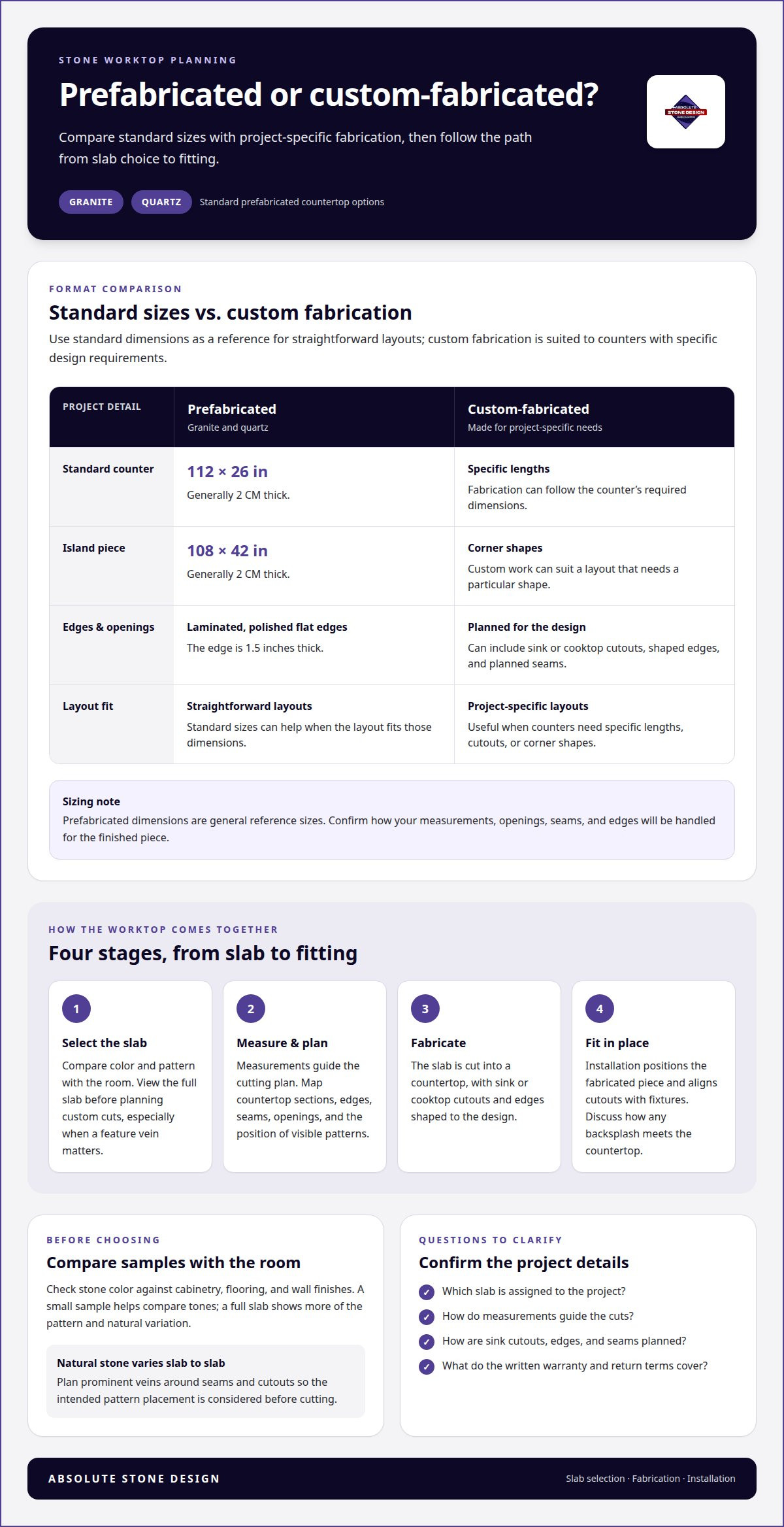
Supply starts with choosing a slab whose color and pattern suit the room. Fabrication turns it into a countertop, with cutouts for sinks and cooktops and edges shaped to the design. Ask which slab is assigned to your project, how measurements guide the cuts, and how seams and openings are planned. These details clarify what the finished piece will include.
Prefabricated Sizes and Thickness
Standard prefabricated granite and quartz countertops are generally 112 by 26 inches and 2 CM thick. Island pieces are generally 108 by 42 inches and 2 CM thick. These dimensions can help with straightforward layouts, while custom fabrication suits counters that need specific lengths, cutouts, or corner shapes. Prefabricated granite and quartz countertops have laminated, polished flat edges that are 1.5 inches thick.
Samples and Sample Pricing
A sample lets you compare a stone’s color with cabinetry, flooring and wall finishes before choosing a full slab. Sample pricing depends on the material and format and is provided after a quote request. A small quartz sample can help you compare tones, but a full slab reveals more of the stone’s pattern and variation. Use both views to guide your selection.
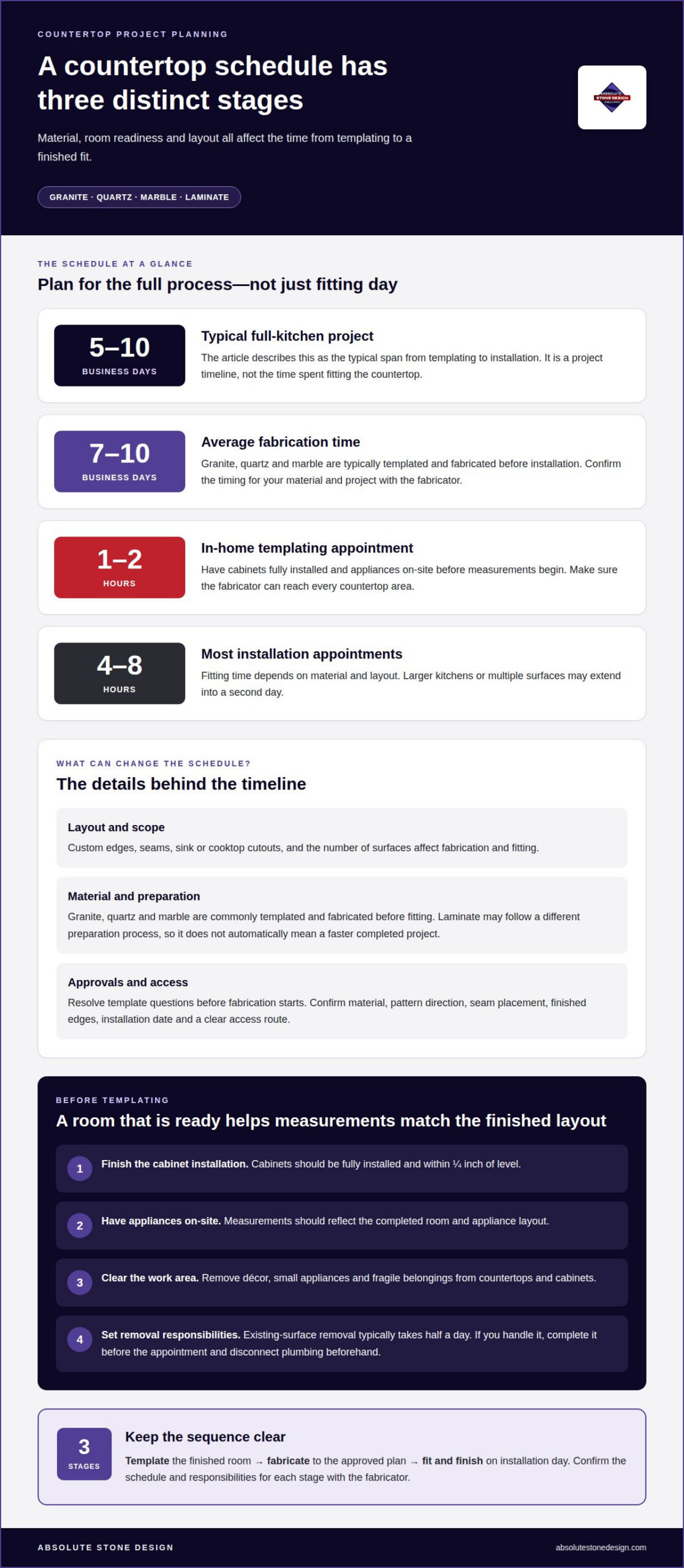
Before ordering, ask which slab is assigned to the project, what fabrication includes, and how sink cutouts, edges and seams are handled. The time from order to installation depends on sourcing the slab, templating, fabrication and scheduling the fitting. These steps shape the project timeline.
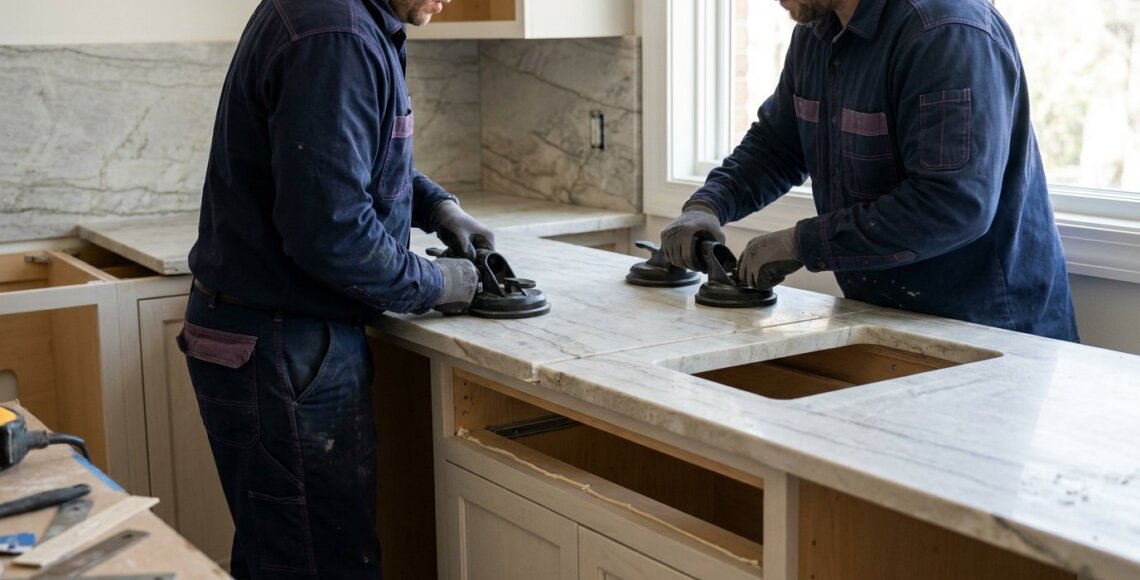
For kitchens and bathrooms, installation puts the fabricated piece in its final position, with cutouts aligned to fixtures. If the design includes a backsplash, discuss how it will meet the countertop. Written order terms set out warranty coverage and return conditions; review what they cover for the slab, fabrication and installation.
Natural and engineered stone slab distribution
Slab distribution connects material selection with the surface to be fabricated for your project. The key is to match the chosen slab, finish and pattern to the intended design.
Natural and Engineered Selections
Natural stone and engineered surfaces offer different visual qualities. Granite and marble are natural options, while engineered quartz and porcelain have distinct appearances. Compare color, pattern and finish with your cabinetry or flooring. A softly patterned surface, for example, can complement detailed cabinets, while a bold natural vein can anchor a simpler room.
Distribution planning follows material selection: the slab chosen for the project is identified before fabrication begins. Connecting selection with fabrication helps preserve the intended pattern and finish in the completed countertop.
Natural Stone Slabs
Every natural stone slab has its own pattern, so pieces of the same stone can look different. Granite may show varied mineral patterns, while marble can have prominent veins. Before cutting, the fabricator considers how these features will appear across the countertop, including near seams and cutouts. A dramatic vein might be positioned as a focal detail rather than interrupted by a sink opening.
Choosing natural stone also means examining the slab’s surface and finish in the lighting of the intended space. A polished finish reflects light differently from a honed one, changing how the color and pattern appear.
To keep distribution and fabrication aligned, the selected slab is matched to the project before its dimensions are turned into cutting plans. The layout identifies countertop sections, edges, seams and openings. For a kitchen island, the plan can account for how a visible pattern runs across the surface; a bathroom vanity may need a different arrangement around its basin.
Engineered quartz and porcelain offer more options when a design calls for a consistent visual effect. Compare their colors and finishes with natural stone samples, then consider the full surface rather than a small detail alone. This helps connect the material’s appearance with the dimensions and design of the finished space.
Stone slabs for kitchens, bathrooms, and interior projects
Stone slabs can define a kitchen island, bathroom vanity or interior feature. Match the material and pattern to the room’s layout, lighting and intended use.
In a kitchen, quartz countertops can create a consistent look across an island and perimeter counters. A bathroom vanity may need a smaller surface, with the sink opening and edge profile planned around the cabinet. In either space, the slab’s pattern affects how seams and cutouts appear, so make layout decisions before fabrication.
A showroom display can help you compare finishes and colors with cabinetry samples. For a polished look, consider how a bold pattern will relate to nearby surfaces rather than choosing it in isolation. A kitchen visualization tool can illustrate how a selected color or pattern might look with cabinets. Use the image as a planning aid, then assess the stone’s natural variation on the actual slab.
Outdoor kitchens need a separate material assessment. Sun exposure, weather and location affect which surfaces are suitable, so consider these conditions before selecting a slab. Coordinate the countertop layout with the outdoor cabinets and cooking area, and plan cutouts around the chosen fixtures. This creates a clear fabrication plan without assuming every interior material suits an exterior space.
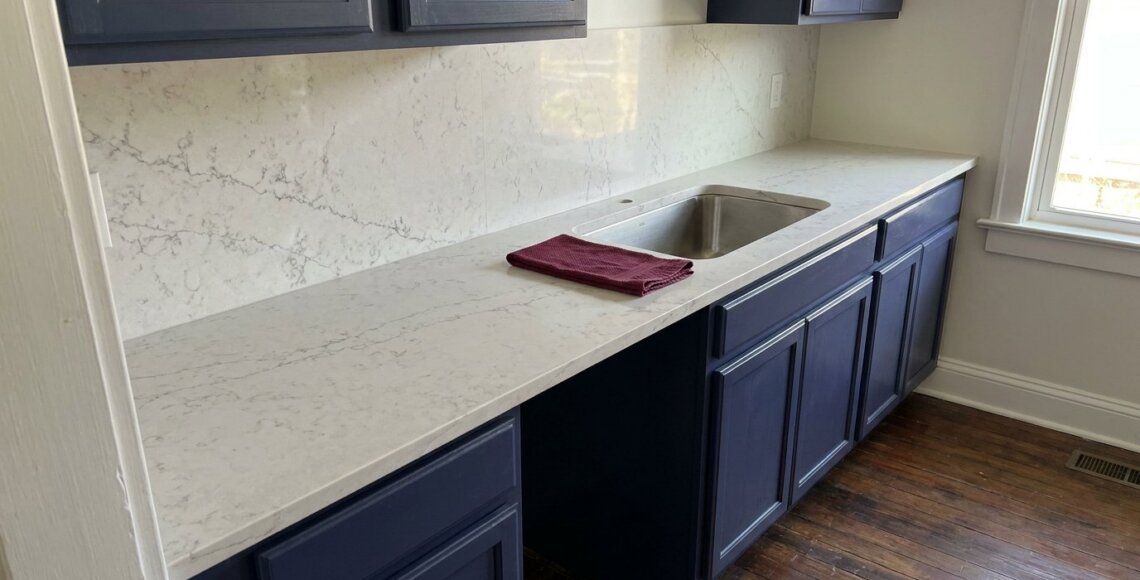
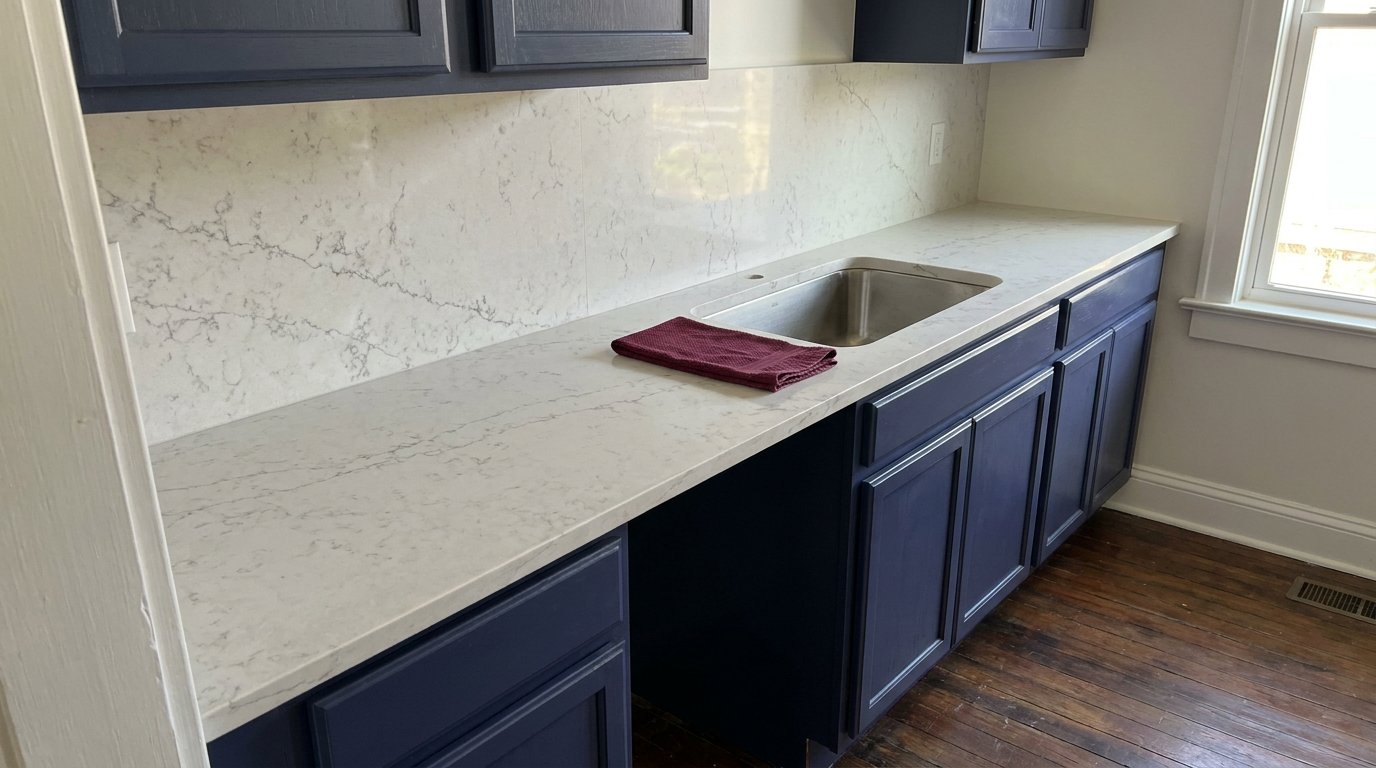
Stone works beyond countertops, too. A coordinated backsplash can extend the kitchen’s visual line, while bathroom tile work can carry a related finish through the room. For any interior project, decide whether the stone should blend with surrounding finishes or become a focal point. A quartz countertop with a restrained pattern, for example, can complement more expressive wall finishes.
Ready to plan a surface for your kitchen or bathroom? Explore countertop options and consider how the slab will fit your project’s layout and finishes.
Absolute Stone Design: Bathroom Tile Work
Absolute Stone Design provides bathroom tile work and coordinated stone surfaces. For a vanity countertop, granite and marble offer natural options that can shape the room’s color and character. If your bathroom refresh focuses on wall or floor finishes, bathroom tile work addresses those surfaces without expanding the project into unrelated remodeling.
Bring together the decisions that shape the finished space: the tile area, countertop material, and relationship between their colors and patterns. This helps you plan a considered bathroom, whether you’re updating tile, choosing a marble vanity top or combining both.
Contact Absolute Stone Design to discuss your bathroom tile work or countertop project.
Shape the Next Step for Your Space
A successful stone project starts with a clear idea of how you want the room to look and function. Before moving forward, consider which surface should lead the design, how it will relate to nearby finishes and which details matter in daily use. This gives conversations with stone worktop suppliers a practical starting point and helps turn inspiration into a well-considered plan.
Absolute Stone Design offers countertops in granite and marble, giving you natural material options to consider for your project. If you’re ready to discuss a surface for your home, share the space you’re planning and the look you hope to create. Contact Absolute Stone Design to talk through your countertop project and take a thoughtful next step toward a space that feels distinctly yours.
Frequently Asked Questions
Do You Have Slabs In Stock For Immediate Pickup?
Immediate pickup requires an uncut slab to be available for release; custom countertops follow a different process. A made-to-measure project involves selecting material, measuring the space, fabricating the piece and arranging installation. Slab distribution and fabrication affect whether pickup suits your plans. For a custom fit, the slab must be coordinated with the countertop’s dimensions and design.
What types of stone worktops do suppliers offer, including granite, marble, quartzite, and soapstone?
Common choices include natural granite, marble, quartzite and soapstone, as well as engineered quartz. Absolute Stone Design offers granite, marble, quartz and quartzite countertops. Each material has its own color and pattern, so start by comparing the look you want and how it will relate to cabinetry and other finishes. Soapstone is another natural-stone option.
How can I find reputable stone worktop suppliers near me in the United States?
For homeowners comparing stone worktop suppliers in Richmond and nearby communities, local service coverage is a practical starting point. Absolute Stone Design serves Richmond, Henrico, Glen Allen, Midlothian, Chesterfield and Charlottesville. The company focuses on countertops and related surfaces for local residential and commercial projects, with project measurements and installation within its service area.
What should I compare when choosing stone worktop suppliers?
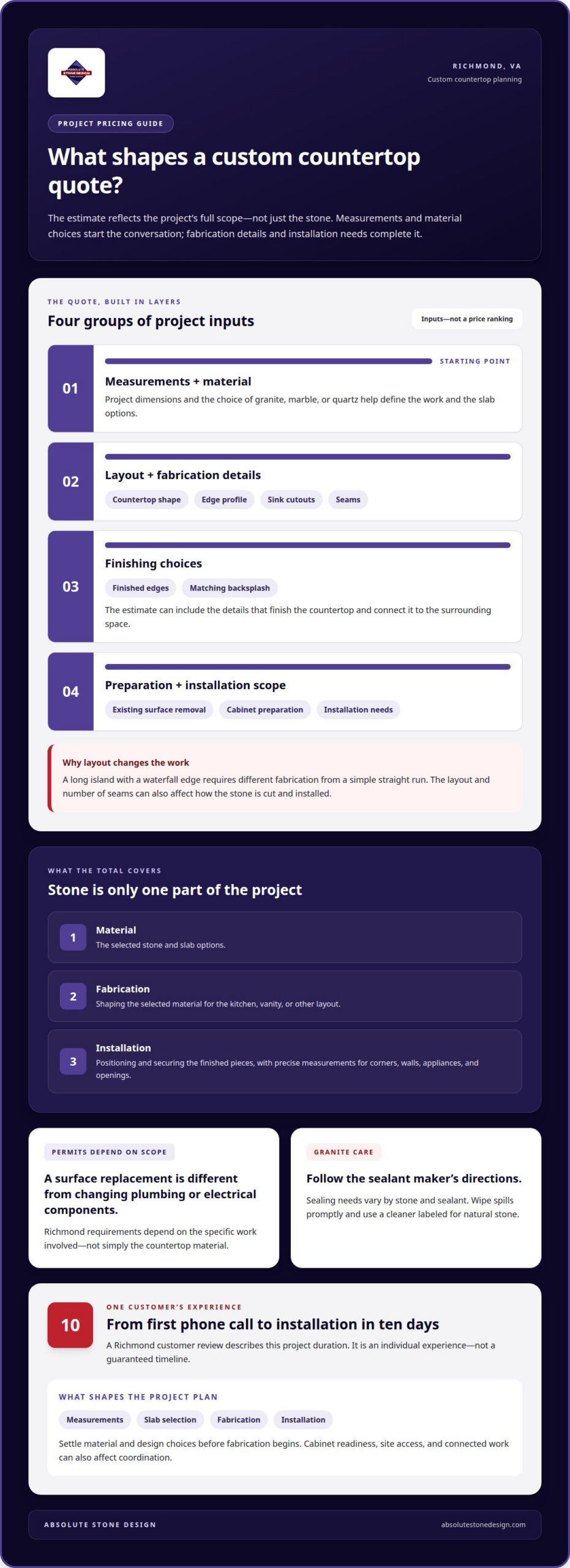
Compare the material selection, how the slab’s natural variation is handled, and the details included in the written project scope. A sink cutout, edge finish, seam placement and installation responsibility can all affect the final result. Review care guidance for the chosen stone, too. These points clarify what the finished countertop includes before fabrication begins.
Do stone worktop suppliers provide samples, templating, fabrication, delivery, and installation?
Absolute Stone Design provides precision measuring and template services, countertop fabrication and installation. Samples can help with early color decisions, but a small piece won’t show every variation across a full slab. A broad vein, for instance, may look different across a kitchen island than on a sample, so consider the appearance of the whole surface.
What are the risks of buying stone worktops, such as hidden defects, sealing needs, or installation damage?
Natural stone can vary across a slab, and small samples may not show every feature. Fabrication or handling can also cause chips or damage, while care needs vary by material and finish. A sound project process includes reviewing the selected slab before cutting, planning visible features around openings and receiving care instructions for the specific surface. This helps set clear expectations for appearance and upkeep.