
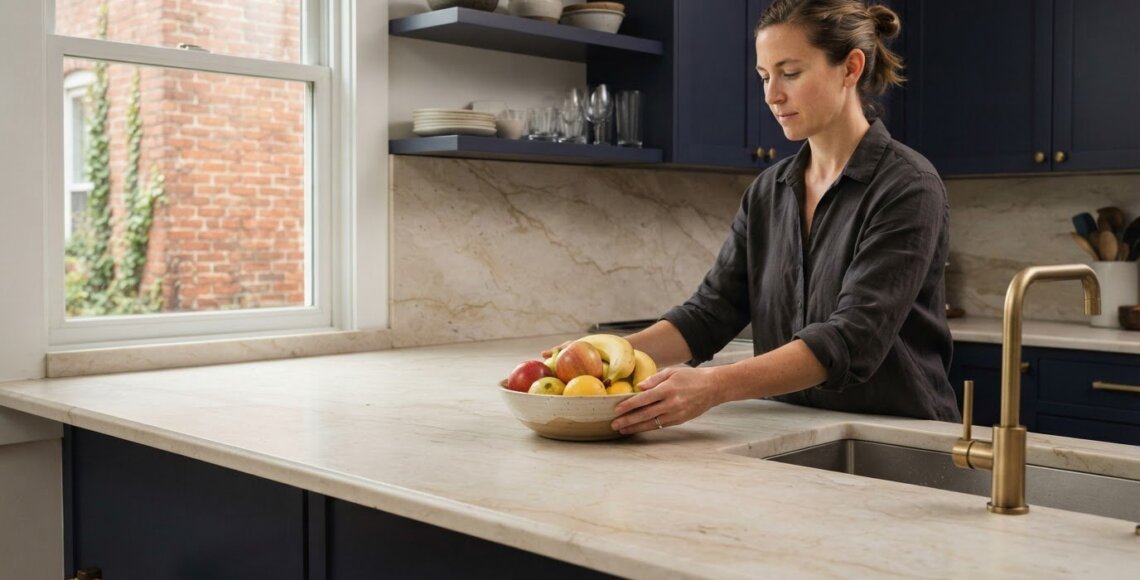
Taj Mahal Countertops for Homes and Commercial Spaces
The stone sold as Taj Mahal granite is actually natural quartzite, formed when sandstone changes under heat and pressure. Its creamy ivory-to-beige background and soft gold, taupe, or gray veining create a warm, understated look. Because slabs vary in color and movement, the specific piece you choose shapes the finished design.
That natural variation matters when planning a kitchen island, countertop runs, or a full-height backsplash, especially if you want the veining to flow across seams or around a sink opening. It also helps to understand how quartzite compares with granite and engineered surfaces, since materials with a similar appearance can have different compositions and care needs.
This guide explains what Taj Mahal quartzite is made of, what to look for when selecting slabs, and how its appearance and durability compare with other surfaces. You’ll also learn when stone sealing may be appropriate. Taj Mahal quartzite is commonly sealed about once a year, depending on kitchen use, to help improve stain resistance.
Key Takeaways
- Plan slab selection around your island, backsplash, and cutouts so the stone’s natural movement works with the finished layout.
- Learn how natural quartzite differs from granite and engineered surfaces before choosing the look and material for your project.
- Consider how the surface will function in a home or commercial setting, including kitchens, bathrooms, and other design applications.
- Weigh the visual appeal and care needs of quartzite to decide whether it suits your everyday routines.
Slab variation and in-person selection
Taj Mahal quartzite ranges from creamy ivory to beige, with gold, taupe, or gray veining. For a kitchen, view the actual slabs before planning an island, seams, or a matching backsplash.
Assessing Slab Quality
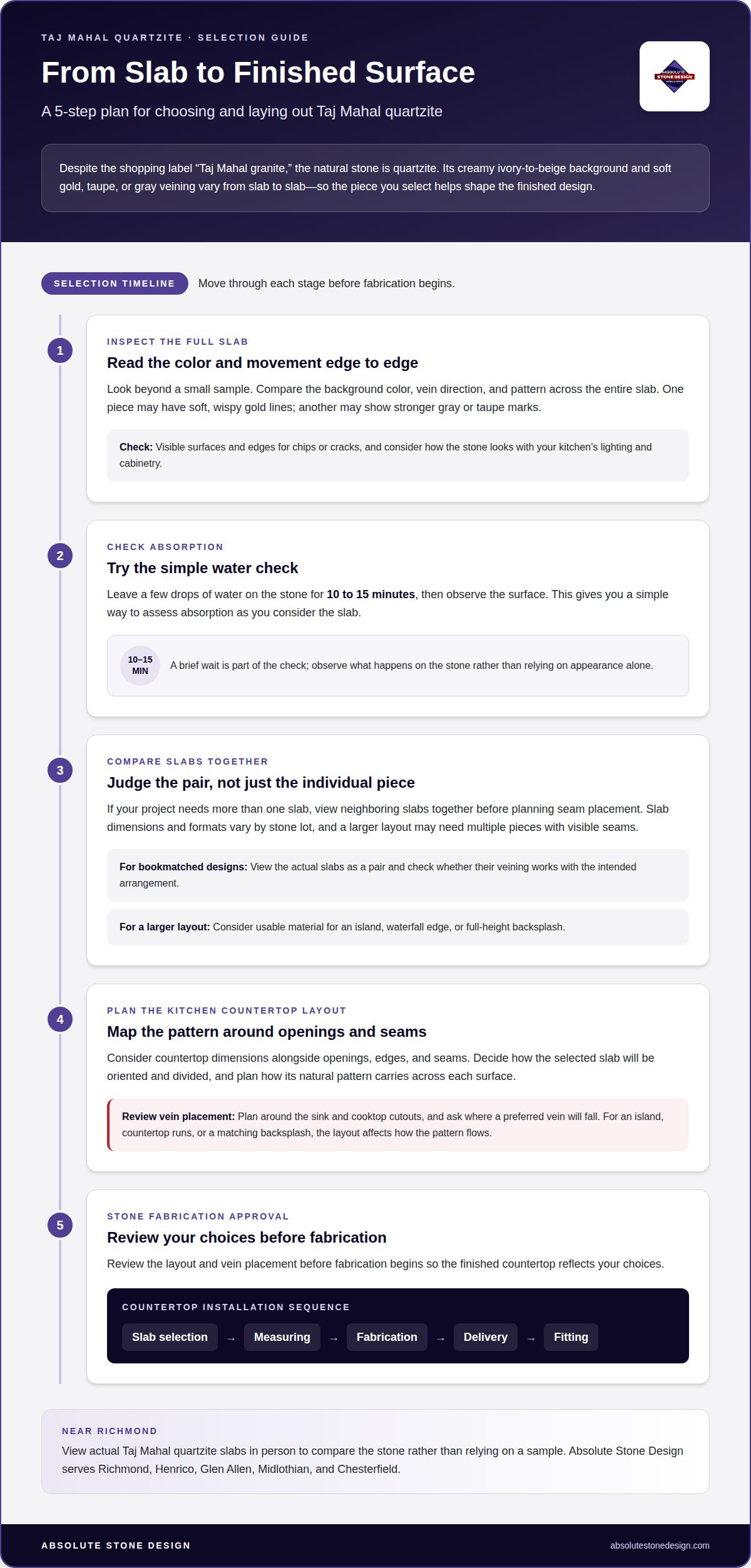
Look across the full slab, not just a small sample. Compare the background color, vein direction, and pattern from edge to edge. One slab may have soft, wispy gold lines, while another shows stronger gray or taupe marks. Check visible surfaces and edges for chips or cracks, and consider how the pattern will look with your kitchen’s lighting and cabinetry.
A simple water check can help you assess absorption: leave a few drops on the stone for 10 to 15 minutes and observe the surface. Before deciding, view neighboring slabs together if your project needs more than one. This helps you compare their color and movement before planning seam placement.
Slab Sizes and Formats
Slab dimensions and formats vary by stone lot, so don’t assume one piece will cover every kitchen run or island. Consider the planned countertop dimensions alongside openings, edges, and seams. A large island, waterfall edge, or full-height backsplash may require more usable material, and the layout affects how the natural pattern carries across each surface.
Ask how the selected slab will be oriented and divided for your design. One slab may suit a smaller run, while a larger layout may need multiple pieces and visible seams. For bookmatched applications, view the actual slabs as a pair and check that their veining works with the intended arrangement.
Finding Slabs and Planning Installation
Near Richmond, view actual Taj Mahal quartzite slabs in person to compare the stone rather than relying on a sample. Absolute Stone Design serves Richmond, Henrico, Glen Allen, Midlothian, and Chesterfield, with a large stone viewing selection. For a waterfall island or bookmatched design, assess the chosen slabs together before settling on the layout.
Before fabrication, plan the kitchen countertop layout around the sink, cooktop, edges, and seams. The fabricator can show where a preferred vein will fall around sink or cooktop cutouts. Countertop installation involves slab selection and measuring, followed by fabrication, delivery, and fitting. Review the layout and vein placement before fabrication begins so the finished countertop reflects your choices.
Taj Mahal quartzite versus granite and engineered surfaces
Despite the shopping label “Taj Mahal granite,” natural Taj Mahal stone is quartzite, not granite. Quartzite forms when sandstone changes under heat and pressure over millions of years. It has a distinct geological origin from granite, even though both materials are considered for kitchen countertops.
Hardness offers one point of comparison. True Taj Mahal quartzite has a Mohs hardness of around 7, while granite typically measures between 6 and 6.5. Marble is softer, with a Mohs hardness range of 3-4. These figures describe scratch resistance, not every aspect of performance, so surface care and project needs matter too.
Engineered quartz and porcelain may use the Taj Mahal name to suggest a similar creamy, veined appearance. A quartzite countertop, however, is natural stone, and its pattern varies from slab to slab. Engineered surfaces are manufactured products, with different compositions and patterns. Compare the material itself, not just a label or photograph, before deciding.
Cabinet color can make the stone feel subtle or more defined. White or cream cabinetry echoes a pale quartzite background for a quiet, blended kitchen. Natural wood adds warmth, while dark cabinets create stronger contrast with ivory stone and gold veining. View cabinet samples beside the actual slab to judge how the combination looks.
Choose based on the look and care considerations that suit your space, rather than assuming every material performs the same way. For example, marble’s lower hardness differs from quartzite’s, while granite is a separate natural stone category. If you’re weighing natural and engineered options, explore quartzite countertops alongside granite, marble, and quartz to compare materials for your kitchen.
Residential and commercial applications
In a home, Taj Mahal quartzite can bring a consistent stone look to kitchen countertops, bathroom vanities, and fireplace surrounds. Each setting gives the natural pattern a different role. A kitchen surface is part of daily food preparation, while a vanity or fireplace surround may serve as a quieter design feature.
For a residential kitchen, consider how the countertop connects with nearby finishes. A pale surface can complement light cabinetry, while wood or darker cabinets create contrast. On a bathroom vanity, the same stone can coordinate with nearby tile. A fireplace surround can carry the stone’s soft movement into a living room.
Commercial spaces can also use quartzite for visible surfaces, such as reception counters, office kitchenette tops, or hospitality service counters. Because routines vary, assess how the surface will be used and cleaned. A reception desk may prioritize a polished appearance, while a shared kitchenette needs a layout that supports everyday tasks.
Scale changes the design decisions. A broad reception counter may call for a calm, continuous pattern, while a smaller vanity can accommodate more noticeable veining. For a commercial project with several counters, planning stone selection and placement together can help create a consistent appearance across separate rooms.
Finish affects how the stone looks in each space. Polished Taj Mahal quartzite reflects more light and can make its veining appear more pronounced. That quality may suit a residential kitchen or reception area where a brighter look is desired. A honed finish has a matte appearance and creates a softer visual effect.
Consider the full setting before choosing. Note where the stone will sit, the cabinetry or tile beside it, and the surface’s daily role. A kitchen, bathroom vanity, fireplace surround, and commercial counter each call for a different balance of appearance and function. Matching the application to the design helps you choose with purpose.
What are the pros and cons of Taj Mahal quartzite for kitchens and bathrooms?
Taj Mahal quartzite pairs a creamy background with subtle veining, giving kitchens and bathrooms a natural stone surface with a soft, refined look. Its Mohs hardness rating is 7+, which makes it a hard surface, though hardness alone doesn’t prevent stains or damage.
In a kitchen, polished quartzite reflects more light and can make its veining look stronger. That finish may suit an island or countertop where you want the pattern to stand out. Honed quartzite has a matte appearance, while satin offers a gentler sheen than polished stone. Consider nearby lighting and cabinetry when choosing.
Bathrooms offer another application, from vanity tops to coordinated surfaces. The stone’s pale color can pair with tile to create a light, cohesive room. Its natural pattern varies, so the look across a vanity may differ from a small sample. For kitchens and bathrooms alike, viewing the slab helps you understand the finished appearance.
Care is one consideration. Sealing stone can improve stain resistance, and Taj Mahal quartzite is commonly sealed about once a year, depending on kitchen use. For everyday cleanup, use a soft cloth and a neutral cleaner intended for natural stone. Don’t assume quartzite is maintenance-free just because it is hard.
Natural stone varies, while engineered surfaces can offer a more consistent manufactured pattern. Quartzite also requires professional fabrication. Silica-containing material calls for careful handling during fabrication. That work calls for appropriate shop practices, not a do-it-yourself cutting approach.
For your project, weigh the natural variation, finish, and care routine against the look you want. If quartzite fits your kitchen or bathroom plans, plan a quartzite surface that suits the space.
Absolute Stone Design: Granite
Absolute Stone Design can help you move from comparing stone names to planning countertops for your space. If a slab labeled “Taj Mahal granite” caught your eye, remember that natural Taj Mahal stone is quartzite, not granite. For a different material direction, compare granite, marble, and quartz by appearance and how each suits your kitchen or bathroom.
For countertop projects, the team provides precise measurements and templates, in-house fabrication, and installation. This coordinated process connects your chosen surface with its dimensions, edges, and openings, helping turn material decisions into a finished countertop. Whether you’re updating a kitchen or planning a bathroom, clear design choices can guide the next steps.
Contact Absolute Stone Design to discuss your countertop project.
Shape a Surface Plan That Feels Like Yours
Your next step is to turn inspiration into a clear design direction. Think about the feeling you want the room to create, from a calm, softly blended kitchen to a reception area with a more defined focal point. If the label “Taj Mahal granite” started your search, use what you’ve learned to describe the look and material you have in mind.
Absolute Stone Design’s team can help you consider how countertops, granite, and marble fit your project’s design. Bring your ideas together around the room, the surrounding finishes, and how you want the surface to feel in everyday use. A thoughtful starting point makes the design conversation more focused, whether you’re planning a home or commercial project.
Start planning your countertop project with Absolute Stone Design, and take the next step toward a space that feels distinctly yours.
Frequently Asked Questions
What Are Taj Mahal Countertops Made Of?
Natural Taj Mahal countertops are made from quartzite, not granite. When purchasing, treat the name as a style label until the material is identified in the slab documentation. That distinction matters before you approve fabrication: the label alone cannot tell you whether the surface is natural stone or an engineered product made to resemble it.
What is Taj Mahal granite, and is it actually granite or quartzite?
The phrase “Taj Mahal granite” is a market label, not a reliable geological description. Natural stone sold under that name is classified as quartzite, while look-alike engineered surfaces may use similar wording. Before approving a slab, match its written material description to the surface you selected. This helps prevent an ambiguous label from carrying into fabrication decisions or project records.
What colors, patterns, and natural variations does Taj Mahal stone have?
Taj Mahal stone may show creamy ivory, beige, gold, taupe, or gray, with each slab offering its own balance of color and veining. If the room has adjacent surfaces, bring cabinet, flooring, or backsplash samples when viewing slabs. Compare the stone with those finishes in natural and interior lighting, then note which areas of the slab should remain visible in the final design.
How does Taj Mahal quartzite compare with granite, marble, and engineered quartz?
Compare samples side by side under the same lighting, then assess how the pattern works with your cabinet and backsplash choices. Natural quartzite, granite, and marble each have a distinct character, while engineered quartz is manufactured. For a large counter run, consider whether you prefer visible natural variation or a more controlled, repeatable look across the design.
Is Taj Mahal quartzite durable, heat-resistant, and scratch-resistant?
Quartzite is a hard surface, but a hardness rating alone can’t tell you how an installed countertop will handle every impact or heat exposure. In kitchens, protect the edges during use and don’t treat a stone top as a cutting board. Practical performance depends on the material, installation details, and daily habits. Keep those factors in mind when reviewing surface claims.
Does Taj Mahal quartzite need sealing, and how often?
Yes. Taj Mahal quartzite is commonly sealed about once a year, depending on kitchen use. Keep a note of the last application and follow the sealant label for preparation, application, and curing instructions. This interval is a maintenance guide, not a reason to apply another coat automatically. Assess the surface and its care history before repeating the treatment.