Tag: slab selection

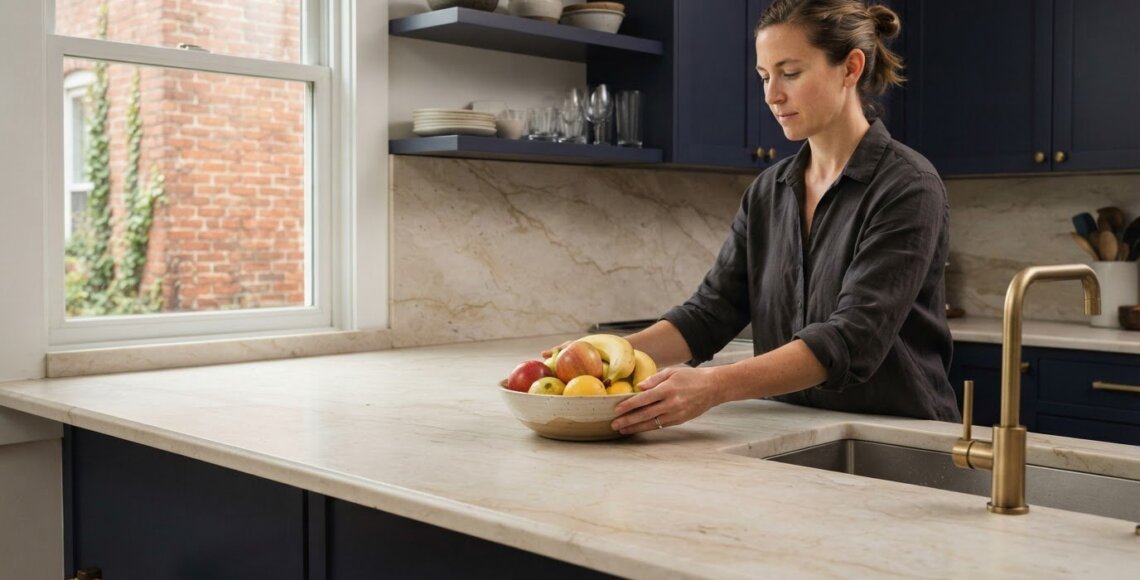
Taj Mahal quartzite island and full-height backsplash in a Richmond rowhouse kitchen

Taj Mahal Countertops for Homes and Commercial Spaces

The stone sold as Taj Mahal granite is actually natural quartzite, formed when sandstone changes under heat and pressure. Its creamy ivory-to-beige background and soft gold, taupe, or gray veining create a warm, understated look. Because slabs vary in color and movement, the specific piece you choose shapes the finished design.

That natural variation matters when planning a kitchen island, countertop runs, or a full-height backsplash, especially if you want the veining to flow across seams or around a sink opening. It also helps to understand how quartzite compares with granite and engineered surfaces, since materials with a similar appearance can have different compositions and care needs.

This guide explains what Taj Mahal quartzite is made of, what to look for when selecting slabs, and how its appearance and durability compare with other surfaces. You’ll also learn when stone sealing may be appropriate. Taj Mahal quartzite is commonly sealed about once a year, depending on kitchen use, to help improve stain resistance.

Key Takeaways

  • Plan slab selection around your island, backsplash, and cutouts so the stone’s natural movement works with the finished layout.
  • Learn how natural quartzite differs from granite and engineered surfaces before choosing the look and material for your project.
  • Consider how the surface will function in a home or commercial setting, including kitchens, bathrooms, and other design applications.
  • Weigh the visual appeal and care needs of quartzite to decide whether it suits your everyday routines.

Slab variation and in-person selection

Taj Mahal quartzite ranges from creamy ivory to beige, with gold, taupe, or gray veining. For a kitchen, view the actual slabs before planning an island, seams, or a matching backsplash.

Assessing Slab Quality

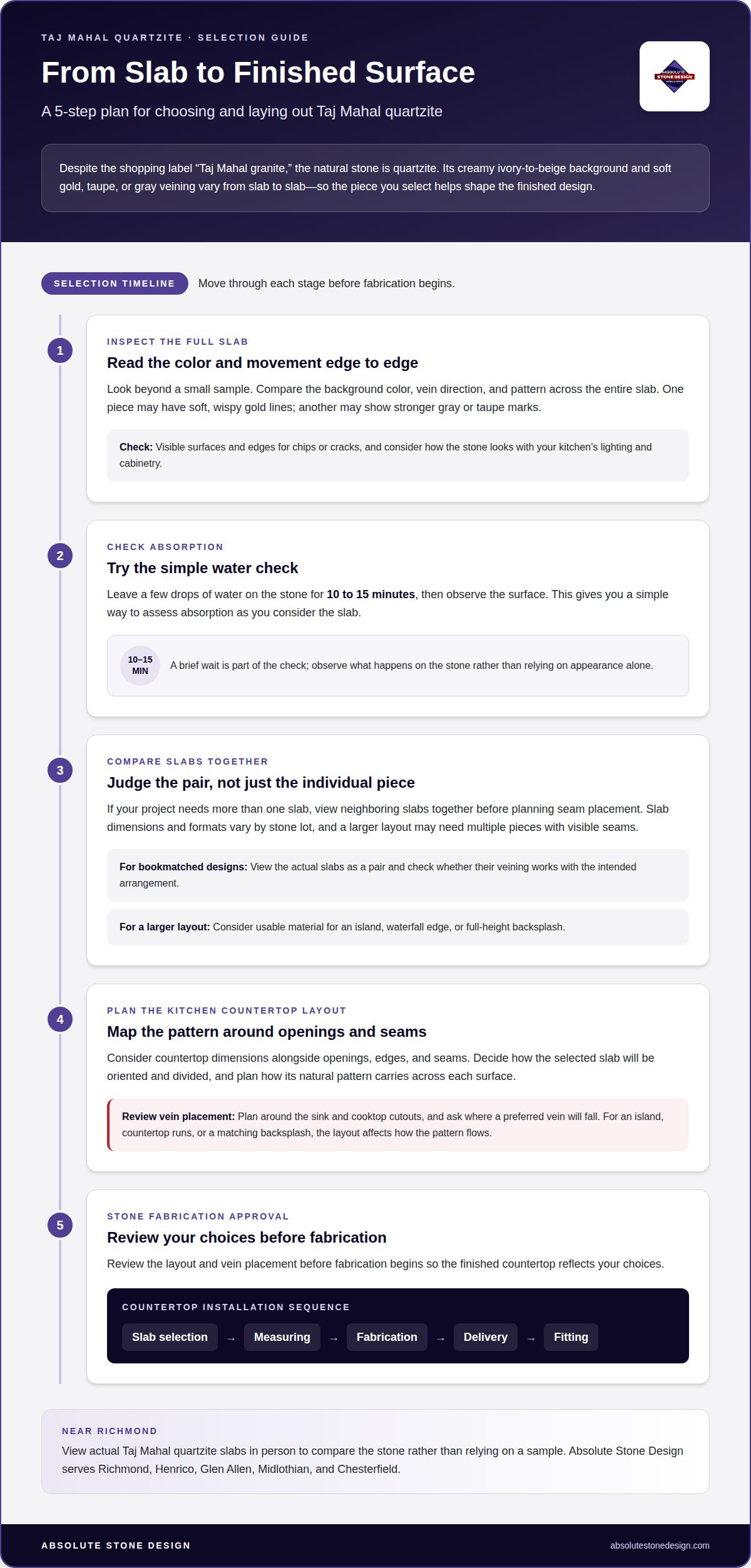
Look across the full slab, not just a small sample. Compare the background color, vein direction, and pattern from edge to edge. One slab may have soft, wispy gold lines, while another shows stronger gray or taupe marks. Check visible surfaces and edges for chips or cracks, and consider how the pattern will look with your kitchen’s lighting and cabinetry.

A simple water check can help you assess absorption: leave a few drops on the stone for 10 to 15 minutes and observe the surface. Before deciding, view neighboring slabs together if your project needs more than one. This helps you compare their color and movement before planning seam placement.

Slab Sizes and Formats

Slab dimensions and formats vary by stone lot, so don’t assume one piece will cover every kitchen run or island. Consider the planned countertop dimensions alongside openings, edges, and seams. A large island, waterfall edge, or full-height backsplash may require more usable material, and the layout affects how the natural pattern carries across each surface.

Ask how the selected slab will be oriented and divided for your design. One slab may suit a smaller run, while a larger layout may need multiple pieces and visible seams. For bookmatched applications, view the actual slabs as a pair and check that their veining works with the intended arrangement.

Finding Slabs and Planning Installation

Near Richmond, view actual Taj Mahal quartzite slabs in person to compare the stone rather than relying on a sample. Absolute Stone Design serves Richmond, Henrico, Glen Allen, Midlothian, and Chesterfield, with a large stone viewing selection. For a waterfall island or bookmatched design, assess the chosen slabs together before settling on the layout.

Before fabrication, plan the kitchen countertop layout around the sink, cooktop, edges, and seams. The fabricator can show where a preferred vein will fall around sink or cooktop cutouts. Countertop installation involves slab selection and measuring, followed by fabrication, delivery, and fitting. Review the layout and vein placement before fabrication begins so the finished countertop reflects your choices.

Taj Mahal quartzite versus granite and engineered surfaces

Despite the shopping label “Taj Mahal granite,” natural Taj Mahal stone is quartzite, not granite. Quartzite forms when sandstone changes under heat and pressure over millions of years. It has a distinct geological origin from granite, even though both materials are considered for kitchen countertops.

Hardness offers one point of comparison. True Taj Mahal quartzite has a Mohs hardness of around 7, while granite typically measures between 6 and 6.5. Marble is softer, with a Mohs hardness range of 3-4. These figures describe scratch resistance, not every aspect of performance, so surface care and project needs matter too.

Engineered quartz and porcelain may use the Taj Mahal name to suggest a similar creamy, veined appearance. A quartzite countertop, however, is natural stone, and its pattern varies from slab to slab. Engineered surfaces are manufactured products, with different compositions and patterns. Compare the material itself, not just a label or photograph, before deciding.

Cabinet color can make the stone feel subtle or more defined. White or cream cabinetry echoes a pale quartzite background for a quiet, blended kitchen. Natural wood adds warmth, while dark cabinets create stronger contrast with ivory stone and gold veining. View cabinet samples beside the actual slab to judge how the combination looks.

Choose based on the look and care considerations that suit your space, rather than assuming every material performs the same way. For example, marble’s lower hardness differs from quartzite’s, while granite is a separate natural stone category. If you’re weighing natural and engineered options, explore quartzite countertops alongside granite, marble, and quartz to compare materials for your kitchen.
Taj Mahal Countertops for Homes and Commercial Spaces

Residential and commercial applications

In a home, Taj Mahal quartzite can bring a consistent stone look to kitchen countertops, bathroom vanities, and fireplace surrounds. Each setting gives the natural pattern a different role. A kitchen surface is part of daily food preparation, while a vanity or fireplace surround may serve as a quieter design feature.

For a residential kitchen, consider how the countertop connects with nearby finishes. A pale surface can complement light cabinetry, while wood or darker cabinets create contrast. On a bathroom vanity, the same stone can coordinate with nearby tile. A fireplace surround can carry the stone’s soft movement into a living room.

Commercial spaces can also use quartzite for visible surfaces, such as reception counters, office kitchenette tops, or hospitality service counters. Because routines vary, assess how the surface will be used and cleaned. A reception desk may prioritize a polished appearance, while a shared kitchenette needs a layout that supports everyday tasks.

Scale changes the design decisions. A broad reception counter may call for a calm, continuous pattern, while a smaller vanity can accommodate more noticeable veining. For a commercial project with several counters, planning stone selection and placement together can help create a consistent appearance across separate rooms.

Finish affects how the stone looks in each space. Polished Taj Mahal quartzite reflects more light and can make its veining appear more pronounced. That quality may suit a residential kitchen or reception area where a brighter look is desired. A honed finish has a matte appearance and creates a softer visual effect.

Consider the full setting before choosing. Note where the stone will sit, the cabinetry or tile beside it, and the surface’s daily role. A kitchen, bathroom vanity, fireplace surround, and commercial counter each call for a different balance of appearance and function. Matching the application to the design helps you choose with purpose.

What are the pros and cons of Taj Mahal quartzite for kitchens and bathrooms?

Taj Mahal quartzite pairs a creamy background with subtle veining, giving kitchens and bathrooms a natural stone surface with a soft, refined look. Its Mohs hardness rating is 7+, which makes it a hard surface, though hardness alone doesn’t prevent stains or damage.

In a kitchen, polished quartzite reflects more light and can make its veining look stronger. That finish may suit an island or countertop where you want the pattern to stand out. Honed quartzite has a matte appearance, while satin offers a gentler sheen than polished stone. Consider nearby lighting and cabinetry when choosing.

Bathrooms offer another application, from vanity tops to coordinated surfaces. The stone’s pale color can pair with tile to create a light, cohesive room. Its natural pattern varies, so the look across a vanity may differ from a small sample. For kitchens and bathrooms alike, viewing the slab helps you understand the finished appearance.

Care is one consideration. Sealing stone can improve stain resistance, and Taj Mahal quartzite is commonly sealed about once a year, depending on kitchen use. For everyday cleanup, use a soft cloth and a neutral cleaner intended for natural stone. Don’t assume quartzite is maintenance-free just because it is hard.

Natural stone varies, while engineered surfaces can offer a more consistent manufactured pattern. Quartzite also requires professional fabrication. Silica-containing material calls for careful handling during fabrication. That work calls for appropriate shop practices, not a do-it-yourself cutting approach.

For your project, weigh the natural variation, finish, and care routine against the look you want. If quartzite fits your kitchen or bathroom plans, plan a quartzite surface that suits the space.

Absolute Stone Design: Granite

Absolute Stone Design can help you move from comparing stone names to planning countertops for your space. If a slab labeled “Taj Mahal granite” caught your eye, remember that natural Taj Mahal stone is quartzite, not granite. For a different material direction, compare granite, marble, and quartz by appearance and how each suits your kitchen or bathroom.

For countertop projects, the team provides precise measurements and templates, in-house fabrication, and installation. This coordinated process connects your chosen surface with its dimensions, edges, and openings, helping turn material decisions into a finished countertop. Whether you’re updating a kitchen or planning a bathroom, clear design choices can guide the next steps.

Contact Absolute Stone Design to discuss your countertop project.

Shape a Surface Plan That Feels Like Yours

Your next step is to turn inspiration into a clear design direction. Think about the feeling you want the room to create, from a calm, softly blended kitchen to a reception area with a more defined focal point. If the label “Taj Mahal granite” started your search, use what you’ve learned to describe the look and material you have in mind.

Absolute Stone Design’s team can help you consider how countertops, granite, and marble fit your project’s design. Bring your ideas together around the room, the surrounding finishes, and how you want the surface to feel in everyday use. A thoughtful starting point makes the design conversation more focused, whether you’re planning a home or commercial project.

Start planning your countertop project with Absolute Stone Design, and take the next step toward a space that feels distinctly yours.

Frequently Asked Questions

What Are Taj Mahal Countertops Made Of?

Natural Taj Mahal countertops are made from quartzite, not granite. When purchasing, treat the name as a style label until the material is identified in the slab documentation. That distinction matters before you approve fabrication: the label alone cannot tell you whether the surface is natural stone or an engineered product made to resemble it.

What is Taj Mahal granite, and is it actually granite or quartzite?

The phrase “Taj Mahal granite” is a market label, not a reliable geological description. Natural stone sold under that name is classified as quartzite, while look-alike engineered surfaces may use similar wording. Before approving a slab, match its written material description to the surface you selected. This helps prevent an ambiguous label from carrying into fabrication decisions or project records.

What colors, patterns, and natural variations does Taj Mahal stone have?

Taj Mahal stone may show creamy ivory, beige, gold, taupe, or gray, with each slab offering its own balance of color and veining. If the room has adjacent surfaces, bring cabinet, flooring, or backsplash samples when viewing slabs. Compare the stone with those finishes in natural and interior lighting, then note which areas of the slab should remain visible in the final design.

How does Taj Mahal quartzite compare with granite, marble, and engineered quartz?

Compare samples side by side under the same lighting, then assess how the pattern works with your cabinet and backsplash choices. Natural quartzite, granite, and marble each have a distinct character, while engineered quartz is manufactured. For a large counter run, consider whether you prefer visible natural variation or a more controlled, repeatable look across the design.

Is Taj Mahal quartzite durable, heat-resistant, and scratch-resistant?

Quartzite is a hard surface, but a hardness rating alone can’t tell you how an installed countertop will handle every impact or heat exposure. In kitchens, protect the edges during use and don’t treat a stone top as a cutting board. Practical performance depends on the material, installation details, and daily habits. Keep those factors in mind when reviewing surface claims.

Does Taj Mahal quartzite need sealing, and how often?

Yes. Taj Mahal quartzite is commonly sealed about once a year, depending on kitchen use. Keep a note of the last application and follow the sealant label for preparation, application, and curing instructions. This interval is a maintenance guide, not a reason to apply another coat automatically. Assess the surface and its care history before repeating the treatment.
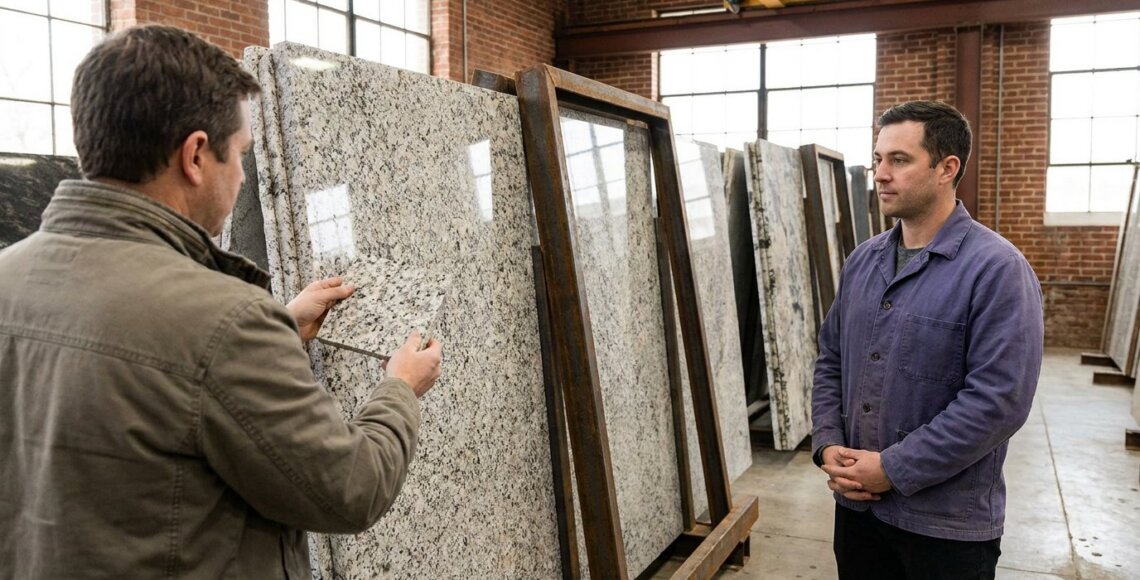
A Richmond homeowner compares a small sample with full-size granite slabs in a stone showroom.

Granite Countertops in Richmond, VA: Costs and Slab Selection

Yes, you can choose the exact natural-stone slab for your project. With granite countertops in Richmond, VA, each slab has its own pattern and color variation, so viewing the specific stone helps you picture the finished space. One Richmond customer review describes a project completed from the first phone call to installation in ten days.

The stone’s appearance is only one part of the decision. Project pricing depends on factors such as dimensions, material, cutouts, edge details, and backsplash work; a quote reflects the specific scope.

It’s natural to want a countertop that suits your home and a clear understanding of the practical details. This guide explains what affects custom countertop pricing, how to compare materials and select a slab, and what shapes installation timing, so you can plan your Richmond project with confidence.

Key Takeaways

  • See which project details shape a custom countertop quote, from the material and layout to the fabrication choices.
  • Learn how granite, marble, and quartz differ so you can narrow your material options to suit your home.
  • Understand which steps and project conditions can affect installation timing for kitchen, bathroom, fireplace, and outdoor countertops.
  • Get a clearer sense of how to plan a Richmond-area countertop project from material decisions through installation.

How much do custom countertops cost in Richmond, VA?

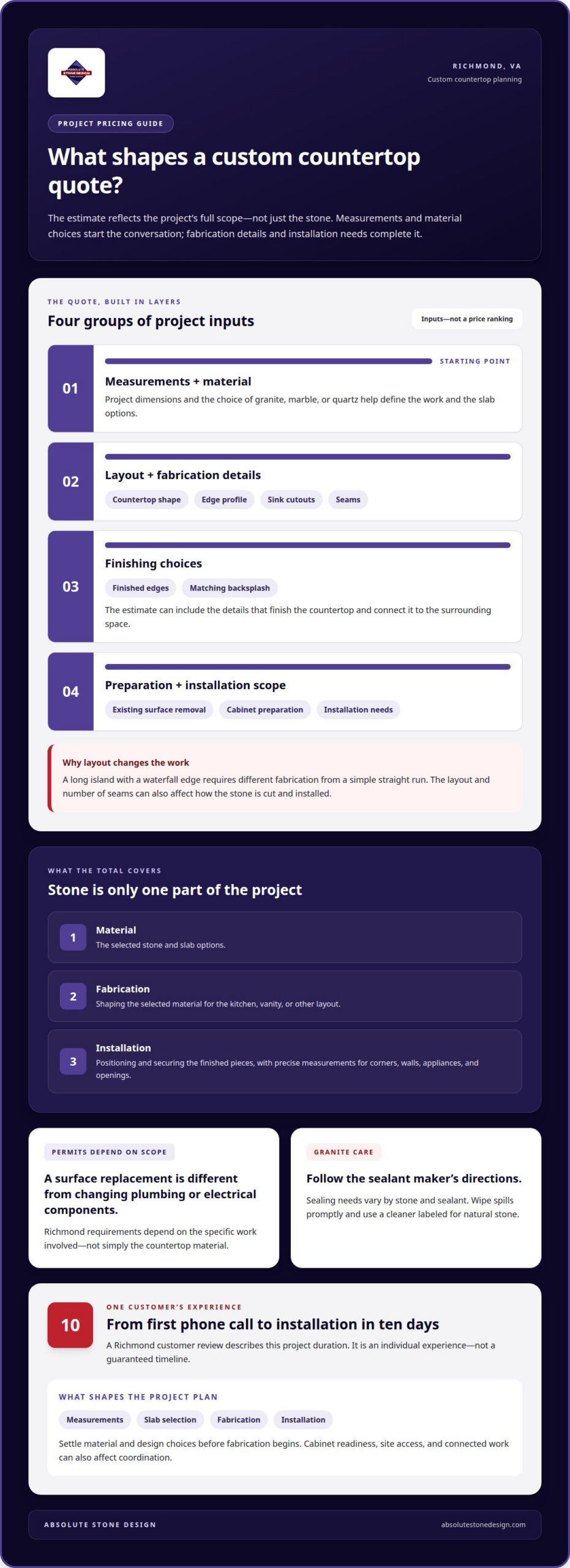
Custom countertop pricing starts with the project measurements and material choice. Granite, marble, and quartz each involve different slab options and fabrication needs. A quote also accounts for the countertop’s shape, edge profile, sink cutouts, and backsplash details. For example, a long island with a waterfall edge requires different fabrication from a simple straight run. The layout and number of seams can affect how the stone is cut and installed. Removing an existing surface or preparing cabinets may also change the project scope.

The total covers more than the stone itself. Fabrication shapes the selected material for your kitchen or vanity, while installation positions and secures the finished pieces. Precise measurements account for corners, walls, appliances, and openings. A custom countertop project can also include finished edges or a matching backsplash. The estimate depends on the material, dimensions, layout, cutouts, edges, backsplash, and installation needs.

Are permits required to replace kitchen countertops in Richmond, VA? It depends on the work involved, not simply the countertop material. A surface replacement differs from a project that also changes plumbing or electrical components, so Richmond requirements depend on the specific scope.

How should granite countertops be sealed and maintained? Sealing needs vary by stone and sealant, so follow the sealant maker’s directions. Wipe spills promptly and use a cleaner labeled for natural stone to care for granite.

Customer experiences can show how a project may unfold, but they don’t establish a standard schedule. One Richmond customer review describes a countertop project completed from the first phone call to installation in ten days. That is one customer’s experience, not a guaranteed timeline. For granite countertops in Richmond, VA, measurements, slab selection, fabrication, and installation all shape the project plan. Settling material and design choices helps define the work before fabrication begins.

Stone countertop materials and slab selection

Start with the material’s appearance, care needs, and how each slab will fit your design vision. Granite, marble, and quartzite are natural stone, so veining, color, and movement vary from slab to slab. For these materials, selecting the exact slab helps you see the pattern that will become your finished surface. A premium stone may have striking movement, while a quieter slab can keep attention on cabinetry and lighting.

How does granite compare with quartz and quartzite for cost, durability, and maintenance? Cost depends on the selected material, slab, layout, and fabrication, rather than a single statewide rate. Wiley describes engineered-stone countertops as durable, affordable, and easier to maintain than natural stone; granite and quartzite are natural stones with individual patterns.

Which granite colors and slab styles are popular in Richmond, VA? No single local style suits every kitchen, so consider how warm beige, gray, or darker tones work with your cabinets and floors. A broad, flowing pattern can make an island a focal point, while fine speckling gives surrounding surfaces a more restrained look. Bring a cabinet or flooring sample to compare colors directly.

Where can I view granite slabs near Richmond, VA? View the exact slab as part of your stone selection, rather than relying only on a small sample or photograph. This matters because natural stone’s pattern can shift across the full slab. For a project in Virginia, countertop material selection can help connect your preferred stone with the finished layout.

Quartz offers a different selection process because its engineered pattern is designed for a more consistent appearance. Compare samples in the room’s lighting, then consider edge shape, seams, and how the pattern will meet around a sink or corner. A responsive selection process keeps those details aligned with your design and practical needs. Highly recommend viewing full slabs before settling on natural stone, especially when a prominent vein or color contrast matters.

Granite Countertops in Richmond, VA: Costs and Slab Selection

How long does countertop installation take?

Countertop installation is one stage in a longer sequence: material selection, measurements, fabrication, delivery, and fitting. The time between stages depends on the material, layout, and preparation. A kitchen with an island, sink openings, and several corners requires different fabrication from a single straight bathroom vanity. Installation itself is only part of the overall schedule.

For a kitchen, accurate measurements account for cabinet edges, appliances, sink placement, and wall angles. After fabrication, installers position the pieces, join seams where needed, and fit the countertop around cutouts. A change in sink choice or cabinet setup can affect the sequence because the finished surface must match the final layout. A clear design and ready cabinets help keep each step coordinated.

Bathroom countertops may be smaller, but a vanity still needs precise sink and faucet openings. A remnant can suit a compact vanity if its dimensions and pattern work with the layout. The finished edge, backsplash, and wall alignment also shape fabrication. For a bathroom project that includes tile work, coordinating the countertop and wall finish helps the components meet cleanly.

Fireplace surrounds require careful attention to the opening, hearth, and adjacent wall surfaces. Measurements and cutouts must follow the design so the stone fits without disrupting the room’s lines. Outdoor countertops bring another consideration: the selected material and installation details need to suit the intended location. Site access and countertop shape also affect delivery and fitting.

To understand your project schedule, distinguish fabrication from installation day. Confirm the final material, layout, sink or appliance openings, and edge profile before fabrication begins. Then plan around cabinet readiness, site access, and connected work. A countertop in a prepared kitchen follows a different path from a bathroom vanity coordinated with tile or an outdoor surface requiring additional site planning. These steps clarify what must happen before the finished surface is ready for use.

Granite countertops in the Richmond area

Granite countertops in Richmond, VA, call for choices that connect the stone’s natural character with your room’s layout. A slab selected for a kitchen island may look very different from one used on a narrow bathroom vanity. Look at the full surface, not just a small sample, and note where strong veins or color changes fall. These details can guide seam placement, sink openings, and finished edges.

What granite countertop companies serve Richmond, VA? Fabricators and installers in the area handle steps such as measuring, cutting, and fitting stone. A useful project sequence is straightforward: choose the slab, confirm the layout, complete fabrication, then install the finished pieces. For a commercial counter or home kitchen, these steps connect the design to the actual space. Learn more about stone worktop supply, fabrication, and installation.

Richmond projects also benefit from decisions based on how the room will be used. A busy kitchen may call for a practical edge profile and a pattern that works with the cabinets and flooring. A bathroom vanity may put more emphasis on the sink opening and backsplash. Natural stone varies from slab to slab, so matching the specific piece to your design helps create a cohesive result. Careful fabrication and installation show in the alignment of edges, seams, and cutouts.

Before fabrication, settle the slab, layout, edge, and cutout positions. These choices give the finished surface a clear design direction and help avoid changes after cutting begins. The result can be beautiful without relying on elaborate details; a simple granite pattern can make an amazing focal point when it complements the surrounding room. For help planning a Richmond granite project, start a granite countertop project.

Absolute Stone Design: Countertops

Absolute Stone Design helps you choose countertops that suit your home, preferred material, and room design. If you’re weighing granite’s natural variation against marble’s distinctive veining or quartz’s more consistent appearance, the team can help you consider what fits your project. Choices about color, pattern, and edge detail bring the surface into harmony with your cabinets and flooring.

Turn to Absolute Stone Design when you’re ready to move from ideas to a countertop project. Whether you’re updating a kitchen surface or planning a bathroom vanity, you can discuss the material and look you have in mind. Start with how you want the room to feel and function.

Contact Absolute Stone Design to discuss your countertop project.

Shape a countertop plan around your home

A countertop is part of daily routines, from setting out breakfast to gathering around the kitchen island. Before moving forward, decide what matters most in your space: a distinctive natural pattern, a particular color relationship with your cabinets, or a surface suited to everyday use. That priority can guide your choices while keeping the room as a whole in view.

For granite countertops in Richmond, VA, consider how the stone will look beside existing finishes and where its most noticeable patterns should appear. Discuss your preferences, room, layout, and material with Absolute Stone Design. The company offers granite and marble countertops to suit a range of project plans.

Ready to take the next step? Contact Absolute Stone Design about your countertop project and begin shaping a surface that feels at home in your space.

Frequently Asked Questions

Can I pick my exact slab?

Yes, you can select the specific granite, marble, or quartzite slab for your project. Natural stone varies from slab to slab, so choosing the actual piece lets you consider its color and pattern. For example, you can choose veining that works with the direction of a kitchen island or the scale of a bathroom vanity. That choice helps shape the finished design.

Do you offer free estimates?

Request a quote for project-specific countertop pricing. The estimate reflects the scope, including material, measurements, cutouts, edge details, and installation needs. For example, a countertop with a sink opening and a full-wall backsplash involves different work from a simple vanity surface. Share the project details so the quote reflects its requirements.

What areas do you serve near Richmond?

Absolute Stone Design serves Richmond, Henrico, Glen Allen, Midlothian, Chesterfield, and Charlottesville. Local projects include kitchen countertops in Henrico and bathroom surfaces in Midlothian. Your project location helps shape planning for measurements, fabrication, and installation. Mention your city and the room you’re updating when you request project pricing.

What countertop materials do you offer?

Countertop materials include granite, marble, quartz, and quartzite. Granite, marble, and quartzite are natural stone, while quartz is engineered stone. Your choice can reflect the look you want, such as natural veining for a statement island or a more consistent pattern across adjoining counters. Material selection also shapes fabrication and care considerations for the finished surface.

How much do granite countertops cost per square foot in Richmond, VA?

Granite countertop pricing per square foot depends on the selected slab and the work required for your layout. Measurements, sink or cooktop cutouts, edge profiles, seams, and backsplash details all affect the project scope. A compact vanity and a kitchen with an island have different fabrication needs. Request a quote based on your specific design.

How long does granite countertop installation take in Richmond, VA?

The full project timeline depends on the sequence from final measurements and slab selection through fabrication and installation. Installation day is only one part of the process. A kitchen with an island, multiple cutouts, and several seams has different requirements from a straightforward bathroom counter. Finalized design choices and ready cabinets help establish the work sequence.