Tag: Richmond VA

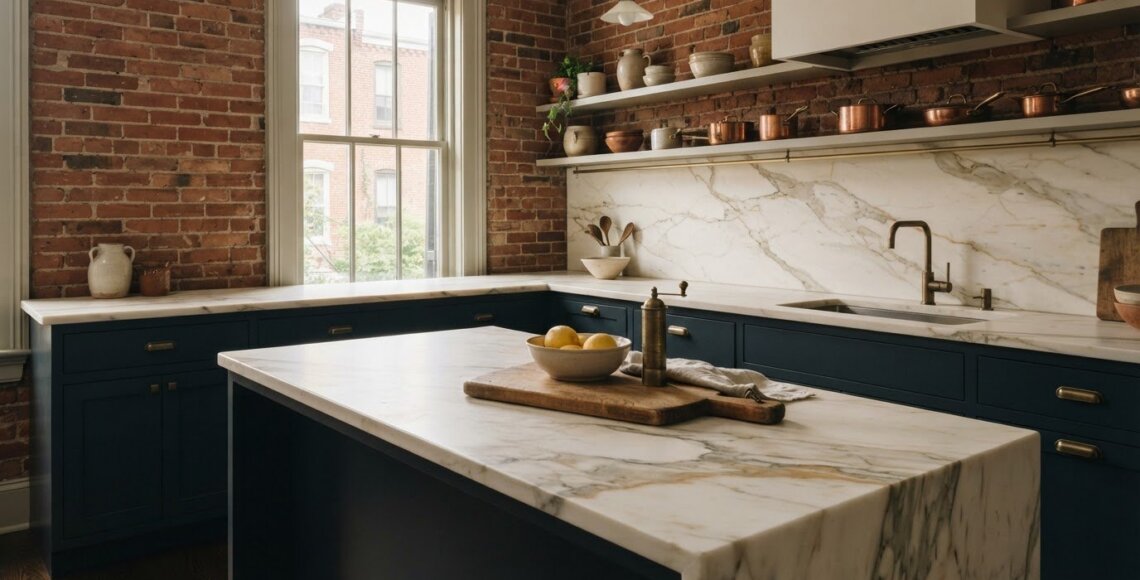
Calacatta Gold marble island and full-height backsplash in a Richmond rowhouse kitchen

Calacatta Gold Marble Countertops for Kitchens and Baths

Calacatta Gold marble countertops make a striking focal point, pairing a warm, buttery-white background with veining that ranges from deep gray to honey-toned gold. This natural pattern brings character to kitchens and bathroom vanities. But appearance is only part of the decision: marble can scratch and etch with everyday use, so the right fit depends on how you use the surface, the care you’re comfortable giving it, and the selected slab’s color and veining. This guide covers Calacatta Gold’s appearance and what to consider for a kitchen or bath, plus how to view slabs at Absolute Stone Design in Richmond. Seeing the stone in person helps you compare its pattern with your cabinets, fixtures, and overall design.

Key Takeaways

  • Match marble to how you use your kitchen or bath, and consider the care its surface needs in daily life.
  • Look at the full slab to understand how its natural pattern may flow across your countertop.
  • Plan the countertop layout, edges, and seams together so the finished surface feels cohesive.
  • Learn how measuring, in-house fabrication, and installation support a more coordinated countertop project.

Marble countertop suitability and applications

Calacatta Gold marble may suit kitchen counters, islands, and bathroom vanities when its care needs fit your routine. Consider daily use, exposure, and the surface’s role.

Countertop and Island Uses

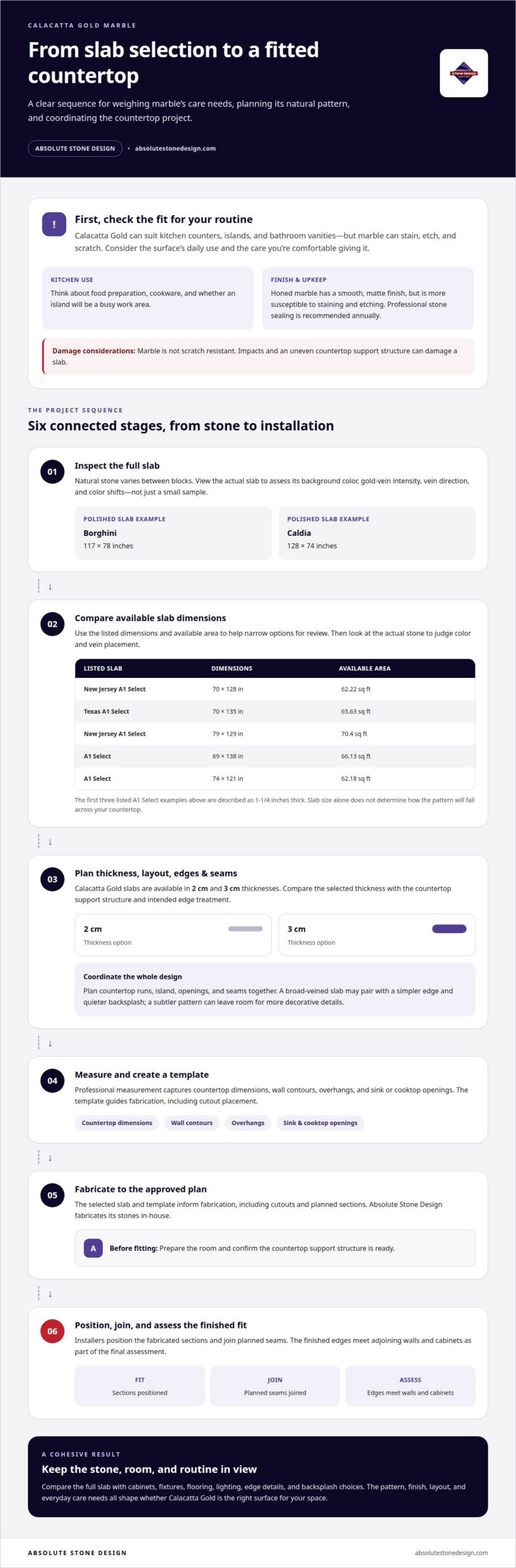
In a kitchen, Calacatta Gold creates a distinctive surface for perimeter counters or an island. Whether it suits your kitchen depends on how you use the surface and care for it. Marble is not scratch resistant, so consider how you prepare food, handle cookware, and use the island before choosing it for a busy work area. In a bathroom, marble may be considered for a vanity, depending on the intended use and care requirements.

Stain, Etch, Scratch, and Crack Concerns

Calacatta Gold marble can stain or etch, and it can scratch because marble is not scratch resistant. Honed marble has a smooth, matte finish, but is more susceptible to staining and etching. Marble does not necessarily crack easily, though impacts and an uneven countertop support structure can damage a slab. Professional stone sealing is recommended annually, with surface restoration and protection specialists like Sealwerx highlighting the importance of regular protective treatments to guard porous natural stone against deep staining.

For a residential kitchen, weigh the visual appeal against the care involved in cooking and cleanup. A bathroom vanity may face different demands than a kitchen island, so choose the application with your daily routine in mind. A honed finish also affects how the surface responds to stains and etching, making finish selection part of the decision.

Commercial settings call for the same practical assessment. A marble reception counter may see different use from a restaurant work surface, while marble flooring requires consideration of foot traffic and maintenance. Match the stone to the setting rather than assuming one application suits every project. This helps you decide whether Calacatta Gold belongs on counters, floors, or selected feature surfaces.

Slab inventory and showroom viewing

Viewing a full slab lets you assess its color, veining, and pattern before fabrication. Calacatta Gold varies between natural stone blocks, so inspect the actual piece.

Slab Inventory and Thickness Options

Calacatta Gold slabs are available in 2 cm and 3 cm thicknesses. Thickness affects the slab profile and planned edge details. Compare the selected thickness with the countertop support structure and intended edge treatment. A fabricator can review the kitchen countertop layout and explain how the slab may be planned for counters, an island, and seams.

Listed examples include a Calacatta Gold Borghini polished slab measuring 117 by 78 inches and a Calacatta Gold Caldia polished slab measuring 128 by 74 inches. Slab dimensions help inform layout planning, but pattern placement also matters. Review how the fabricator plans to position the stone across countertop runs.

Natural Stone Variation and Slab Selection

How can a stone fabricator help you choose and inspect Calacatta Gold marble slabs? The fabricator can guide you through the slab, point out vein direction and color shifts, and discuss how those features may align with your countertop plan. Seeing the full stone helps you assess its character beyond a small sample.

Natural stone blocks can vary in appearance, and gold-vein intensity differs between quarry blocks. One slab may look warmer or more dramatic than another. Examine the entire face and consider where prominent veins will fall across long countertop runs.

Inventory details can complement a full-slab inspection. A New Jersey Calacatta Gold A1 Select marble slab is 1-1/4 inches thick, measures 70X128, and has 62.22 square feet available. A Texas Calacatta Gold A1 Select marble slab measuring 70 by 135 inches is 1-1/4 inches thick and has 65.63 square feet available. Another New Jersey Calacatta Gold A1 Select marble slab measures 79 by 129 inches and has 70.4 square feet available.

Other listed Calacatta Gold A1 Select slabs include one measuring 69 by 138 inches with 66.13 square feet available, and one measuring 74 by 121 inches with 62.18 square feet available. Comparing available area and dimensions with the countertop plan can help narrow the slabs to inspect, while viewing the actual stone lets you consider its color and vein placement.
Calacatta Gold Marble Countertops for Kitchens and Baths

Calacatta Gold marble appearance and characteristics

Calacatta Gold’s visual character depends on the scale and direction of its veining. Broad, sweeping lines can create a dramatic focal point, while finer movement may feel quieter across a long counter. Consider how the pattern will sit beside cabinet colors, hardware, and flooring. Warm cabinet finishes can echo the gold tones; cooler finishes can bring the gray veins forward.

Calacatta Gold marble is quarried natural stone, while Calacatta Gold quartz is an engineered surface inspired by marble’s appearance. Marble’s individual pattern comes from the stone itself, so the finished surface has natural variation. Other marble countertops also differ in background color and vein character. Compare the actual material with nearby finishes to decide which overall effect suits your room.

Edge profiles, surface finishes, and backsplash choices shape the design as a whole. A more decorative edge can add detail, while a restrained profile keeps attention on the stone’s pattern. For the backsplash, consider whether you want a coordinated stone surface or a contrasting material. Lighting matters, too: it can change how a polished surface reflects and how its veining reads.

Professional measurement captures the countertop’s dimensions, wall contours, overhangs, and sink or cooktop openings. A template then guides fabrication, including cutout placement. Before installation, the room and countertop support structure are prepared for fitting. Installers position the fabricated sections, join planned seams, and assess how the finished edges meet adjoining walls and cabinets.

These choices work together. A broad-veined slab, for example, may call for a simpler edge and a quieter backsplash, while a subtler pattern leaves room for more decorative details. Consider the whole room, not just a small sample, when shaping the final design.

Planning a Calacatta Gold Marble Countertop Project

Start with how the room needs to work, not just how it should look. In a family kitchen, you may want a clear prep zone separate from the area where guests gather. For a bathroom vanity, consider who shares the space and how much counter area supports your morning routine. These priorities help shape the project brief.

Next, coordinate the countertop project with the wider renovation. Cabinet changes, flooring work, and wall finishes can affect the room’s readiness and how design choices fit together. If you’re keeping existing cabinets, include that in the plan early. A new build may offer more freedom to coordinate the room’s finishes from the start.

Think through how the space will function during the work. A kitchen renovation may temporarily limit access to cooking and cleanup areas, while a bathroom project may affect a shared daily-use space. Discuss the project schedule and household needs with the team so the work can be planned around the room’s role.

For a commercial project, consider how staff and visitors use the space. A reception counter has different demands from a food-service work area, and the surrounding operation may affect access during the project. Share the intended use, cleaning routine, and any site constraints with the project team. Those details keep the design discussion grounded in the setting.

Finally, choose a clear point of contact for decisions. When homeowners, designers, and contractors are involved, shared priorities help keep selections consistent. Agreeing on the preferred balance between a striking focal point and a quieter overall room, for example, makes later choices easier to evaluate. A well-defined brief gives the team a practical direction from the outset.

Absolute Stone Design: Countertops

Absolute Stone Design manages marble countertop projects from material selection through installation. Its countertop services include precision measuring, templates, in-house stone fabrication, delivery, and installation. This connected process helps account for the slab’s natural pattern alongside the room’s dimensions and planned edges.

For a Calacatta Gold project, visit Absolute Stone Design’s Richmond showroom to view marble and discuss how its veining may suit your kitchen or bathroom. Measurements and a template translate the selected material into countertop pieces, including sink openings and an island. Reviewing the layout and design details before fabrication helps align the finished surface with your plans.

Absolute Stone Design also offers granite and quartz countertops. Each material offers a different way to coordinate your room’s surfaces, so your choice can reflect the appearance and everyday use you have in mind. If you’re comparing marble with another option, the team can discuss the materials and how each may fit your project, without treating them as interchangeable.

Whether you’re renovating a bathroom vanity or planning kitchen counters and an island, begin with the room and the decisions that shape its finished look. Absolute Stone Design manages the process from measurements through delivery and installation, with in-house fabrication keeping the stone work within one workflow. Share your design priorities with the team to discuss the next steps for your project.

Contact Absolute Stone Design to discuss your countertop project.

Frequently Asked Questions

What is Calacatta Gold marble and what does it look like?

Calacatta Gold is marble quarried in Italy, known for expressive natural patterning. Its appearance can shift from slab to slab, so the stone’s name alone does not tell you exactly what a particular piece will look like. If your room has several finishes, compare the selected stone with cabinet and flooring samples under the planned lighting.

Is Calacatta Gold marble durable and suitable for kitchens and bathrooms?

Calacatta Gold can work in either room if you’re comfortable caring for marble as a natural surface. In a kitchen, consider whether you regularly prepare food directly on counters or can use cutting boards and trivets. In a bathroom, think about how the vanity is used and cleaned. The right application depends on your routine, not just the room’s appearance.

How do you seal, clean, and maintain Calacatta Gold marble countertops?

Build a simple care routine around gentle daily use: place a cutting board under food, use trivets for hot cookware, and choose nonabrasive cleaning tools. Keep cosmetics and toiletries on trays where practical, especially near a bathroom sink. Ask the fabricator which care products suit the selected finish, then follow its guidance for maintenance and resealing.

Where can you buy Calacatta Gold marble slabs near me, and what should you ask a stone fabricator?

For homeowners in Richmond, Henrico, Glen Allen, Midlothian, and Chesterfield, Absolute Stone Design’s Richmond showroom offers a place to view slabs in person. For a large project, consider whether slabs from the same lot would help maintain a consistent look, since gold-vein intensity can vary between quarry blocks. Discuss how the team can help assess the selected stone’s overall pattern for your project.

What countertop edge profiles, finishes, and backsplash options work with Calacatta Gold marble?

A decorative edge adds detail, while a restrained profile keeps attention on the veining. A honed finish is smooth and matte, but more susceptible to staining and etching. For the backsplash, choose coordinated stone or a contrasting material; broad veining can pair well with a quieter backsplash.
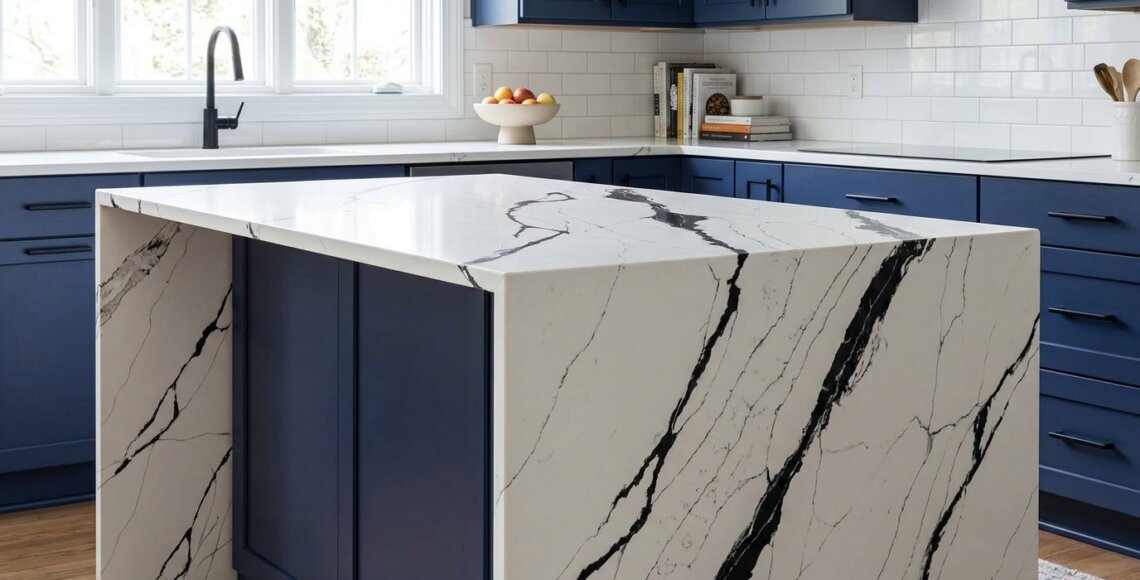
White quartz waterfall island with dark veining aligned across its mitered edge in a Richmond-area kitchen

Waterfall Edge Quartz Islands in Richmond, VA: Costs and Choices

Choosing quartz for a waterfall edge quartz island in Richmond, VA, starts with the look you want across the top and sides. Unlike natural stone, quartz is designed, rather than selected as a unique natural slab, so focus on how its color and pattern will carry through the island’s full design.

With waterfall sides, the surface shapes the look of the entire kitchen countertop layout, not just the island top. Pattern, dimensions, panel placement, and edge details all affect the finished design, so plan them before fabrication begins.

This guide covers what to consider when choosing quartz, how professional measuring and templating inform the design, and how fabrication, delivery, and countertop installation fit together. You’ll get a clearer view of the decisions involved and how thoughtful planning can turn your island idea into a finished feature.

Key Takeaways

  • Understand how material selection affects whether you can choose a specific slab or focus on a quartz design.
  • See how measurements, the kitchen layout, and the countertop support structure shape waterfall island planning.
  • Learn how fabrication and installation turn design details into a finished island.
  • Compare quartz colors and patterns with other countertop materials to find a fit for your kitchen and daily needs.

Planning a Waterfall Edge Quartz Island in Richmond, VA

For a waterfall-edge quartz island in Richmond, VA, begin with the kitchen countertop layout and the countertop support structure. Quartz suits a coordinated look, while granite and quartzite offer natural variation; porcelain is another surface option. The right fit depends on your design priorities, intended use, and project details.

Templating follows the design plan. A fabricator measures the island top, cabinet edges, overhangs, sink or cooktop openings, and waterfall panels. These measurements guide fabrication and help align the pattern across the top and sides. The process then moves through fabrication, delivery, and installation. The same planning can also cover kitchen countertops and bathroom vanity tops.

Measure clearances around the island in relation to cabinets, appliances, walkways, and doors. The template also records the island’s length, width, finished height, and panel dimensions. In Richmond, permits may apply if the work involves electrical, plumbing, or structural changes. Requirements depend on project scope, so a countertop replacement differs from a broader remodel.

Installation timing follows the project sequence: measurement, fabrication, delivery, and fitting. Countertop removal and site readiness also affect when installation can proceed, so there isn’t one schedule for every kitchen. During countertop removal, the existing surface comes out before the countertop support structure is prepared. Waterfall edges need careful handling because exposed corners can chip from impact; follow the surface’s care guidance for routine cleaning. Service areas include Richmond and the surrounding Central Virginia communities, with expert craftsmanship provided by Absolute Stone Design.

Project Details That Shape Your Island Design

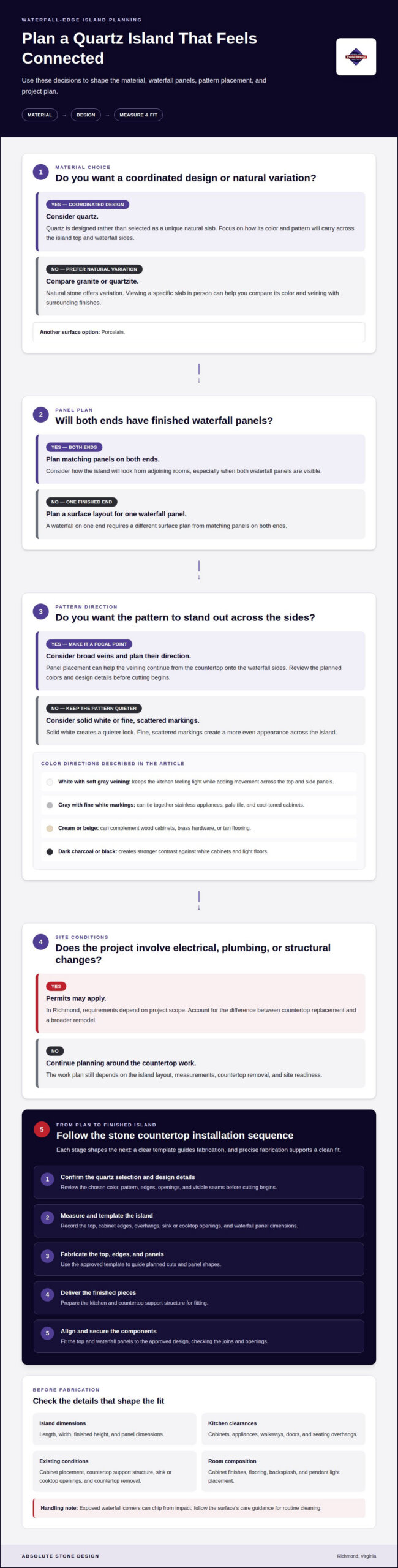
Start by defining the island’s shape and how many sides will have finished panels. A waterfall on one end requires a different surface plan from matching panels on both ends. The kitchen countertop layout matters too: a long island beside a full-height backsplash creates a different visual balance from a compact island with open sides.

Quartz pattern direction is another decision. If veining runs across the island top, panel placement can help create a coordinated appearance. Natural stone, including marble, varies from slab to slab, so selecting a particular piece helps define the final look. At a Richmond showroom, viewing a slab in person makes color, veining, and surrounding finishes easier to compare.

Existing conditions shape the work plan. Cabinet placement, countertop support structure, and sink or cooktop openings all affect fabrication details. For example, the sink location must be incorporated into the island design. If the project involves countertop removal, coordinate that work before fitting the new surface.

Let daily use guide the island’s details. A seating overhang affects how people gather, while nearby appliance doors need space to open. Pendant lights can make the island a focal point, so consider their placement in relation to the surface. In Richmond-area homes with open kitchens, check how the waterfall panels look from adjoining rooms. Cabinet finishes, flooring, and a nearby marble backsplash also shape the overall composition, helping the island feel connected to the room.

Custom Quartz Fabrication and Installation

Once the design is set, fabrication turns the approved plan into finished quartz pieces. Installation then fits the island components into the kitchen.

Custom Countertop Fabrication

Fabrication begins with the approved template and quartz selection. The fabricator plans the island top and waterfall panels as connected pieces, accounting for edges, openings, and visible seams. If the chosen pattern has prominent veining, panel placement can help create a coordinated appearance. Review the colors and design details during stone fabrication approval, before cutting begins. In-house fabrication keeps the planned details connected to the finished pieces.

Countertop Installation Service

During countertop installation, the team brings the fabricated pieces into the kitchen and positions them on the prepared countertop support structure. The top and side panels must follow the approved design, including the island’s edges and any sink or cooktop openings. Careful handling protects exposed corners. The team checks the fit and joins the pieces so the waterfall reads as one intentional design.

  1. Confirm the approved quartz selection and design details.
  2. Use the template to guide the planned cuts and panel shapes.
  3. Fabricate the island top, edges, and waterfall panels.
  4. Deliver the finished pieces for fitting in the kitchen.
  5. Align and secure the components during countertop installation.

Each stage shapes the next: a clear template guides fabrication, and precise fabrication supports a clean fit. For example, matching veining across the top and side starts with panel planning and continues through cutting and installation.

Waterfall Edge Quartz Islands in Richmond, VA: Costs and Choices

White quartz with soft gray veining is a familiar choice for waterfall islands. It keeps the kitchen feeling light while adding movement across the top and side panels. Solid white creates a quieter look beside detailed cabinetry. Gray with fine white markings can tie together stainless appliances, pale tile, and cool-toned cabinets.

For a warmer palette, cream and beige quartz can complement wood cabinets, brass hardware, or tan flooring. A subtle pattern adds depth without competing with a stone backsplash. Dark charcoal or black surfaces create stronger contrast against white cabinets and light floors, making the island’s shape stand out, especially when both waterfall panels are visible.

Pattern direction matters as much as color. Broad veins can become a focal point as they continue from the countertop onto the waterfall sides, while fine, scattered markings create a more even appearance. Before fabrication, consider how the pattern will meet at the island’s corners and where seams may fall. The same color can look different across a large island than in a small sample.

Compare quartz samples with your kitchen’s fixed finishes, including cabinet doors, flooring, and backsplash tile. View them in daylight and evening light, as lighting can change how whites and grays appear. Warm wood with cream quartz creates a softer palette, while black quartz with white cabinets feels more graphic. Consider the island top, side panels, and surrounding finishes together.

Choosing Quartz for Your Kitchen Island

Choose an island surface by balancing appearance, daily routines, and the look you want across the waterfall sides. Quartz offers designed colors and patterns, while natural stones have distinctive variation. Decide whether you prefer a coordinated surface or the individual character of a particular slab, and consider how the island will relate to nearby counters and cabinetry.

Granite, marble, and quartzite are natural stones, so their colors and markings vary from slab to slab. Viewing the specific slab helps you understand the pattern that will shape the island. Granite is easy to clean and can last for decades. Marble brings its own natural character, while quartzite offers another natural-stone option to consider.

Quartz and porcelain offer alternatives to natural stone. Choose by comparing the look you want with the surface care that suits your household. Ask how to handle routine cleaning, then follow the guidance for your chosen material. For a waterfall design, consider how the surface will look across the top and exposed sides.

Before deciding, compare full-size views when possible, not just small samples. Look at the material beside cabinet finishes, flooring, and backsplash choices. Then consider pattern continuity, visible seams, and the island’s role as a focal point. A quiet surface lets cabinetry stand out, while stronger veining draws attention to the island. Choose a surface that suits your kitchen’s style and how you use the space.

Your next step is to turn the island idea into a clear design direction. Consider how the quartz pattern should carry across the top and waterfall sides, and how the finished island will complement your kitchen. A waterfall edge quartz island in Richmond, VA, feels at home when its details are planned around your space and style.

Absolute Stone Design offers countertops in quartz, granite, and marble, giving you material options to consider for your project. The team’s hands-on experience with measuring, in-house fabrication, and installation helps carry approved design details through to the finished surface.

Bring your preferred look and project plans together, then take the next step with Absolute Stone Design. Your island can start with a thoughtful choice and become a distinctive part of the kitchen you enjoy every day.

Frequently Asked Questions

What does “waterfall edge” mean?

A waterfall edge continues the countertop surface down one or both sides of the island, creating a finished vertical panel. The design makes the island’s side part of its visible composition rather than leaving the cabinet end exposed. It can frame the island as a distinct feature, especially in kitchens where its sides are visible from adjoining spaces.

Can a waterfall edge suit a traditional kitchen?

Yes. A waterfall island can suit different kitchen styles when its surface, cabinetry, and surrounding finishes work together. In a traditional room, a quieter quartz pattern and classic cabinet details can keep the island connected to the existing design. Treat it as part of the room’s character, rather than as a separate trend-led feature.

Can I preview design options before making a selection?

Absolute Stone Design’s kitchen and bath visualizer tool helps you preview options and explore possible combinations before making final decisions. Use it to develop a general direction, then consider how the selected surface and finishes look together in your kitchen’s lighting and beside its existing materials.

Do the island and perimeter countertops need to match?

No. A coordinated kitchen can use a different surface or color on the island, as long as the materials feel intentional together. A distinctive island can stand apart while perimeter counters take a quieter role. Repeating a finish in cabinet hardware or a nearby accent can connect the two areas without making them identical.

How can I make the island a focal point without overwhelming the kitchen?

Give the island one clear design feature, such as a waterfall side or distinctive surface, and let other finishes play a supporting role. If the cabinetry has strong detailing, a restrained island pattern can balance the room. In a simpler kitchen, the island can bring more visual interest while still relating to the surrounding finishes.

What should I bring to an initial design conversation?

Bring inspiration images, cabinet or flooring samples, and any kitchen plans you have. Room photos can help communicate the current layout and finishes. If you’re working with an interior designer or remodeling collaborator, their design direction can help align the island with the wider project. These references make it easier to discuss the look you want.

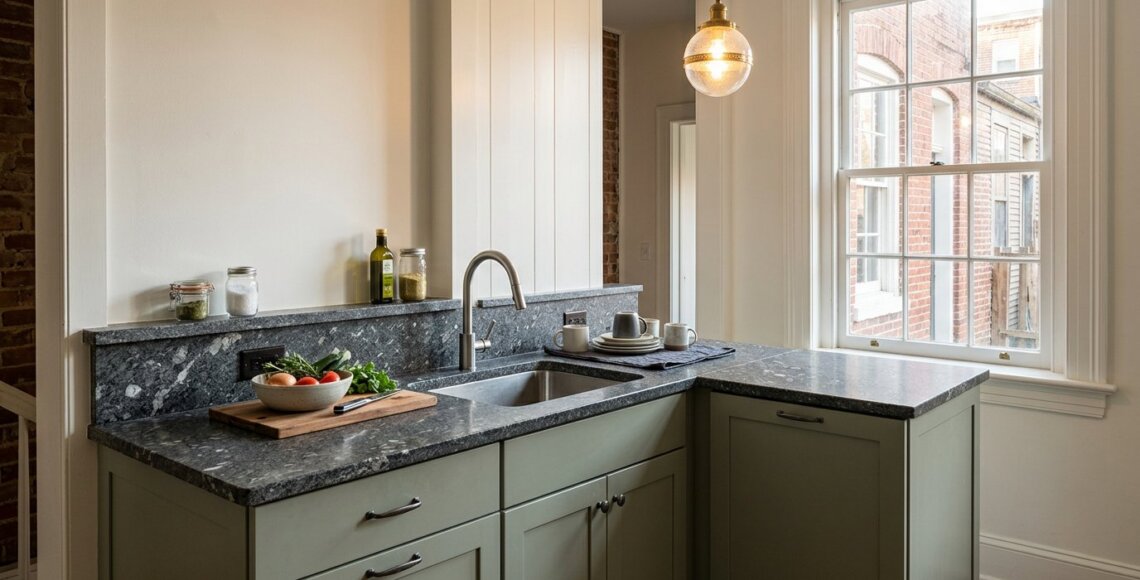
Charcoal-gray granite countertop with natural mineral flecks in a Richmond rowhouse kitchen

Granite Countertop Colors for Your Room and Lasting Appeal

The best granite countertop colors complement your cabinetry, lighting, and overall palette while still feeling right for years to come. White granite can bring creamy tones and subtle gray veining into a room, while gray options range from soft neutrals to dramatic dark patterns. Explore how color shapes a space, what to consider for lasting appeal, and why viewing the full slab helps you choose with confidence.

Key Takeaways

  • Compare white and gray granite patterns, from subtle veining to bold mineral flecks, to find the look that suits your room.
  • View the full slab and consider whether its pattern is one you’ll enjoy for years.
  • Assess colors beside your cabinetry and in different lighting, since daylight and indoor light can change how a stone appears.
  • Choose a countertop shade with both your room’s palette and your everyday preferences in mind; darker surfaces may make dust and water spots more noticeable.

White and gray granite color options

White granite ranges from creamy to bright, and its mineral patterns make every slab distinctive. White Spring has a creamy base with light gray veins, while New River White pairs soft white with delicate gray lines. Bianco Frost features black, gray, and rust-colored speckles. Pure white granite is rare, so expect natural variation rather than a completely blank surface.

For a lighter kitchen, White Sand blends beige and gray with darker flecks, while White Ornamental has brown and beige specks. Steel Grey offers dark gray tones and a subtle pattern. Black granite creates a deeper look, while brown granite often features warm, earthy shades. Blue granite can contain minerals that catch the light and create depth that photographs may miss.

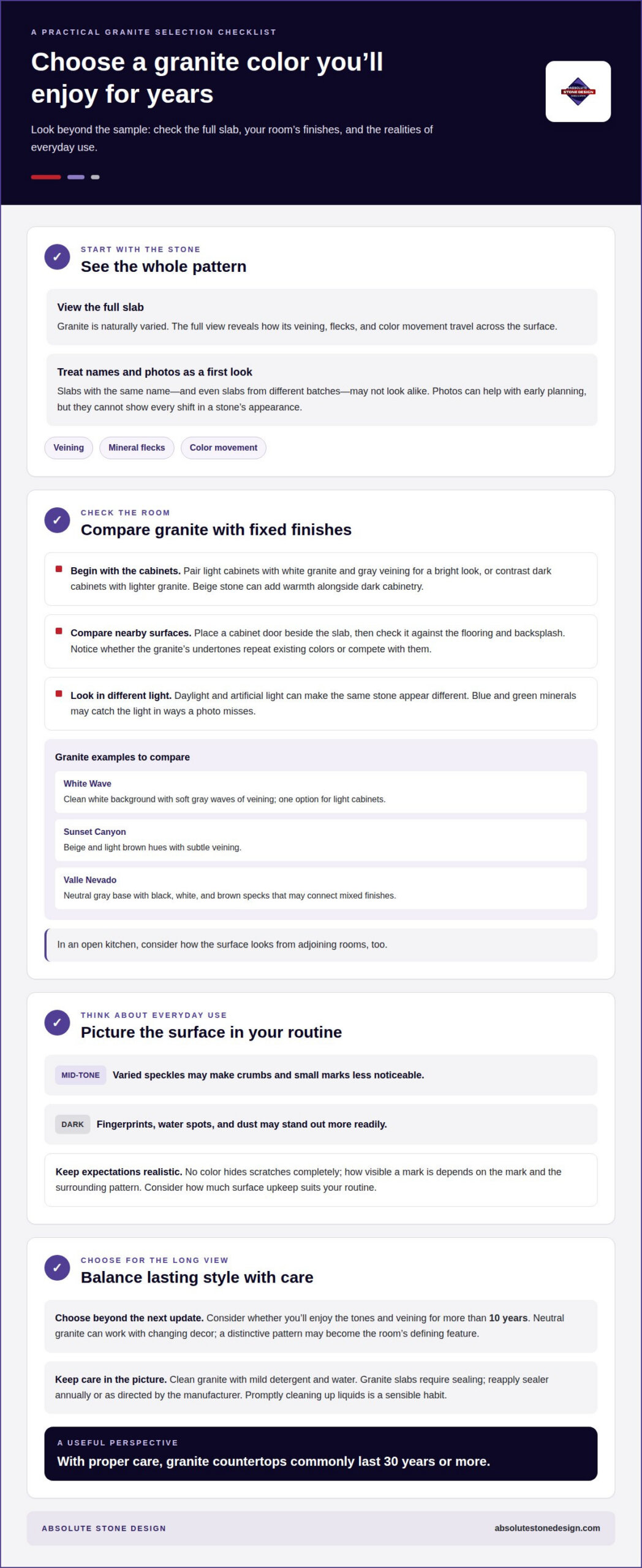
Quartz generally has more consistent color and requires less maintenance than granite, according to JOEH, LLC. Granite’s natural mineral patterns vary, so slabs with the same name may not look exactly alike. Differences can also occur between batches. Review the actual slab to see its veining, flecks, and color movement before choosing.

Some granite colors can be harder to find because availability depends on the stone and its quarry source. Brown and beige granite are often widely available. Since color names do not guarantee an exact match, assess the specific slab instead of relying only on a sample.

For routine care, clean granite with mild detergent and water. Granite slabs require sealing, so reapply sealer annually or as directed by the manufacturer. The U.S. Environmental Protection Agency notes that liquid may enter granite’s pores or bond strongly to its surface, making prompt cleanup a sensible habit.

Repair options depend on the damage. A small chip may be filled with color-matched stone epoxy, while a crack needs assessment to determine an appropriate repair. Avoid abrasive cleaners around a repaired area, and follow the repair professional’s care instructions.

Snowfall has a white background speckled with gray and black minerals. Bianco Frost has a creamy white background with black, gray, and rust-colored speckles. White Valley has a smooth, light background with subtle gray veining.

Stream White has a soft white background with delicate gray and light brown veins. White Wave has a clean white background with soft waves of gray veining. Steel Grey is dark gray granite with a smooth texture and subtle pattern.

Choosing granite for long-term appeal

A granite pattern can feel striking in a sample but look different across a full counter. Each slab is unique, so you should consider the overall movement, mineral contrast, and balance of colors. Viewing the full slab gives a clearer sense of how patterns will run across the kitchen or bathroom. Choose a color you expect to enjoy for more than 10 years, not only one that matches a temporary accent.

Consider daily cleanup, too. Mid-tone granite with varied speckles can make crumbs and small marks less noticeable than a uniform surface. Dark granite tends to show fingerprints, water spots, and dust more readily. No color hides scratches completely; visibility depends on the mark and the surrounding pattern. Consider how much surface upkeep suits your routine before deciding.

Long-term appeal also depends on how the stone works with lasting room elements. Compare the slab with cabinet colors, flooring, and backsplash materials, then picture the combination if you repaint or replace hardware. A neutral granite can suit changing decor, while a distinctive pattern may become the room’s defining feature. With proper care, granite countertops commonly last 30 years or more.

Follow this practical selection sequence to balance appearance with everyday use:

  • View the full slab to assess its pattern and color movement.
  • Compare it with cabinet finishes and other fixed surfaces in the room.
  • Consider whether its tones and veining suit your preferred look beyond the next renovation.
  • Picture routine crumbs, spills, and dust against the surface before settling on a shade.

For a kitchen used throughout the day, prioritize a pattern and tone that feel comfortable to live with, not just dramatic at first glance. If you’re considering a natural-stone surface, explore granite countertop options as you narrow your selection.

Use a small sample as an initial reference, then review the full slab before choosing. The broader view makes it easier to assess how the pattern travels across the stone, rather than relying on a limited glimpse. This closer look can help you decide whether the overall effect suits your room.

Granite Countertop Colors for Your Room and Lasting Appeal

Granite color selection for room design

Start with your cabinets, then choose granite that complements or contrasts with their finish. With light cabinets, white granite with gray veining can keep the room bright while adding pattern. White Wave pairs a clean background with soft gray movement. Dark cabinets can contrast with lighter granite or blend with warm beige stone.

For example, Sunset Canyon combines beige and light brown hues with subtle veining, while Monte Cristo adds darker speckles and veins. These natural patterns can echo wood floors, cabinet undertones, or nearby tile. Valle Nevado has a neutral gray base with black, white, and brown specks, which can help tie together mixed finishes.

Granite color also responds to room lighting. Daylight and artificial light can make the same stone appear different, so view a sample in both conditions. Blue and green minerals may catch the light and create depth that photographs do not capture. Photos are useful for early planning, but they cannot show every shift in a stone’s appearance.

To assess a pairing, place a cabinet door beside the granite slab, or compare the slab with a clear cabinet photo. Check the combination near the flooring and backsplash, too. This shows whether the granite’s undertones repeat existing colors or compete with them. In an open kitchen, consider how the surface looks from adjoining rooms.

Use these pairings as starting points, not fixed rules:

  • Light cabinets with White Wave can create a bright, softly patterned setting.
  • Dark cabinets with beige granite can bring warmth and contrast into the room.
  • Mixed gray, brown, and black finishes may connect with Valle Nevado’s varied minerals.

Choose a combination that supports the room’s existing palette and the atmosphere you want, whether calm, warm, or dramatic.

Granite selections often center on white, gray, black, and warm beige or brown. Each palette offers a different balance of contrast and pattern, with no single look suited to every room. White Galaxy pairs a bright background with black and gray specks. White Napoli has a warmer base with light gray veining, while white granite is rarely completely pure.

Gray options range from quiet neutrals to bolder patterns. Silver Waves mixes gray and black in swirling patterns, while Steel Grey has a dark gray tone and subtle pattern. Both can complement similar cabinet shades or contrast with lighter finishes. Brown and beige granite adds warmth through earthy tones and darker flecks.

Black granite can anchor a room with a deeper surface, but dark finishes tend to show dust, fingerprints, and water spots more readily. Blue and green varieties offer color and mineral depth that can shift with the light. Because every natural slab has its own markings, the same color family can feel calm or dramatic depending on its veining and flecks.

Use these examples to narrow down the look you want for your room:

  • Bright and defined: White Galaxy adds contrast with black and gray minerals.
  • Soft and warm: White Napoli brings gentle gray lines across a warm white base.
  • Moody and layered: Silver Waves combines dark tones with flowing movement.
  • Earthy and grounded: White Ornamental pairs a creamy base with brown and beige specks.

Names describe a general color direction, not an exact appearance. Look at the particular slab under the room’s lighting to understand its tone, pattern, and visual weight. Explore granite countertop options as you refine the palette for your space.

Absolute Stone Design: Countertops

Absolute Stone Design helps homeowners in Richmond, Henrico, Glen Allen, Midlothian, Chesterfield, and Charlottesville turn granite color choices into countertop plans. When you are ready to move from comparing patterns to planning a surface, the team provides measuring, in-house fabrication, delivery, and installation.

Granite is not the only option to consider. Absolute Stone Design also offers marble and quartz, giving you natural-stone and engineered options to compare as your project takes shape. The right choice depends on the look you want and how the surface will serve your home.

For help planning a countertop for your Richmond-area home, contact Absolute Stone Design.

Turn your color choice into a room plan

Your granite countertop colors can set the direction for the rest of the room. Once you have a favorite, consider how its tones could guide choices such as cabinet hardware, lighting, and decorative accents. A clear design direction can help later updates feel connected, even as individual details change.

Absolute Stone Design offers granite and marble countertops, giving you natural-stone options to consider as your project takes shape. The team’s stone selection and in-house fabrication services can help turn your preferred look into a countertop plan for your space. Whether you are updating a kitchen or adding a surface in another room, start with the colors and details that appeal to you.

Start planning your countertop project with Absolute Stone Design, and take the next step toward a room that feels distinctly yours.

Frequently Asked Questions

How do I choose the right granite color?

First decide whether the countertop should tie several finishes together or stand apart as a focal point. Then consider the visual weight of nearby materials. If a backsplash has a pronounced pattern, for example, quieter granite can help balance the room; a simpler backsplash leaves more room for a strongly veined surface. This gives your color choice a clear design role.

How can I choose a granite color using samples and full slabs?

Use a sample to narrow down the color family, then review the exact slab before fabrication. If your project needs multiple slabs, view them together and consider how their patterns will meet across the countertop runs. Discuss which sections are planned for the island and perimeter, too, to see how the selected stone will read across the design.

What lighting and kitchen features affect how granite countertop colors look?

Task lights can cast shadows across mineral patterns, while direct window light may bring out details that appear subtler in shaded areas. Consider where you prepare food and how light falls across those work zones. Ceiling fixtures, windows, and the direction of nearby light all affect the surface’s appearance, so pay attention to the areas where you spend the most time.

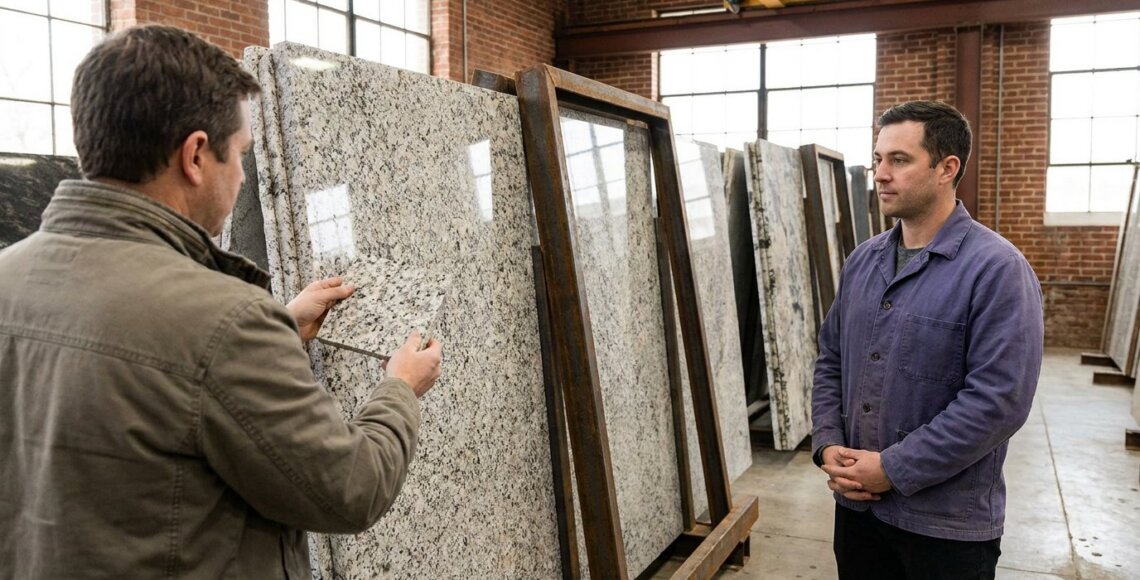
A Richmond homeowner compares a small sample with full-size granite slabs in a stone showroom.

Granite Countertops in Richmond, VA: Costs and Slab Selection

Yes, you can choose the exact natural-stone slab for your project. With granite countertops in Richmond, VA, each slab has its own pattern and color variation, so viewing the specific stone helps you picture the finished space. One Richmond customer review describes a project completed from the first phone call to installation in ten days.

The stone’s appearance is only one part of the decision. Project pricing depends on factors such as dimensions, material, cutouts, edge details, and backsplash work; a quote reflects the specific scope.

It’s natural to want a countertop that suits your home and a clear understanding of the practical details. This guide explains what affects custom countertop pricing, how to compare materials and select a slab, and what shapes installation timing, so you can plan your Richmond project with confidence.

Key Takeaways

  • See which project details shape a custom countertop quote, from the material and layout to the fabrication choices.
  • Learn how granite, marble, and quartz differ so you can narrow your material options to suit your home.
  • Understand which steps and project conditions can affect installation timing for kitchen, bathroom, fireplace, and outdoor countertops.
  • Get a clearer sense of how to plan a Richmond-area countertop project from material decisions through installation.

How much do custom countertops cost in Richmond, VA?

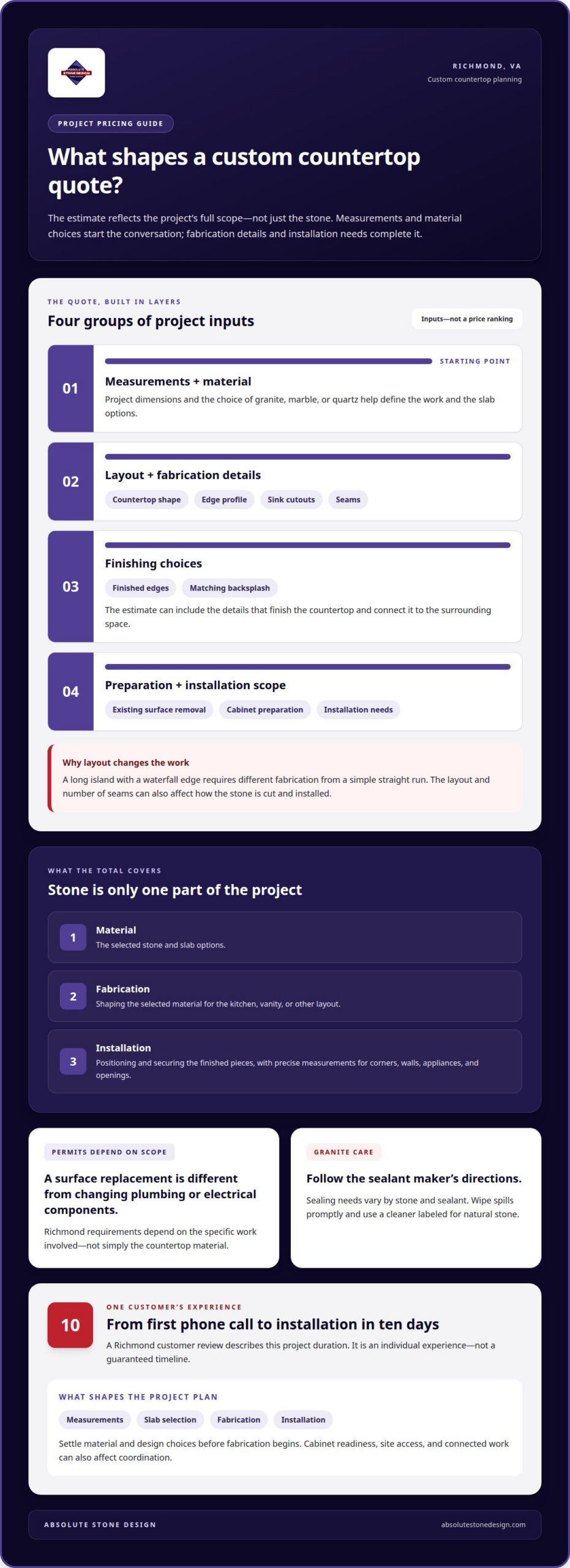
Custom countertop pricing starts with the project measurements and material choice. Granite, marble, and quartz each involve different slab options and fabrication needs. A quote also accounts for the countertop’s shape, edge profile, sink cutouts, and backsplash details. For example, a long island with a waterfall edge requires different fabrication from a simple straight run. The layout and number of seams can affect how the stone is cut and installed. Removing an existing surface or preparing cabinets may also change the project scope.

The total covers more than the stone itself. Fabrication shapes the selected material for your kitchen or vanity, while installation positions and secures the finished pieces. Precise measurements account for corners, walls, appliances, and openings. A custom countertop project can also include finished edges or a matching backsplash. The estimate depends on the material, dimensions, layout, cutouts, edges, backsplash, and installation needs.

Are permits required to replace kitchen countertops in Richmond, VA? It depends on the work involved, not simply the countertop material. A surface replacement differs from a project that also changes plumbing or electrical components, so Richmond requirements depend on the specific scope.

How should granite countertops be sealed and maintained? Sealing needs vary by stone and sealant, so follow the sealant maker’s directions. Wipe spills promptly and use a cleaner labeled for natural stone to care for granite.

Customer experiences can show how a project may unfold, but they don’t establish a standard schedule. One Richmond customer review describes a countertop project completed from the first phone call to installation in ten days. That is one customer’s experience, not a guaranteed timeline. For granite countertops in Richmond, VA, measurements, slab selection, fabrication, and installation all shape the project plan. Settling material and design choices helps define the work before fabrication begins.

Stone countertop materials and slab selection

Start with the material’s appearance, care needs, and how each slab will fit your design vision. Granite, marble, and quartzite are natural stone, so veining, color, and movement vary from slab to slab. For these materials, selecting the exact slab helps you see the pattern that will become your finished surface. A premium stone may have striking movement, while a quieter slab can keep attention on cabinetry and lighting.

How does granite compare with quartz and quartzite for cost, durability, and maintenance? Cost depends on the selected material, slab, layout, and fabrication, rather than a single statewide rate. Wiley describes engineered-stone countertops as durable, affordable, and easier to maintain than natural stone; granite and quartzite are natural stones with individual patterns.

Which granite colors and slab styles are popular in Richmond, VA? No single local style suits every kitchen, so consider how warm beige, gray, or darker tones work with your cabinets and floors. A broad, flowing pattern can make an island a focal point, while fine speckling gives surrounding surfaces a more restrained look. Bring a cabinet or flooring sample to compare colors directly.

Where can I view granite slabs near Richmond, VA? View the exact slab as part of your stone selection, rather than relying only on a small sample or photograph. This matters because natural stone’s pattern can shift across the full slab. For a project in Virginia, countertop material selection can help connect your preferred stone with the finished layout.

Quartz offers a different selection process because its engineered pattern is designed for a more consistent appearance. Compare samples in the room’s lighting, then consider edge shape, seams, and how the pattern will meet around a sink or corner. A responsive selection process keeps those details aligned with your design and practical needs. Highly recommend viewing full slabs before settling on natural stone, especially when a prominent vein or color contrast matters.

Granite Countertops in Richmond, VA: Costs and Slab Selection

How long does countertop installation take?

Countertop installation is one stage in a longer sequence: material selection, measurements, fabrication, delivery, and fitting. The time between stages depends on the material, layout, and preparation. A kitchen with an island, sink openings, and several corners requires different fabrication from a single straight bathroom vanity. Installation itself is only part of the overall schedule.

For a kitchen, accurate measurements account for cabinet edges, appliances, sink placement, and wall angles. After fabrication, installers position the pieces, join seams where needed, and fit the countertop around cutouts. A change in sink choice or cabinet setup can affect the sequence because the finished surface must match the final layout. A clear design and ready cabinets help keep each step coordinated.

Bathroom countertops may be smaller, but a vanity still needs precise sink and faucet openings. A remnant can suit a compact vanity if its dimensions and pattern work with the layout. The finished edge, backsplash, and wall alignment also shape fabrication. For a bathroom project that includes tile work, coordinating the countertop and wall finish helps the components meet cleanly.

Fireplace surrounds require careful attention to the opening, hearth, and adjacent wall surfaces. Measurements and cutouts must follow the design so the stone fits without disrupting the room’s lines. Outdoor countertops bring another consideration: the selected material and installation details need to suit the intended location. Site access and countertop shape also affect delivery and fitting.

To understand your project schedule, distinguish fabrication from installation day. Confirm the final material, layout, sink or appliance openings, and edge profile before fabrication begins. Then plan around cabinet readiness, site access, and connected work. A countertop in a prepared kitchen follows a different path from a bathroom vanity coordinated with tile or an outdoor surface requiring additional site planning. These steps clarify what must happen before the finished surface is ready for use.

Granite countertops in the Richmond area

Granite countertops in Richmond, VA, call for choices that connect the stone’s natural character with your room’s layout. A slab selected for a kitchen island may look very different from one used on a narrow bathroom vanity. Look at the full surface, not just a small sample, and note where strong veins or color changes fall. These details can guide seam placement, sink openings, and finished edges.

What granite countertop companies serve Richmond, VA? Fabricators and installers in the area handle steps such as measuring, cutting, and fitting stone. A useful project sequence is straightforward: choose the slab, confirm the layout, complete fabrication, then install the finished pieces. For a commercial counter or home kitchen, these steps connect the design to the actual space. Learn more about stone worktop supply, fabrication, and installation.

Richmond projects also benefit from decisions based on how the room will be used. A busy kitchen may call for a practical edge profile and a pattern that works with the cabinets and flooring. A bathroom vanity may put more emphasis on the sink opening and backsplash. Natural stone varies from slab to slab, so matching the specific piece to your design helps create a cohesive result. Careful fabrication and installation show in the alignment of edges, seams, and cutouts.

Before fabrication, settle the slab, layout, edge, and cutout positions. These choices give the finished surface a clear design direction and help avoid changes after cutting begins. The result can be beautiful without relying on elaborate details; a simple granite pattern can make an amazing focal point when it complements the surrounding room. For help planning a Richmond granite project, start a granite countertop project.

Absolute Stone Design: Countertops

Absolute Stone Design helps you choose countertops that suit your home, preferred material, and room design. If you’re weighing granite’s natural variation against marble’s distinctive veining or quartz’s more consistent appearance, the team can help you consider what fits your project. Choices about color, pattern, and edge detail bring the surface into harmony with your cabinets and flooring.

Turn to Absolute Stone Design when you’re ready to move from ideas to a countertop project. Whether you’re updating a kitchen surface or planning a bathroom vanity, you can discuss the material and look you have in mind. Start with how you want the room to feel and function.

Contact Absolute Stone Design to discuss your countertop project.

Shape a countertop plan around your home

A countertop is part of daily routines, from setting out breakfast to gathering around the kitchen island. Before moving forward, decide what matters most in your space: a distinctive natural pattern, a particular color relationship with your cabinets, or a surface suited to everyday use. That priority can guide your choices while keeping the room as a whole in view.

For granite countertops in Richmond, VA, consider how the stone will look beside existing finishes and where its most noticeable patterns should appear. Discuss your preferences, room, layout, and material with Absolute Stone Design. The company offers granite and marble countertops to suit a range of project plans.

Ready to take the next step? Contact Absolute Stone Design about your countertop project and begin shaping a surface that feels at home in your space.

Frequently Asked Questions

Can I pick my exact slab?

Yes, you can select the specific granite, marble, or quartzite slab for your project. Natural stone varies from slab to slab, so choosing the actual piece lets you consider its color and pattern. For example, you can choose veining that works with the direction of a kitchen island or the scale of a bathroom vanity. That choice helps shape the finished design.

Do you offer free estimates?

Request a quote for project-specific countertop pricing. The estimate reflects the scope, including material, measurements, cutouts, edge details, and installation needs. For example, a countertop with a sink opening and a full-wall backsplash involves different work from a simple vanity surface. Share the project details so the quote reflects its requirements.

What areas do you serve near Richmond?

Absolute Stone Design serves Richmond, Henrico, Glen Allen, Midlothian, Chesterfield, and Charlottesville. Local projects include kitchen countertops in Henrico and bathroom surfaces in Midlothian. Your project location helps shape planning for measurements, fabrication, and installation. Mention your city and the room you’re updating when you request project pricing.

What countertop materials do you offer?

Countertop materials include granite, marble, quartz, and quartzite. Granite, marble, and quartzite are natural stone, while quartz is engineered stone. Your choice can reflect the look you want, such as natural veining for a statement island or a more consistent pattern across adjoining counters. Material selection also shapes fabrication and care considerations for the finished surface.

How much do granite countertops cost per square foot in Richmond, VA?

Granite countertop pricing per square foot depends on the selected slab and the work required for your layout. Measurements, sink or cooktop cutouts, edge profiles, seams, and backsplash details all affect the project scope. A compact vanity and a kitchen with an island have different fabrication needs. Request a quote based on your specific design.

How long does granite countertop installation take in Richmond, VA?

The full project timeline depends on the sequence from final measurements and slab selection through fabrication and installation. Installation day is only one part of the process. A kitchen with an island, multiple cutouts, and several seams has different requirements from a straightforward bathroom counter. Finalized design choices and ready cabinets help establish the work sequence.