Quartzite Colors, Durability, Care and Sealing Needs
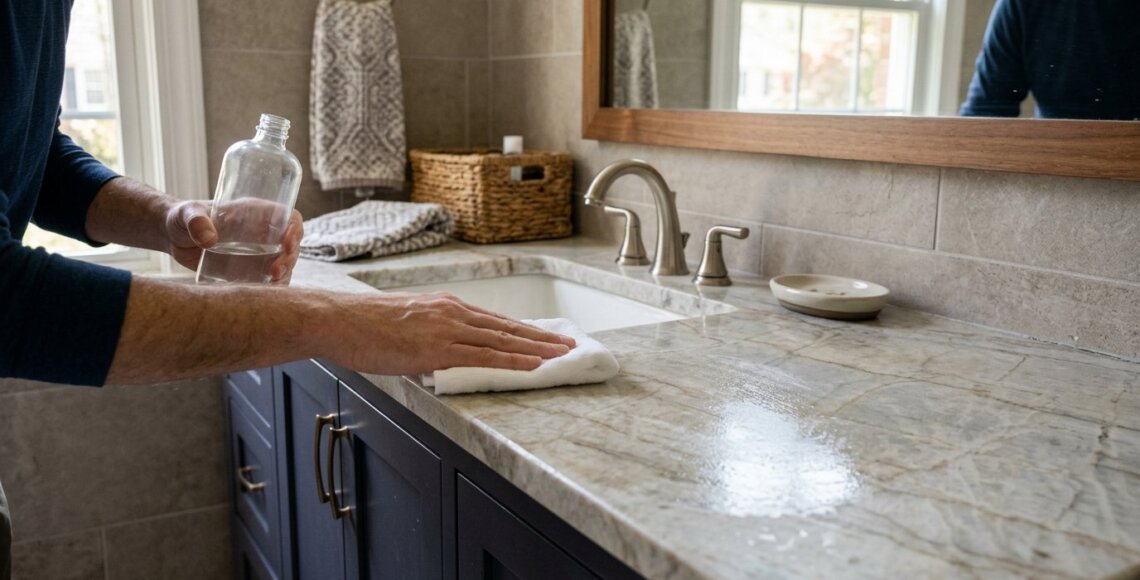
Yes, quartzite generally needs periodic sealing to help protect its porous surface from stains. Wipe spills promptly and avoid harsh or acidic cleaners. To understand what quartzite is, start with its geology: heat and pressure transform quartz-rich sandstone into a dense natural stone. This differs from engineered quartz, which combines mined quartz with resin and pigments. Quartzite’s minerals create natural colors and veining, so slabs range from calm, pale backgrounds to more expressive patterns. It can bring a refined look to a kitchen or bath and offer strong everyday durability, but no natural surface is maintenance-free. This article explains how quartzite’s composition shapes its appearance and performance, how it compares with quartz, and what routine care and sealing involve, helping you decide whether its character and upkeep suit your home.
Key Takeaways
- Learn how mineral traces influence a slab’s color and pattern, and what to look for when choosing a finish that suits your space.
- Understand how natural stone formation differs from engineered quartz, so you can compare the materials with greater confidence.
- Get practical guidance on everyday care and the habits that help protect a stone countertop from stains and surface damage.
- Consider how each material’s characteristics fit your home’s style, daily use, and maintenance preferences.
Natural quartzite colors and mineral impurities
Natural quartzite often appears white, cream, or gray, with veins and patches that add movement across a slab. Iron-bearing minerals can create pink, red, or rust-colored areas, while other mineral impurities may contribute green or darker markings. The mix and distribution of minerals shape each stone’s colors, so even slabs from the same collection can have distinct patterns.
Veining can appear as soft, cloudy bands or sharper lines across the surface. A pale background with gray veining may feel quiet, while brown or gold streaks create stronger contrast. Cutting also affects how these patterns appear: the slab’s direction and the placement of cut pieces determine which veins continue across a countertop. Reviewing the full slab helps you see how its grains and markings will look in your space.
The finish also changes the look. A polished surface reflects light and can make colors seem more pronounced; honed stone has a softer, less reflective appearance. A leathered finish adds tactile texture and highlights variation in the stone. These finishes change how light meets the surface, not the minerals that give the rock its color.
Natural quartz crystals show a broader range of colors than the mostly pale appearance associated with many quartzite slabs. Clear, white, smoky, pink, and purple crystals are examples; trace elements and formation conditions influence their color. Quartzite’s appearance reflects the rock as a whole and its mineral impurities, rather than a single crystal.
Some quartzite, including Cristallo varieties, can transmit light and suit backlit designs. Transparency depends on the particular stone and its structure. In gemstone-quality material, cutting can reveal translucence or emphasize color, while a countertop slab may show cloudy areas, visible grains, or veining. Viewing the actual piece in different lighting helps reveal its colors, clarity, and pattern before you choose it.
What is Difference Between Quartz and Quartzite?
Quartzite and quartz share a mineral name but describe different materials. Their formation and composition explain key differences between the countertop options.
Composition and Metamorphic Formation
Quartzite is a natural metamorphic rock composed mainly of interlocking quartz grains. Its name describes the rock; quartz names a mineral found within it. This distinction matters when comparing quarried stone with engineered quartz. Natural quartzite forms in the earth, while engineered quartz combines mined quartz with resin and pigments. The materials therefore differ in composition and how they are made.
Geological Origins
Quartzite begins as quartz-rich sandstone buried and exposed to intense heat and pressure. During metamorphism, its original grains recrystallize and fuse, forming dense stone. This process can change the rock’s texture without making it a manufactured surface. For countertop decisions, that origin explains why quartzite is natural stone and why individual slabs can differ.
Formation from Sandstone
Quartz-rich sandstone contains 90% to 99% quartz grains. As heat and pressure act on the buried rock, the grains recrystallize and bind together, creating quartzite. The sandstone’s original structure changes, but quartz remains central to the resulting stone. This formation process helps explain quartzite’s hardness and why its natural surface can be resistant to everyday wear.
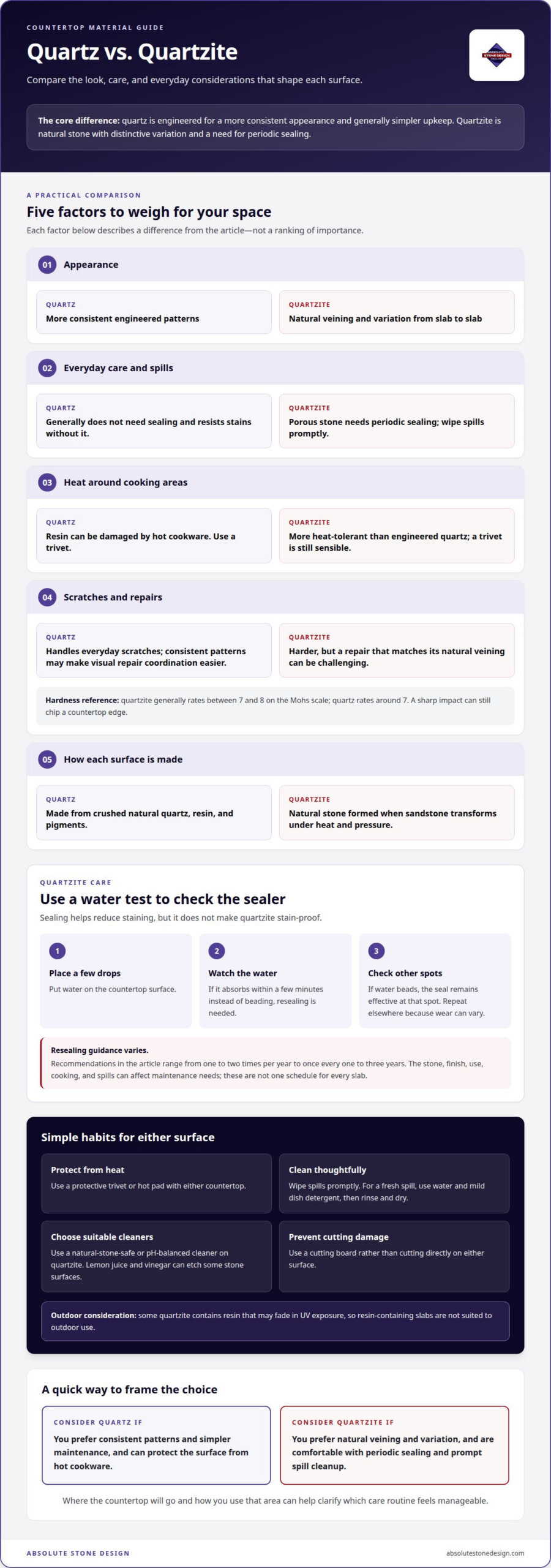
Engineered quartz follows a different path: manufacturers combine crushed, mined quartz with resin and pigments. It is about 93% quartz, while quartzite is a natural stone formed underground. That difference affects the material’s character and care. Quartzite can withstand high temperatures, while resin in engineered quartz can be damaged by excessive heat. A cutting board and prompt spill cleanup help protect either surface during daily use.

Quartzite countertop durability and maintenance
Quartzite has a Mohs hardness of around 7, making it resistant to everyday scratches. Is quartzite harder than granite? Quartzite generally ranks higher in hardness, while both natural stones resist heat and everyday wear. Formed under heat and pressure, quartzite is dense, but countertops can still chip or dent from impact. Use a cutting board, and avoid striking exposed edges with cookware.
What are the pros and cons of quartzite countertops? Their strengths include natural patterns, high heat tolerance, and hardness. The tradeoffs are periodic sealing and care to limit stains, chips, and dents. Quartzite’s porous surface can absorb spills, so wipe them promptly. Sealing helps protect against staining, but it does not make the countertop immune to damage.
Quartz countertops have different care needs because they contain resin. They’re often more stain-resistant than quartzite, but less heat-resistant; repeated exposure to temperatures over 500 degrees Fahrenheit may cause heat damage. Excessive heat can damage quartz countertops. A cutting board also helps prevent knife scratches. For routine cleaning, wipe quartz with a damp cloth. These differences matter if you regularly set hot cookware or prepare food directly on the counter.
Quartzite can suit countertops, kitchen islands, bathroom vanities, and bar tops, but each application brings different exposure to spills, heat, and daily wear. A busy kitchen island, for example, needs prompt spill cleanup and attention to its seal. An outdoor kitchen requires a separate evaluation based on the stone’s performance, local climate, and intended use. If your outdoor living plans also encompass an adjacent swimming area, industry specialists like Rod Cameron Pools provide helpful guidance on what to expect during surface restoration and maintenance. Gem-quality quartzite and countertop slabs serve different purposes: a translucent gemstone cut for light is not automatically suited to a work surface. Choose according to how you’ll use the surface, the appearance you want, and the care it requires.
Quartz and quartzite composition
Quartz is a mineral; quartzite is a metamorphic rock made mostly from quartz. That difference explains why a quartz crystal and a quartzite slab have distinct textures, even though both contain the same mineral. Quartzite is composed of more than 90% quartz, while the remaining minerals can vary. Those differences influence the stone’s color, veining, and other visible characteristics.
Heat and pressure transform quartz-rich sandstone into quartzite. Its grains recrystallize and become tightly interlocked, creating the stone’s crystalline texture. Mineral impurities, such as iron oxide, can add color, while a purer quartz-rich composition may look more uniform. The mineral mix varies from piece to piece, helping explain why natural stone slabs rarely have identical patterns.
Quartz has a crystalline structure and a chemical composition distinct from the full rock. In quartzite, quartz crystals are part of a larger mineral arrangement rather than a single specimen. This matters when comparing a crystal’s clarity with a slab’s overall appearance: other minerals and the arrangement of grains affect the stone’s color and texture.
For gem-quality quartzite, measured characteristics include a density of 2.64 to 2.69, a refractive index of 1.544 to 1.553, and birefringence of 0.009. These values describe how gemstone material behaves with light and measurement. They don’t explain every countertop’s appearance, since mineral variety and grain structure also shape each slab.
Composition can help explain what you’re seeing: a pale field with darker veins may reflect differences in mineral content, not a surface coating. Compare the whole slab under consistent lighting, then consider how its pattern will fall across your planned countertop. This gives you a clearer sense of the stone’s natural characteristics before choosing a particular piece.
Absolute Stone Design: Quartz
Absolute Stone Design can help you compare quartzite and quartz when planning countertops in Richmond, Henrico, Glen Allen, Midlothian, or Chesterfield. When weighing natural stone’s distinctive patterns against engineered quartz’s composition, start with how you use the space, the look you want, and the care each surface needs.
The team handles the process from measuring through delivery and installation, with stone fabrication completed in-house. This connected approach carries your material choice through to the finished countertop. Granite is also available if you’re considering another natural stone for your project.
Contact Absolute Stone Design to discuss your countertop plans.
Choose a Surface That Fits Your Home
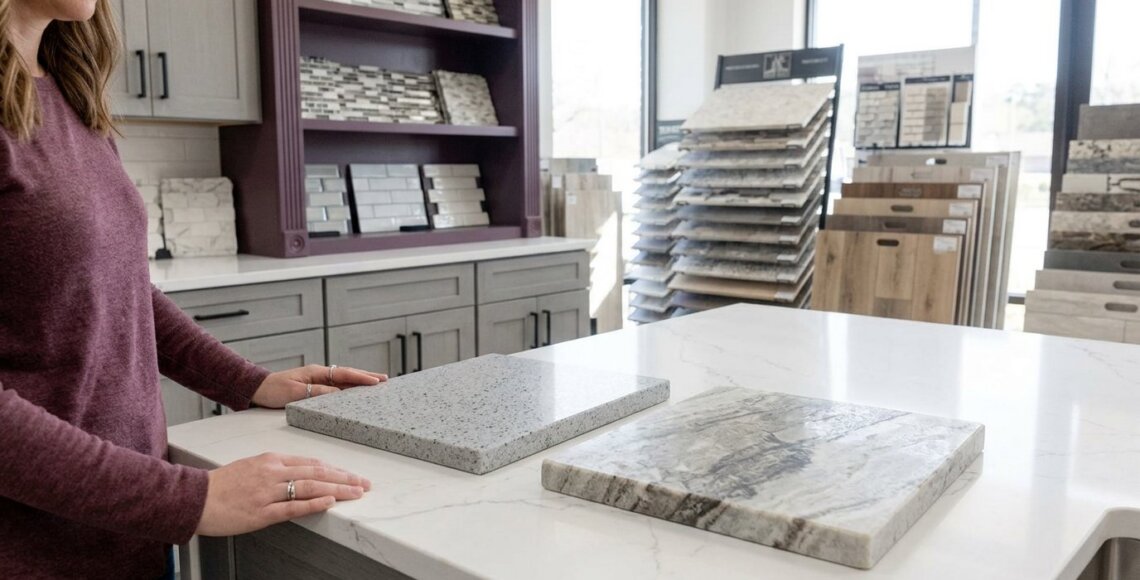
Understanding what quartzite is gives you a helpful starting point. Next, picture how the surface will work with the room’s lighting, cabinetry, and daily routines. A striking slab may look different beside your existing finishes, so consider the whole space as you shape your plans.
Absolute Stone Design offers quartzite, quartz, granite, and marble countertops for projects in Richmond, Henrico, Glen Allen, Midlothian, and Chesterfield. The team can help you think through your design direction and which material suits your needs. Bring your priorities, from the look you want to how you use the room, into the conversation.
Ready to take the next step? Contact Absolute Stone Design to discuss your countertop plans and move your project forward with confidence.
Frequently Asked Questions
Does quartzite need to be sealed?
Yes. Sealing is part of caring for a quartzite surface, but it should not be treated as a one-time finish. Before applying sealer, make sure the countertop is clean and dry, and choose a product intended for natural stone. Follow its label directions, including guidance on application and curing, to avoid affecting the finish.
Where Does Quartzite Come From?
Quartzite is quarried from natural deposits found in several countries, including the United States. In the U.S., deposits occur in the Appalachian Mountains, which extend through 13 states. That broad geological region means domestic quartzite can come from different locations, with natural variation from deposit to deposit. The origin may help explain why slabs vary in appearance, even within a similar color family.
What is quartzite and how does it form?
Quartzite is a natural metamorphic rock formed from quartz-rich sandstone. One useful way to understand its classification is through the British Geological Survey’s standard: a metamorphic rock is quartzite when it contains at least 80% quartz by volume. This threshold distinguishes quartzite from some quartz-rich rocks that may look similar but have a different geological identity.
How can you tell quartzite from marble or quartz?
Color and veining alone cannot reliably identify a slab, since quartzite and marble can look alike. For a renovation, use the material identification provided with the stone rather than relying only on a sample’s appearance. Compare the full slab with the selected sample, too, since natural patterns can vary. Clear material identification helps you match care expectations to the surface you choose.
Is quartzite heat-resistant and scratch-resistant?
Yes, quartzite resists heat and everyday scratching, but it is not immune to every kitchen hazard. Avoid sliding gritty cookware or small appliances across the surface, since trapped particles can abrade the finish. Place hot cookware carefully rather than dropping it onto the countertop. These habits help preserve the polished appearance without treating the stone as damage-proof.
Does quartzite need to be sealed, and how often?
Yes, but no single calendar interval suits every quartzite countertop. Follow the sealer’s care directions and note the product and application date so you can plan maintenance consistently. A sink area may encounter water more often than a lightly used counter section. Differences in use can affect when resealing is needed.