
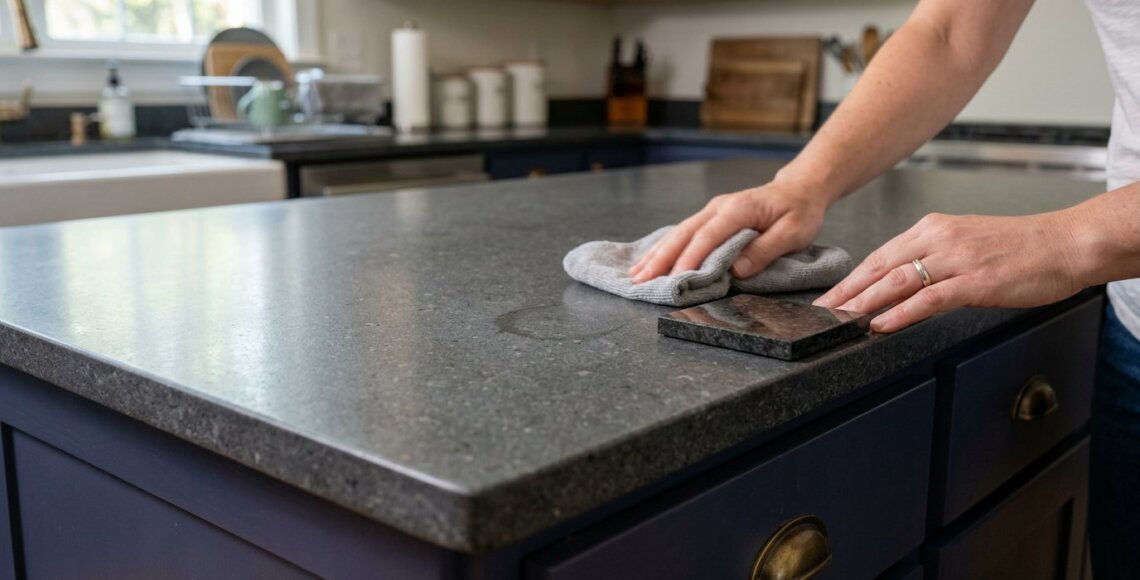
Honed or Polished Granite: Which Finish Fits Your Kitchen
Honed granite countertops have a smooth, matte surface rather than the glossy shine of polished granite. That understated look comes with a practical consideration: honed stone may be slightly more porous and vulnerable to staining. Both finishes showcase natural stone character, so the right choice depends on your preferred look and how you approach everyday care.
A nonreflective finish can make fingerprints less conspicuous, but water spots and smudges may still show. Regular wiping and thorough drying matter. Honed granite also needs attentive sealing, while acidic spills can etch the surface. Polished granite’s shine creates a different look and maintenance experience.
This guide compares the finishes for appearance, fingerprints, upkeep, stains, and etching, helping you picture how each could work in your kitchen and choose with confidence.
Key Takeaways
- Compare the soft, matte look of honed granite with polished granite’s reflective finish to see which better suits your kitchen’s style.
- Consider your cleaning routine: a muted surface may disguise some fingerprints, but water spots and smudges can still call for regular wiping.
- Learn how sealing, quick spill cleanup, and care around acidic foods can help manage honed granite’s vulnerability to stains and etching.
- Use your kitchen’s look and everyday demands to guide your finish choice, then explore how granite countertop design and installation can bring the plan together.
What Is Honed Granite?
Honed granite is natural stone ground with coarse abrasives, stopping before the surface is polished. Colors and patterns vary by slab, and darker granite can look lighter or grayer with a honed finish.
Smooth Matte Appearance
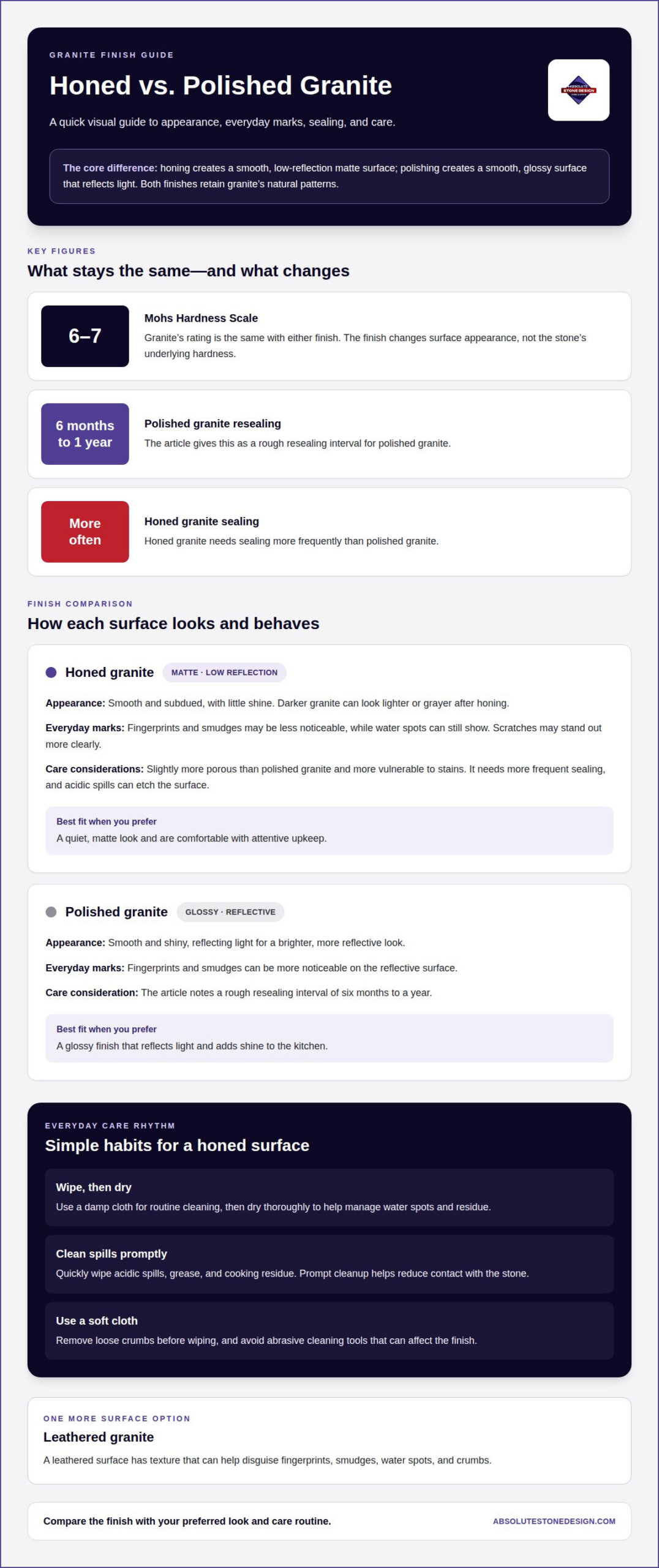
The surface feels smooth, with little shine or reflection. This matte appearance sets honed granite apart from polished granite, whose glossy finish reflects light. Across a large countertop, honed granite looks subdued, while polished granite can appear brighter and more reflective. Both finishes retain the stone’s natural patterns.
Decor Compatibility
Honed granite suits decor built around understated surfaces, such as kitchens with wood cabinets, simple hardware, or soft, muted colors. Its low-sheen appearance lets the stone’s natural pattern add interest without a glossy focal point. Polished granite may better suit a kitchen designed around shine and contrast. Since darker granite can look grayer after honing, consider how the finish will look beside your cabinets and backsplash.
Granite’s natural variety means each slab has its own color and pattern. A honed finish changes the surface appearance, not the underlying pattern, so veins, flecks, and color variation remain part of the stone’s character. Compare the slab with nearby kitchen materials to see how the pattern and finish work together.
| Finish | Appearance | Surface |
|---|---|---|
| Honed | Matte, subdued | Smooth, low reflection |
| Polished | Glossy, reflective | Smooth, shiny |
Choose honed for a quieter, matte look; choose polished if you prefer a glossy, light-reflecting surface.
Choosing a finish based on lifestyle and maintenance
Your kitchen routine can help settle the choice. Honed granite suits homeowners who prefer a low-sheen surface and are comfortable with regular care. Polished granite has a glossy finish, but its reflective surface can make fingerprints and smudges more noticeable.
Honed granite’s advantages include a muted look and fingerprints that may be less apparent. Trade-offs include more frequent sealing than polished granite and greater vulnerability to staining and etching. Clean up acidic spills promptly, and remember that scratches may show more clearly on a honed surface.
Before choosing honed granite for a kitchen countertop, consider whether you’ll maintain the sealant and wipe spills promptly. Polished granite should be resealed roughly every six months to a year; honed granite needs sealing more frequently. The right care routine depends on how you use the kitchen and maintain the surface.
Think about a typical day: cooking with citrus, setting down a glass, or wiping the counter after breakfast. Acidic substances can etch honed granite, and water spots or fingerprints may still show. A protective coaster and prompt cleanup can limit contact with spills, but they don’t replace regular sealing.
Granite’s Mohs Hardness Scale rating is six to seven, regardless of finish; the finish changes the surface appearance, not the stone’s underlying hardness. Compare your preferred look with the care you’re comfortable giving it. If you’re weighing finishes for your kitchen, explore granite countertop options as part of your decision.
Honed granite’s nonreflective finish may make fingerprints and scratches less noticeable than on polished granite. A leathered surface’s texture can help disguise fingerprints, smudges, water spots, and crumbs.
Fingerprints, grease, and dust on honed surfaces
Honed granite may disguise fingerprints better than polished granite, but water spots and everyday residue can still show. For routine cleaning, wipe with a damp cloth, then dry the surface thoroughly.
Fingerprints and Surface Imperfections
Because a honed finish reflects less light, fingerprints and smudges may be less noticeable than on glossy polished granite. But not every mark disappears: scratches can show more clearly on honed stone. A drag mark near a frequently used cutting area, for example, may stand out against the matte surface. Consider how visible wear will look beside your backsplash and its finish.
Water Spots
Water spots may be more visible on honed granite than you expect, even if fingerprints seem less prominent. Drops around a sink or a damp glass left on the counter can leave marks as water dries. Wipe the area with a damp cloth, then dry it thoroughly. This simple step helps remove visible spots and prevent residue from lingering.
Clean up grease and cooking residue promptly, too. After preparing a meal, wipe splashes near the stove and kitchen island with warm water and a soft cloth. Avoid abrasive cleaning tools, which can affect the stone’s finish. A quick wipe after cooking helps prevent ordinary buildup around food-preparation areas.
Dust and crumbs can collect along counter edges, beside appliances, or where the counter meets a backsplash. Remove loose debris with a soft cloth before wiping, so particles aren’t dragged across the stone. Dry the cleaned area rather than letting water evaporate. This routine is especially useful on a matte surface, where dried spots may catch your eye.
In short, honed granite can make fingerprints less conspicuous, but water spots and scratches may remain visible. Consistent wiping and thorough drying help manage everyday marks.
Honed granite’s susceptibility to stains and etching
Honed granite is slightly more porous than polished granite, so spills may stain it more easily. Knowing the difference between stains and etching helps you respond appropriately.
Stain Susceptibility
A stain occurs when a spill absorbs into stone, and honed granite may be more vulnerable than polished granite. Spilled cooking oil, for example, can leave a mark if it sits on an unsealed surface. Wipe spills promptly and maintain the sealant to help reduce absorption. A leathered finish has texture, but granite still needs protection from spills.
Etching Susceptibility
Etching differs from staining: acidic substances can affect the stone’s surface rather than simply leaving absorbed color. Lemon juice or vinegar, for example, should be wiped up promptly instead of left to sit. Honed granite can etch, so even durable stone needs care around acidic ingredients. Sealing helps guard against stains, but it doesn’t prevent etching.
Sealing Frequency
Honed granite countertops should be resealed at least annually, or even every few months, to help prevent spills and water from absorbing into the stone. Honed granite may need more frequent sealing than polished granite. Regular sealing supports stain protection, while prompt cleanup addresses spills between applications. Include both steps in your care routine.
Choosing granite for a kitchen means weighing its natural character against the care its finish calls for. Explore granite countertop options as you plan a surface that fits your kitchen and everyday routine.
Respond consistently: clean up spills quickly and maintain the sealant, since both steps help prevent stains on honed granite countertops. Treat them as parts of routine surface care rather than relying on either one alone. The goal is to reduce the chance of spills leaving stains.
Absolute Stone Design: Countertops
Absolute Stone Design helps turn your finish preference into a kitchen countertop plan. For homeowners in Richmond, Henrico, Glen Allen, Midlothian, Chesterfield, and Charlottesville, its design services connect visual goals with practical material selection. Bring cabinet tones, lighting, and backsplash ideas into the conversation, along with the care routine you prefer. These details help shape a considered surface choice that suits your kitchen.
After you choose a material and direction, Absolute Stone Design handles countertop measuring, templating, in-house fabrication, delivery, and installation. Precise measurements and templates account for the kitchen’s dimensions, countertop runs, and openings. This process carries your design choices through fabrication and fitting, planning the finished surface for its intended space.
Granite is one option; quartz and quartzite offer other material choices for your project. The right fit depends on the appearance you want and how you use your kitchen. If you’re drawn to granite, consider the finish alongside the stone’s color and pattern. Your preference for a matte or glossy look, and the upkeep you’re comfortable with, can guide your decision.
As your plans take shape, Absolute Stone Design can help bring the material and countertop details together. Discuss how your preferred finish suits the room and project layout before fabrication begins.
If you’re ready to discuss your kitchen countertop project, contact Absolute Stone Design.
Plan a Finish That Feels Like Yours
Your kitchen should feel considered, from the first impression to everyday details. As you decide whether honed granite countertops suit your plans, think about how the finish will work with your lighting, cabinet colors, and daily routine. Taking the whole room into account can help your selection feel cohesive.
The Absolute Stone Design team brings practical knowledge of stone selection and custom countertop projects, helping you shape a design around your preferences. A conversation can be a useful next step as you refine the direction for your kitchen.
Ready to keep planning? Contact Absolute Stone Design to talk through your ideas. Your kitchen can begin with one thoughtful choice.
Frequently Asked Questions
Can stone sealing change honed granite’s color?
It can affect the appearance. One reported experience described a lighter gray honed slab becoming darker after sealing. If preserving the stone’s original tone matters to your design, consider how a sealed sample looks beside your cabinet and backsplash colors before settling on the finished palette.
Can every granite color be honed?
No. Some granite colors may not suit a honed finish because their mineral content can compromise the slab’s integrity during finishing. Your preferred color and finish may not always be available together. Keep your overall design in mind and consider other granite options if a particular slab cannot take the finish.
Which cleaner is suitable for honed granite?
Use gentle, nonabrasive soap and warm water, or a specialty stone cleanser. Choose a cleaner made for natural stone rather than a harsh household product. Apply it with a soft cloth and follow the product directions to clean everyday kitchen residue without abrasive products.
What colors and patterns are available in honed granite countertops?
Colors and patterns vary by slab, and veins, flecks, and natural color variation remain. Darker granite may look lighter or grayer when honed.