
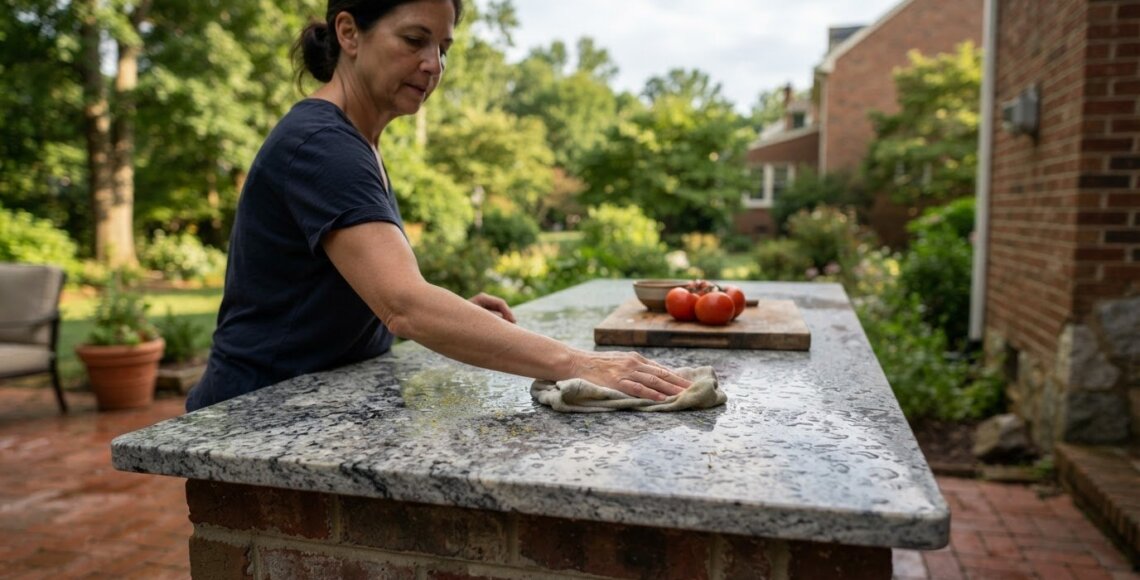
Outdoor Granite Countertops: Compare Costs, Climate and Care
The best outdoor countertop isn’t automatically granite. Outdoor granite countertops can bring natural character to an outdoor kitchen, but climate, finish, durability, and upkeep all matter when comparing materials such as quartz, concrete, and tile. Heavily veined granite may change in appearance outdoors if fillers react to UV light.
Look beyond color and pattern: a surface should suit both your design and the conditions where you’ll use it, as well as the level of care you’re comfortable with. Weigh these practical factors alongside the look you want.
Compare how materials respond to sun, rain, and freezing weather, then consider the care each requires. Use those factors to narrow the options for your outdoor kitchen.
Key Takeaways
- Compare granite, quartz, concrete, and tile by more than appearance; installation needs and upkeep also shape the overall decision.
- Match the countertop material and finish to local exposure, since sunlight and freezing weather can affect surfaces differently.
- Plan for routine care and outdoor spills when weighing durability, and consider how surface texture may affect the look of everyday debris.
- Use the decision guide to narrow your options around your outdoor kitchen’s setting, design, and practical needs.
Countertop planning
Compare the full installation scope, not just the surface material. Granite, concrete, and tile involve different fabrication and fitting needs, while cutouts, edge profiles, seams, and the countertop support structure can affect the project plan. A sink opening, for example, adds detail that a simple straight counter run doesn’t require.
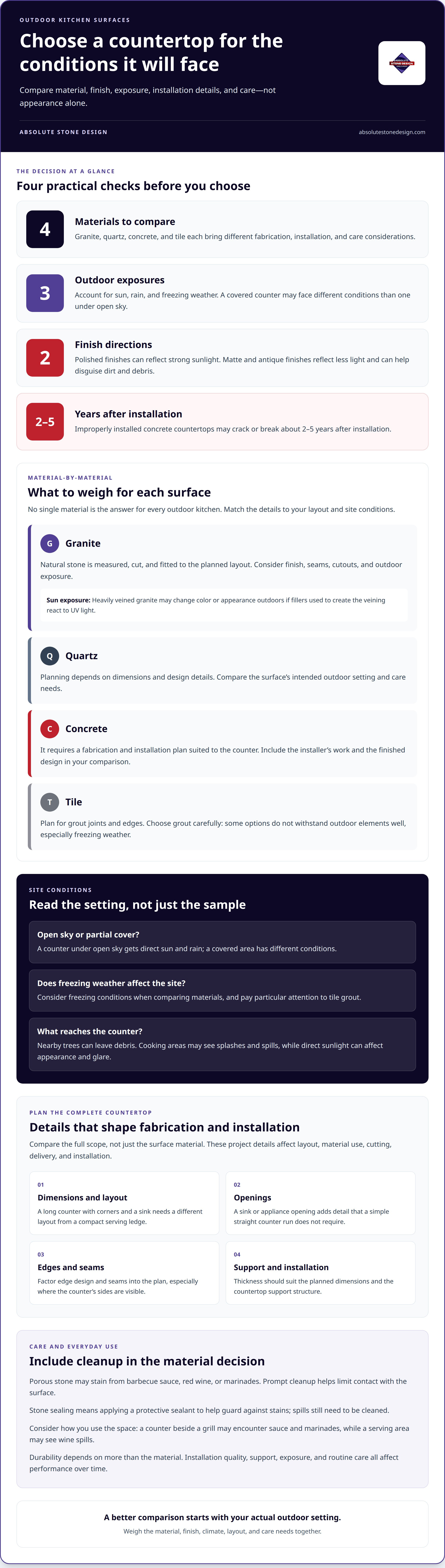
Granite and other stone surfaces are fabricated to fit the planned dimensions. Tile adds grout joints, while concrete requires a different fabrication approach. A long counter with several corners and a sink needs a different layout from a compact serving ledge. These details affect material use, cutting, delivery, and installation. A polished finish can reflect strong sunlight; matte and antique finishes reflect less light and can help disguise dirt and debris.
| Option | Fabrication and installation considerations | Useful comparison |
|---|---|---|
| Granite | Natural stone is measured, cut, and fitted to the planned layout. | Consider finish, seams, cutouts, and outdoor exposure. |
| Quartz | Engineered surface planning depends on dimensions and design details. | Compare its intended outdoor setting and care needs. |
| Concrete | Requires a fabrication and installation plan suited to the counter. | Include the installer’s work and the finished design. |
| Tile | Tile layout includes grout joints and careful edge planning. | Consider grout selection alongside the surface. |
Codes, permits, and warranties depend on the project and its location, so requirements vary between outdoor kitchens. Before construction, clarify local requirements and review the written warranty terms for the material and installation.
To compare options fairly, first define the counter dimensions, sink or appliance openings, edge design, finish, and installation scope. Then weigh those details against maintenance needs and climate suitability. Choose a surface that fits the complete project, rather than deciding by material name alone.
Climate considerations
Sun, rain, and freezing weather expose an outdoor countertop to conditions an indoor surface avoids. Choose for the setting, not appearance alone. Heavily veined granite may change color or appearance outdoors because fillers used to create the veining can react negatively to UV light. A dramatic pattern may therefore look different after ongoing sun exposure. Consider the stone’s veining and finish when assessing its outdoor suitability.
Consider exposure across the whole outdoor kitchen. A surface under open sky gets direct sun and rain, while a covered area has different conditions. Nearby trees can leave debris, and cooking areas may see splashes and spills. These factors help determine which surface and finish suit your layout. Matte and antique finishes reflect less light than polished ones and can help disguise dirt and debris.
Freezing weather also matters when choosing a material. Some materials do not hold up well to freezing or heavy UV exposure, so consider both conditions at your site. Tile needs particular attention at the grout joints: choose grout carefully, since some options do not withstand outdoor elements well, especially freezing weather. Grout is part of the climate decision, not a minor detail.
Use a simple sequence before choosing: identify whether the counter will be in full sun, partial cover, or open exposure; note whether freezing weather affects the site; then compare materials and finishes against those conditions. Heavily veined granite in direct sun raises a different concern from tile grout exposed to freezing weather. Matching the design to the actual setting supports a more informed choice for long-term outdoor use.
Countertop durability and maintenance
Outdoor surfaces face sun, weather, food spills, and regular use, so consider durability and upkeep together. Thickness, edge design, and finish also affect the appearance and suitability of the counter for your outdoor kitchen.
Thickness, Edge Profiles, and Finishes
No single countertop thickness or edge profile works best for every outdoor kitchen. Thickness should suit the planned dimensions and countertop support structure, while the edge profile shapes the finished look. On an exposed island, the edge is visible from several sides, so its design can influence the overall appearance. Matte and antique finishes reflect less light than polished ones and can help disguise debris.
Cracking, Fading, and Staining
Outdoor granite countertops can face different concerns from spills to sun exposure. Porous stone may stain from barbecue sauce, red wine, or marinades, so prompt cleanup helps limit contact with the surface. Granite with heavy veining may also change color or appearance outdoors if fillers react negatively to UV light. Improperly installed concrete countertops may crack or break about 2-5 years after installation.
For care planning, think about how you’ll use the outdoor kitchen. A counter beside a grill may encounter sauce and marinades; a serving area may see wine spills. These examples make porosity and cleanup practical selection factors, not just technical details. Stone sealing means applying a protective sealant to help guard against stains, but spills still need to be cleaned.
Compare expected upkeep alongside appearance and exposure. A polished finish may cause uncomfortable glare in strong sun, while a matte finish can soften reflections and help conceal everyday debris. Durability depends on more than the material: installation quality, support, exposure, and routine care all affect performance over time. Choose a finish and care approach that suit how you’ll use the outdoor kitchen.
Can outdoor granite countertops crack, fade, or stain in sun, rain, frost, or heat?
Outdoor granite can change or become damaged, but the risk depends on the stone and its exposure. Heavily veined granite may change color or appearance outdoors because fillers used to create the veining can react negatively to UV light. The slab’s pattern matters, not just its label as granite. Consider how much direct sun reaches the counter throughout the day.
Rain can leave outdoor surfaces wet, while cooking and entertaining bring spills. Porous stone may stain from barbecue sauce, red wine, or marinades, especially if a spill sits on the surface. Plan to clean regularly after meals, particularly near a grill or serving area. Sealing stone can help guard against stains, though it doesn’t make the surface stain-proof.
Consider freezing weather and heat, but don’t assume the same outcome for every stone and installation. Choose outdoor materials with the local climate in mind, since some do not hold up well to freezing or heavy UV exposure. Assess cracks in context: the surface, installation, and support beneath it all matter. Don’t assume a crack or color change has a single cause based on appearance alone.
For a practical review, note whether the counter is in full sun or under cover, where rain collects, and how close it is to cooking activity. Then consider the stone’s veining, exposure, and care needs together. These details help distinguish a likely stain concern from a sun-related appearance change or a possible installation issue. They also give a stone professional useful context when assessing a surface.
If you’re planning an outdoor surface, discuss granite countertop selection with a stone professional.
Absolute Stone Design: Countertops
Absolute Stone Design can help you move from material comparison to a finished countertop for your outdoor kitchen. If you’re weighing granite against marble or quartz, the team can help you select a countertop suited to your design and the practical needs of your space.
The process includes precision measuring and templating, in-house stone fabrication, delivery, and countertop installation. Measurements help tailor the surface to the planned layout, including its edges and openings. This process connects material choice to the finished fit, giving you the opportunity to discuss how your design preferences meet the setting’s exposure and intended use.
When you’re ready to plan a countertop, contact Absolute Stone Design to discuss your project.
Shape an outdoor kitchen that feels like yours
The right surface should feel at home in the way you gather, cook, and unwind. When planning outdoor granite countertops, consider the atmosphere you want, from a quiet coffee spot to a welcoming place for shared meals. That design intention can guide your final choices alongside practical considerations.
Absolute Stone Design offers granite and marble countertops as natural stone options for your project. The team’s fabrication experience helps translate your chosen material and design direction into a finished surface. Share your priorities, whether you’re drawn to a particular stone pattern or want the counter to complement the wider outdoor setting.
Your outdoor kitchen can become a thoughtful extension of your home, shaped around the way you’ll use it. Contact Absolute Stone Design to discuss your countertop project and take the next step with confidence.
Frequently Asked Questions
What are the best outdoor kitchen countertops?
The best surface suits your design, intended use, and care preferences. Start by deciding how the counter will function: a broad prep area has different layout needs from a narrow serving ledge. Then compare full-size material samples with nearby finishes, such as patio stone or exterior trim, so the selection feels connected to the whole space.
Is granite suitable for outdoor countertops in different climates?
Granite can suit outdoor projects, but its suitability depends on the specific slab and setting. Ask about the particular material rather than treating every granite selection as identical. For a project in Richmond, share your planned layout and how you expect to use the counter; those details can guide a material recommendation for the space.
What types of granite are best for outdoor countertops?
No single granite variety is best for every outdoor kitchen. For outdoor granite countertops, review the full slab rather than relying only on a small sample; seeing more of it helps you judge how the pattern carries across the planned counter. Compare its appearance with the surrounding design, then select a slab suited to the intended setting.
How are outdoor granite countertops measured and planned?
The installed surface is defined by its finished dimensions and design, rather than by a generic countertop label. A professional measurement records each counter run, corner, edge, and requested opening. For example, a kitchen island and a perimeter counter are separate measured pieces. Establishing the layout gives you a clear description of the work involved.
Does outdoor granite need sealing, and how often should it be resealed?
Care guidance should match the specific stone and protective treatment. Keep the material and care instructions together after installation so you can refer to the right recommendations as you use the outdoor kitchen. If you no longer have those details, a stone professional can help identify relevant care guidance from the surface and installation records.
How do granite countertops compare with porcelain, quartzite, and concrete outdoors?
These materials differ in character and how they shape a design, so compare actual samples in the context of your outdoor kitchen. Place them beside the planned cabinetry, patio materials, or exterior finishes to see how they coordinate. Consider whether you prefer a natural pattern or a more uniform look; that preference can help narrow your shortlist.