
Bathroom Tile Design Ideas for Farmhouse Style and More
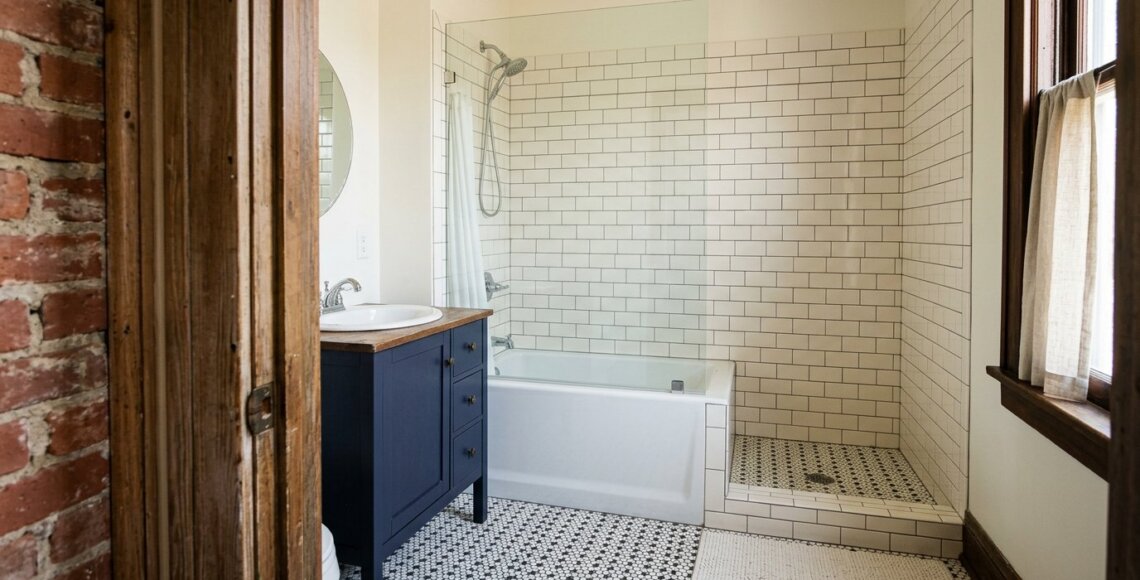
Bathroom tile design ideas for farmhouse style and more include classic subway layouts, soft neutral palettes, patterned floors, and contrasting textures. These choices help create a room that feels personal and practical: a simple rectangular tile in warm, understated tones, for example, can set a farmhouse mood.
Tile choices shape a bathroom’s visual feel. Vertical layouts draw the eye upward, while light colors and reflective finishes can make the room seem brighter. An accent wall or distinctive floor adds character without covering every surface in a bold pattern.
This guide explores farmhouse and transitional looks, geometric floors, light-reflecting finishes, and durable porcelain options, helping you balance pattern, texture, and scale whether you’re planning a full renovation or refreshing one carefully chosen surface.
Key Takeaways
- Pair simple rectangular tile layouts with warm, understated tones to create a farmhouse or transitional feel.
- Let a geometric or mosaic floor become the focal point by keeping nearby surfaces calm and uncluttered.
- Use light colors, reflective finishes, and coordinated grout to create a more continuous, open look.
- Choose porcelain tile size and finish with both the room’s appearance and everyday use in mind.
1. Farmhouse and transitional styles
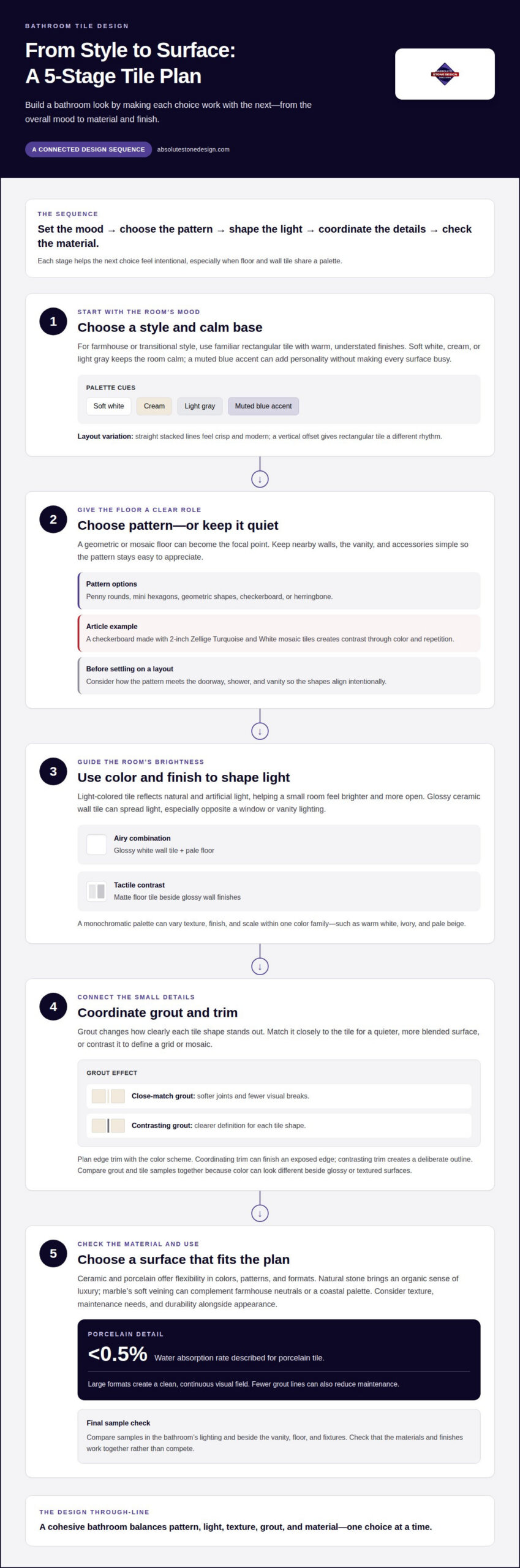
Farmhouse bathrooms pair familiar shapes with warm, understated finishes. Rectangular subway tile gives walls a clean foundation, while soft white, cream, or light gray keeps the room calm. For a transitional look, combine that classic format with a distinctive accent, such as muted blue tile behind the vanity. The contrast adds personality without making the whole room feel busy.
Zellige-style tile brings handcrafted character through subtle variation in color and surface. One example uses 4-inch Zellige Dirty Blue tile as an accent, while 2-by-6-inch Zellige Light Grey subway tile offers a quieter wall treatment. Arrange rectangular tile in straight stacked lines for a crisp, modern effect, or use a vertical offset pattern to give the wall a different rhythm. These layouts let a familiar shape suit several styles.
Material selection shapes both the mood and everyday feel of a bathroom. Ceramic and porcelain offer flexibility in colors, patterns, and formats; natural stone brings an organic sense of luxury. Marble’s soft veining can complement farmhouse neutrals or a coastal palette. Consider how each surface will look beside the vanity, floor, and fixtures, and choose finishes that work together rather than compete.
For a coastal variation, pair white wall tile with pale blue, sandy beige, or sea-glass tones. A restrained palette keeps the room relaxed, while a small accent area adds definition. For farmhouse warmth, combine a light subway tile field with a contrasting niche or vanity wall. Compare samples in the bathroom’s lighting, and weigh each material’s texture, maintenance needs, and durability. A consistent palette helps the tile feel intentional from floor to wall.
Floor choices can reinforce a sense of continuity. Using similar color tones on bathroom walls and floors can make a small space feel larger by reducing visual transitions. For more pattern underfoot, consider penny rounds, mini hexagons, or geometric tiles in a patterned or mosaic floor.
The Astrid Alabaster porcelain mosaic tile is described as having 95% locally sourced materials, offering another mosaic possibility to consider alongside the room’s palette. Keeping the floor’s color and pattern in balance with the wall treatment can help maintain a cohesive farmhouse or transitional look.
2. Hexagonal and patterned floors
A patterned floor can give a bathroom a clear focal point without requiring bold tile on every wall. For example, a checkerboard design can pair 2-inch Zellige Turquoise and White mosaic tiles, creating contrast through color and repetition. Penny rounds, mini hexagons, and geometric shapes offer other ways to introduce pattern. In a small bathroom, keep the vanity, walls, and accessories simple so the floor’s shape remains easy to appreciate.
Tile shape changes a room’s visual rhythm. Hexagons create a repeating, honeycomb-like surface, while square mosaics form orderly grids. Herringbone adds movement with rectangular tiles, and a straight grid feels more restrained. Before settling on a pattern, consider where the floor meets the doorway, shower, and vanity. These transitions affect how shapes align and whether the design feels intentional throughout the room.
How do you choose bathroom tile size, grout color, and layout? Start with the room’s scale and the look you want: smaller pieces suit intricate mosaics, while larger shapes create a quieter field. Choose grout close to the tile color for a blended look, or contrast it to outline each shape. Then select a layout that works with the room’s edges and fixtures.
A 2-by-2-inch porcelain mosaic, such as Sloane Matte Porcelain Mosaic Tile in Pearl, offers a compact square format. Compare it with penny rounds or mini hexagons to see how each pattern changes the floor’s overall impression. Ceramic and porcelain tile both come in varied shapes and finishes, so your selection can balance the look you want with the room’s everyday use. If porcelain fits your plan, explore porcelain tile options as part of your bathroom tile work.
Keep the rest of a small bathroom simple to let patterned or mosaic floor tile stand out. This approach keeps attention on the floor’s design.
3. Light-colored tile and reflective finishes
Light-colored bathroom tile reflects natural and artificial light, helping a small room feel brighter and more open. Glossy ceramic wall tile can spread light, especially opposite a window or vanity lighting. For an airy palette, pair glossy white wall tile with a pale floor. If you prefer less shine underfoot, matte floor tile beside glossy wall finishes adds tactile contrast while keeping the room bright.
A monochromatic scheme doesn’t have to feel flat. Stay within one color family, such as warm white, ivory, and pale beige, while varying texture, finish, and scale. A smooth ceramic wall tile can sit beside a small mosaic accent in a similar tone, adding detail without a strong color break. In a small bathroom, repeating one tone across the walls and floor can make the surfaces feel more continuous.
Grout color affects how clearly each tile shape stands out. Match grout closely to a light tile for a quieter surface with fewer visual breaks, or choose a contrasting shade to emphasize a grid or mosaic pattern. Pale grout with cream ceramic tile, for example, softens the joints, while darker grout defines each piece. Compare grout and tile samples together, since color can look different beside a glossy finish or textured surface.
Plan trim as part of the color scheme, not as an afterthought. Coordinating edge trim can make a tiled corner or exposed wall edge feel finished, while contrasting trim creates a deliberate outline. For a cohesive look, repeat a finish from the shower wall at the niche edge, then carry its color into the grout. These bathroom tile design ideas work best when colors, textures, and shapes support one another rather than compete.
4. Durable porcelain floor tiles
Porcelain tile suits many bathroom styles, from traditional patterns to quiet neutral floors. Porcelain tile has a water absorption rate below 0.5%, and large formats create a clean, continuous visual field. Fewer grout lines can also reduce maintenance. For example, 24-by-24-inch porcelain creates a broad, simple look, while smaller pieces add more pattern and movement.
What bathroom floor tiles are slip-resistant and safe for wet areas? Smaller tiles often provide more traction than larger ones, but no tile is automatically slip-proof. Consider the tile’s surface texture and intended use, especially on a shower floor, where water and soap can affect footing.
What are the best bathroom tile ideas for showers, floors, and walls? Pair small-format tile on the shower floor with larger porcelain on the main bathroom floor, then carry wall tile upward for a cohesive look. Floor-to-ceiling tile can visually elongate walls and protect them in wet zones; vertical placement can also make the ceiling feel higher.
What building codes and waterproofing rules apply to bathroom tile in the United States? Requirements depend on the local jurisdiction and the shower or bathroom assembly. Tile is the finish surface, so water management also depends on properly detailed waterproofing beneath or behind it and at transitions.
Large-format porcelain creates fewer grout lines, while small floor tiles add joints and visual detail. A matte finish can give a traditional bathroom a softer feel; a subtle stone-look pattern adds texture without overwhelming neutral walls. Consider how the floor connects to the shower threshold and wall tile, since these transitions shape the room’s overall appearance.
For a coordinated renovation, plan your bathroom tile work around the floor, shower, and wall surfaces together. That approach helps each format and finish feel intentional across the room.
Absolute Stone Design: Bathroom Tile Work
Absolute Stone Design provides bathroom tile work and coordinated stone surfaces to help bring your plan to life. Turn to the team when you’re ready to discuss tile placement and how stone surfaces can work across the space.
If your project also includes a vanity surface, coordinating tile with granite or marble countertops can create a connected look. Consider how the floor, shower, walls, and countertop relate, then shape your material choices around the look you want for your bathroom.
Contact Absolute Stone Design to talk through your bathroom project and next steps.
Shape a bathroom that feels like yours
Your tile plan can be the starting point for a more connected room. Before choosing final details, consider how finishes meet the vanity, lighting, and storage, and which options suit your daily routine. The most useful bathroom tile design ideas reflect your taste while serving the way you use the space.
In Richmond, Absolute Stone Design’s team brings hands-on experience in bathroom tile work and coordinated stone surfaces. If your renovation also includes a vanity surface, the team can help you consider how the tile relates to granite or marble countertops.
Ready to discuss your bathroom project? Contact Absolute Stone Design to talk through your plans and take a comfortable next step.
Frequently Asked Questions
What are the most popular bathroom tile design ideas and trends for 2026?
Farmhouse and transitional looks leave room to combine familiar tile shapes with distinctive surface details. For a fresh take, plan where transitions land: align shower niches, outside corners, and trim with nearby grout lines so the finished design feels intentional. A sample board can help you judge how tile, grout, and edge details work together before committing to a full wall.
Which tile colors and patterns make a small bathroom look larger?
Beyond color and finish, consider how the pattern relates to the room’s proportions. A layout that follows the longest wall can guide the eye through the space, while carefully aligned edges around the doorway and vanity reduce visual interruptions. Keep the main sightline from the entrance clear, and position a mirror to reflect a useful view rather than a cluttered corner.
How do ceramic, porcelain, natural stone, and glass bathroom tiles compare?
Ceramic and porcelain offer a broad range of styles, while natural stone brings distinctive variation from piece to piece. Glass creates a luminous accent and can add depth in a smaller area, such as a niche. Compare samples where they’ll be installed, paying attention to surface variation, edges, and how each material meets adjacent tile. Choose according to the look and placement you want.
What are the steps to plan and install bathroom tile?
Choose the room’s palette, tile size, finish, grout, and layout, then compare samples in the bathroom’s lighting. Plan how the tile meets the doorway, shower, vanity, and trim, and coordinate the floor, shower, and wall surfaces. Ensure waterproofing is properly detailed beneath or behind tile and at transitions.