
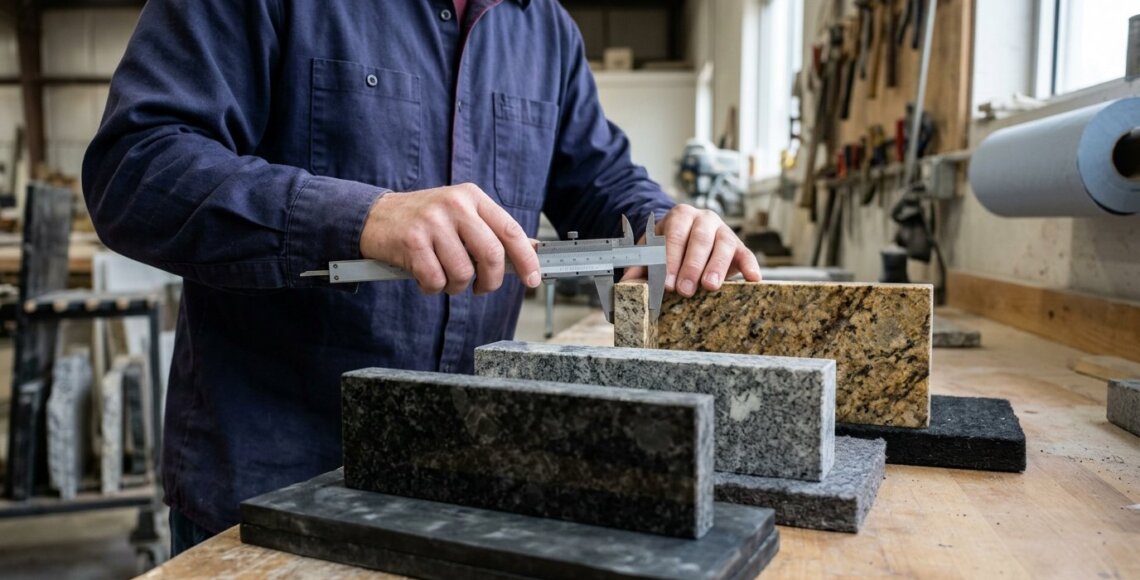
Types of Granite Compared by Color, Grade, and Slab Thickness
No granite color is automatically the most durable. The right choice depends on the specific stone and how its slab will suit the countertop. Types of granite are often grouped by appearance, including black, red, green, gold, yellow, pink, gray, and blue. Geologically, granite is defined by its mineral composition: feldspar, quartz, mica, and hornblende. Color can guide the look of your kitchen or bathroom, but it does not tell you everything about performance. Grade labels and slab thickness offer additional points of comparison, but neither is a stand-alone measure of durability. This guide explains how color, grade, thickness, and granite’s geological meaning fit together to help you make an informed selection. Viewing the full slab matters too: natural veining and tone can vary, and the stone may look different across a large surface than in a small sample.
Key Takeaways
- Learn why a commercial grade label and a geological classification describe different things about a slab.
- Compare slab thickness thoughtfully, instead of assuming a thicker option or higher grade automatically means greater durability.
- See how regional names can help you make sense of granite varieties and narrow your material choices.
- Explore popular kitchen selections and weigh appearance alongside practical factors such as porosity and intended use.
Does the granite’s strength differ between granite colors?
Color alone doesn’t determine how durable a granite countertop will be. Black, red, green, gold, yellow, pink, gray, and blue describe appearance, while a stone’s porosity and condition affect its care and suitability. For an outdoor kitchen, low-porosity granite is generally a better fit. Compare the available colors with the room’s needs and the stone’s care requirements.
Cabinet color can help narrow your choices. Black or gray granite can contrast with white cabinets, while gold or red tones can complement warm wood. Green, pink, and blue varieties add distinctive color, so consider how their patterns will work with cabinet finishes and other surfaces. Granite colors and textures can vary between batches. View the full slab, because a small sample may not show its complete veining or tone.
Granite, quartzite, and engineered quartz are different materials: granite and quartzite are natural stones, while engineered quartz is manufactured. Granite’s geological makeup includes feldspar, quartz, mica, and hornblende, but a stone’s name or color doesn’t reveal its porosity. For a natural-stone project, assess the specific slab rather than assuming every dark or light variety performs alike.
Polished granite has a glossy surface and is often chosen for easier cleaning, though streaks and smudges can show. Honed granite has a matte look, while leathered granite has a textured, more rustic appearance. Matte finishes can help disguise fingerprints and watermarks, making them worth considering for busy countertops.
For maintenance, clean granite with a pH-neutral stone cleaner and use a penetrating sealer as needed. Granite countertops are commonly resealed every 1-2 years; lighter varieties may need particular attention. A water drop that soaks in and leaves a darker area can indicate that the surface needs sealing. Dense black granite may turn cloudy if sealed.
Natural granite comes in varied colors, veining, and textures, giving each slab its own look. Its porosity is an important care consideration, and sealing may be part of upkeep. Compare the slab’s appearance, finish, and care needs together. That gives you a more useful basis for choosing than color alone.
Commercial and geological definitions of granite
“Granite” can mean different things in a geology book and a countertop showroom. Geologically, granite is a natural igneous rock identified by its mineral composition and coarse-grained structure. In commercial stone, the label may describe a broader category of durable, polishable natural stone. So a slab marketed as granite may not fit the narrow geological definition.
For geological classification, mineral content matters more than a slab’s color or trade name. Granite includes feldspar, quartz, mica, and hornblende, and its visible crystals contribute to its natural texture. A geologist evaluates composition and structure, while homeowners typically encounter commercial labels that help distinguish materials during selection.
That difference matters when you compare samples. A product tag reading “granite” is useful when shopping, but it doesn’t tell you every detail about mineral proportions, porosity, or appearance. Looking closely at the slab can reveal crystal size, veining, and color variation that a category name alone can’t convey.
Commercial names also help organize choices by appearance. Two slabs sold as granite may have very different patterns and tones, even though both are natural stone. In a bathroom, one homeowner might prefer a quiet, consistent look, while another might choose pronounced movement as a focal point. The geological label can’t decide which appearance suits the room.
Use each definition for its purpose: geological classification describes what the rock is, while commercial terminology helps identify materials for a project. When reviewing a slab, consider its actual appearance and intended use alongside its sales label. That distinction can make conversations about natural stone clearer and help you compare options with confidence. For a closer look at granite material options, focus on the slab’s visible character and how it will work in your space.

What are the main types of granite?
Granite is often grouped by color or variety name, rather than by one universal classification. Common color groups include black, red, green, gold, yellow, pink, gray, and blue. These labels help you start comparing appearance, but they don’t capture every detail of an individual slab. Patterns, crystal distribution, and tone can differ even within one color group.
Variety names offer another way to describe granite. They identify specific commercial options, often with names that suggest a color or visual character. Examples include Absolute Black, Black Galaxy, New Kashmir White, Vizag Blue, Steel Grey, and Imperial Gold. Names can help organize your choices, but they don’t replace seeing the stone itself.
Other named varieties include:
- New Imperial Red and Jhansi Red
- Crystal Yellow and Alaska White
- Blue Dunes, Platinum White, and Rajasthan Black
These labels provide a starting point for narrowing your selection by broad appearance. For example, Steel Grey suggests a different color direction from Imperial Gold, while Blue Dunes points to another palette. The names alone don’t establish how much veining, contrast, or variation a particular slab will have. Natural stone can differ from slab to slab.
Use color groups and variety names to organize your options, then compare actual slabs for tone, pattern, and how each will look in your room. If you’re considering a kitchen countertop, view the stone alongside your cabinets and other finishes. Types of granite may be described by color or by a specific variety name. Understanding both labels helps you compare appearance without treating a name as a ranking of quality or durability.
What are the most popular granite types for kitchen countertops?
There isn’t one universal ranking that makes a granite variety right for every kitchen. The useful question is how a candidate will work with your room’s shape and planned countertop details. A long peninsula, compact work area, and broad kitchen island each present the stone differently. Consider where you want the surface to draw attention before settling on a selection.
Countertop planning also affects how a slab becomes a finished surface. Sink and cooktop openings interrupt the stone, while seams divide longer runs into sections. A bold feature near an opening may be partly removed during fabrication, so planned cuts matter as much as the slab’s overall appearance. Mapping those details early helps you understand what will remain visible after fabrication.
- For a long run: Consider how the visual movement carries across the usable counter area.
- For a sink zone: Think about which parts of the pattern will remain around the opening.
- For a kitchen island: Decide whether the surface should anchor the room or complement other design elements.
Edge selection is another design decision. A simple edge keeps attention on the stone’s surface, while a more defined profile adds detail along the counter’s perimeter. The choice can change how the countertop relates to cabinet doors, nearby trim, and the room’s overall style. Consider the edge alongside the planned shape of each countertop section.
Rather than choosing solely by a variety’s reputation, consider how the planned pieces will look after fabrication. A coordinated selection accounts for visible areas, cutouts, edges, and transitions as one design. This gives you a practical way to compare popular options based on the finished kitchen, not just a catalog label.
Ready to plan your kitchen surface? Plan your granite countertop selection around the details of your project.
Absolute Stone Design: Granite
Absolute Stone Design helps Richmond-area homeowners turn a granite selection into a countertop planned for their space. If you’re comparing colors, patterns, or slab details, the team can guide material selection and coordinate precision measuring, in-house fabrication, and installation. This is especially useful when you want the finished surface to fit your kitchen layout and complement your cabinets.
Granite is one option alongside marble and quartz, and each material brings a different look to your project. Consider your priorities, such as natural variation or a more consistent appearance, to clarify which surface suits your plans.
Contact Absolute Stone Design to discuss your countertop project.
Shape a Granite Choice Around Your Home
Your next step is to turn your preferences into a clear design direction. Decide whether the surface should feel quiet or expressive, and how it should support the room’s everyday use. This makes comparisons between types of granite more purposeful, because you’re judging each option against your space rather than an abstract ranking.
Absolute Stone Design offers granite and marble countertops, with a team that can connect material selection to your project’s design. Bring your priorities for color, pattern, and the overall feel of your kitchen or bath into the conversation. The team’s stone expertise can help shape a considered, personal direction.
Whether you’re planning a new surface or refining a renovation plan in Richmond or the surrounding area, make the choice around your home, not a passing trend. Contact Absolute Stone Design to talk through your project and take the next step with confidence.
Frequently Asked Questions
What is the most durable type of granite?
No variety name by itself establishes which slab will be most durable. Start with how you use the surface: a kitchen used frequently for food preparation has different demands from a guest bathroom vanity. Then consider how much routine care you’re comfortable providing. These practical priorities help you compare options without treating a color, label, or grade as a guarantee of performance.
Granite: What’s In a Name?
A variety name helps distinguish one marketed granite selection from another, but it shouldn’t be the only identifier in your project notes. Record the exact name alongside the slab you selected and its intended location. This can keep design discussions clear when coordinating a kitchen countertop, island, and other surfaces. The physical slab remains the reference for its particular appearance.
Which granite is best for outdoor use?
Choose a slab with the outdoor setting in mind, including the surface’s exposure and the look you want alongside nearby materials. For example, an outdoor kitchen beside stone paving may call for a different visual balance from a covered entertaining area next to wood cabinetry. Consider the whole setting and intended use together, rather than choosing based on a granite name alone.
What are the different granite colors and patterns?
Granite ranges from pale, relatively quiet appearances to darker stones with stronger visual movement. For a practical comparison, look at how a pattern reads across the full surface, then picture it around a sink or cooktop opening. Cutouts can change which parts of the design remain visible. This helps you judge the finished countertop, not just an isolated patch of stone.
How do granite types differ in hardness, durability, and porosity?
These properties represent different considerations, so don’t treat one as a substitute for another. A surface may suit your preferred appearance yet require care that doesn’t fit your routine. Think about daily use, likely spills, and how you clean your counters. These habits help you assess what performance means for your household, beyond a broad label or a single material characteristic.
Which granite types are best for indoor and outdoor use?
A slab marketed for a bathroom countertop may also work in a kitchen, but suitability depends on the specific slab and its intended use. For outdoor spaces, consider the setting and the surface’s exposure as part of your selection. Matching the slab to its location means looking beyond the room name and considering how the surface will be used and experienced there.