Tag: natural stone

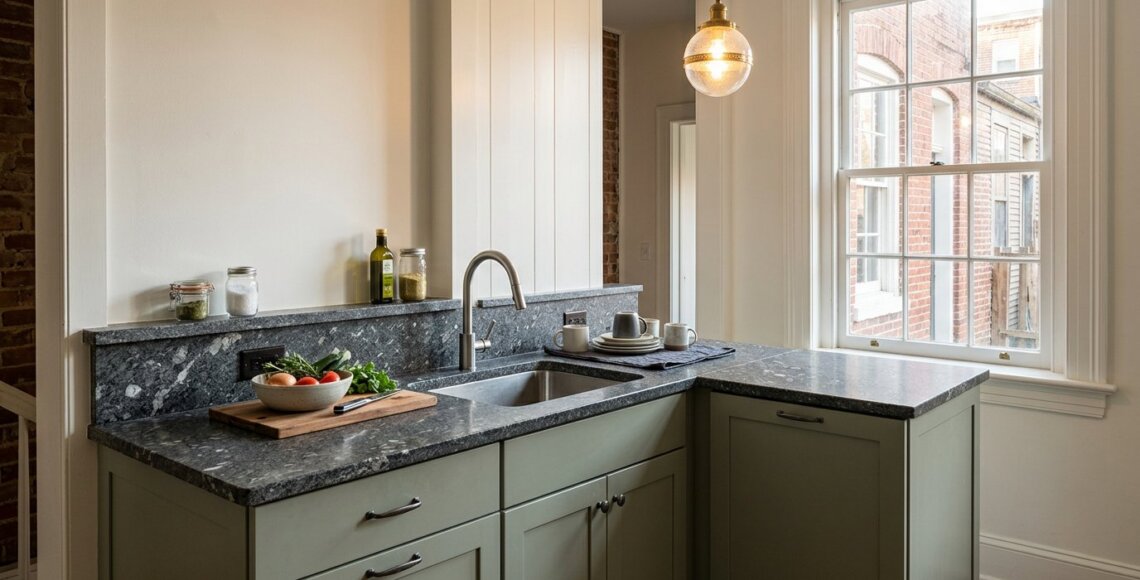
Charcoal-gray granite countertop with natural mineral flecks in a Richmond rowhouse kitchen

Granite Countertop Colors for Your Room and Lasting Appeal

The best granite countertop colors complement your cabinetry, lighting, and overall palette while still feeling right for years to come. White granite can bring creamy tones and subtle gray veining into a room, while gray options range from soft neutrals to dramatic dark patterns. Explore how color shapes a space, what to consider for lasting appeal, and why viewing the full slab helps you choose with confidence.

Key Takeaways

  • Compare white and gray granite patterns, from subtle veining to bold mineral flecks, to find the look that suits your room.
  • View the full slab and consider whether its pattern is one you’ll enjoy for years.
  • Assess colors beside your cabinetry and in different lighting, since daylight and indoor light can change how a stone appears.
  • Choose a countertop shade with both your room’s palette and your everyday preferences in mind; darker surfaces may make dust and water spots more noticeable.

White and gray granite color options

White granite ranges from creamy to bright, and its mineral patterns make every slab distinctive. White Spring has a creamy base with light gray veins, while New River White pairs soft white with delicate gray lines. Bianco Frost features black, gray, and rust-colored speckles. Pure white granite is rare, so expect natural variation rather than a completely blank surface.

For a lighter kitchen, White Sand blends beige and gray with darker flecks, while White Ornamental has brown and beige specks. Steel Grey offers dark gray tones and a subtle pattern. Black granite creates a deeper look, while brown granite often features warm, earthy shades. Blue granite can contain minerals that catch the light and create depth that photographs may miss.

Quartz generally has more consistent color and requires less maintenance than granite, according to JOEH, LLC. Granite’s natural mineral patterns vary, so slabs with the same name may not look exactly alike. Differences can also occur between batches. Review the actual slab to see its veining, flecks, and color movement before choosing.

Some granite colors can be harder to find because availability depends on the stone and its quarry source. Brown and beige granite are often widely available. Since color names do not guarantee an exact match, assess the specific slab instead of relying only on a sample.

For routine care, clean granite with mild detergent and water. Granite slabs require sealing, so reapply sealer annually or as directed by the manufacturer. The U.S. Environmental Protection Agency notes that liquid may enter granite’s pores or bond strongly to its surface, making prompt cleanup a sensible habit.

Repair options depend on the damage. A small chip may be filled with color-matched stone epoxy, while a crack needs assessment to determine an appropriate repair. Avoid abrasive cleaners around a repaired area, and follow the repair professional’s care instructions.

Snowfall has a white background speckled with gray and black minerals. Bianco Frost has a creamy white background with black, gray, and rust-colored speckles. White Valley has a smooth, light background with subtle gray veining.

Stream White has a soft white background with delicate gray and light brown veins. White Wave has a clean white background with soft waves of gray veining. Steel Grey is dark gray granite with a smooth texture and subtle pattern.

Choosing granite for long-term appeal

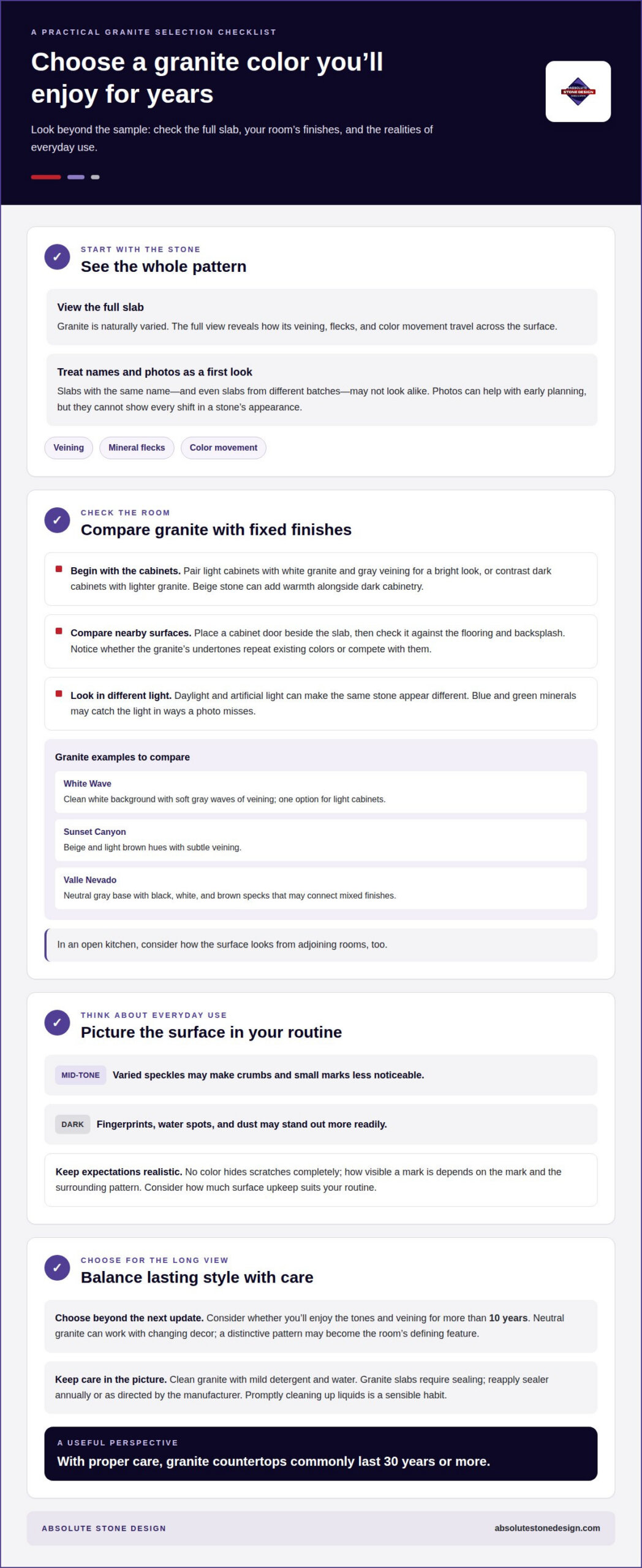
A granite pattern can feel striking in a sample but look different across a full counter. Each slab is unique, so you should consider the overall movement, mineral contrast, and balance of colors. Viewing the full slab gives a clearer sense of how patterns will run across the kitchen or bathroom. Choose a color you expect to enjoy for more than 10 years, not only one that matches a temporary accent.

Consider daily cleanup, too. Mid-tone granite with varied speckles can make crumbs and small marks less noticeable than a uniform surface. Dark granite tends to show fingerprints, water spots, and dust more readily. No color hides scratches completely; visibility depends on the mark and the surrounding pattern. Consider how much surface upkeep suits your routine before deciding.

Long-term appeal also depends on how the stone works with lasting room elements. Compare the slab with cabinet colors, flooring, and backsplash materials, then picture the combination if you repaint or replace hardware. A neutral granite can suit changing decor, while a distinctive pattern may become the room’s defining feature. With proper care, granite countertops commonly last 30 years or more.

Follow this practical selection sequence to balance appearance with everyday use:

  • View the full slab to assess its pattern and color movement.
  • Compare it with cabinet finishes and other fixed surfaces in the room.
  • Consider whether its tones and veining suit your preferred look beyond the next renovation.
  • Picture routine crumbs, spills, and dust against the surface before settling on a shade.

For a kitchen used throughout the day, prioritize a pattern and tone that feel comfortable to live with, not just dramatic at first glance. If you’re considering a natural-stone surface, explore granite countertop options as you narrow your selection.

Use a small sample as an initial reference, then review the full slab before choosing. The broader view makes it easier to assess how the pattern travels across the stone, rather than relying on a limited glimpse. This closer look can help you decide whether the overall effect suits your room.
Granite Countertop Colors for Your Room and Lasting Appeal

Granite color selection for room design

Start with your cabinets, then choose granite that complements or contrasts with their finish. With light cabinets, white granite with gray veining can keep the room bright while adding pattern. White Wave pairs a clean background with soft gray movement. Dark cabinets can contrast with lighter granite or blend with warm beige stone.

For example, Sunset Canyon combines beige and light brown hues with subtle veining, while Monte Cristo adds darker speckles and veins. These natural patterns can echo wood floors, cabinet undertones, or nearby tile. Valle Nevado has a neutral gray base with black, white, and brown specks, which can help tie together mixed finishes.

Granite color also responds to room lighting. Daylight and artificial light can make the same stone appear different, so view a sample in both conditions. Blue and green minerals may catch the light and create depth that photographs do not capture. Photos are useful for early planning, but they cannot show every shift in a stone’s appearance.

To assess a pairing, place a cabinet door beside the granite slab, or compare the slab with a clear cabinet photo. Check the combination near the flooring and backsplash, too. This shows whether the granite’s undertones repeat existing colors or compete with them. In an open kitchen, consider how the surface looks from adjoining rooms.

Use these pairings as starting points, not fixed rules:

  • Light cabinets with White Wave can create a bright, softly patterned setting.
  • Dark cabinets with beige granite can bring warmth and contrast into the room.
  • Mixed gray, brown, and black finishes may connect with Valle Nevado’s varied minerals.

Choose a combination that supports the room’s existing palette and the atmosphere you want, whether calm, warm, or dramatic.

Granite selections often center on white, gray, black, and warm beige or brown. Each palette offers a different balance of contrast and pattern, with no single look suited to every room. White Galaxy pairs a bright background with black and gray specks. White Napoli has a warmer base with light gray veining, while white granite is rarely completely pure.

Gray options range from quiet neutrals to bolder patterns. Silver Waves mixes gray and black in swirling patterns, while Steel Grey has a dark gray tone and subtle pattern. Both can complement similar cabinet shades or contrast with lighter finishes. Brown and beige granite adds warmth through earthy tones and darker flecks.

Black granite can anchor a room with a deeper surface, but dark finishes tend to show dust, fingerprints, and water spots more readily. Blue and green varieties offer color and mineral depth that can shift with the light. Because every natural slab has its own markings, the same color family can feel calm or dramatic depending on its veining and flecks.

Use these examples to narrow down the look you want for your room:

  • Bright and defined: White Galaxy adds contrast with black and gray minerals.
  • Soft and warm: White Napoli brings gentle gray lines across a warm white base.
  • Moody and layered: Silver Waves combines dark tones with flowing movement.
  • Earthy and grounded: White Ornamental pairs a creamy base with brown and beige specks.

Names describe a general color direction, not an exact appearance. Look at the particular slab under the room’s lighting to understand its tone, pattern, and visual weight. Explore granite countertop options as you refine the palette for your space.

Absolute Stone Design: Countertops

Absolute Stone Design helps homeowners in Richmond, Henrico, Glen Allen, Midlothian, Chesterfield, and Charlottesville turn granite color choices into countertop plans. When you are ready to move from comparing patterns to planning a surface, the team provides measuring, in-house fabrication, delivery, and installation.

Granite is not the only option to consider. Absolute Stone Design also offers marble and quartz, giving you natural-stone and engineered options to compare as your project takes shape. The right choice depends on the look you want and how the surface will serve your home.

For help planning a countertop for your Richmond-area home, contact Absolute Stone Design.

Turn your color choice into a room plan

Your granite countertop colors can set the direction for the rest of the room. Once you have a favorite, consider how its tones could guide choices such as cabinet hardware, lighting, and decorative accents. A clear design direction can help later updates feel connected, even as individual details change.

Absolute Stone Design offers granite and marble countertops, giving you natural-stone options to consider as your project takes shape. The team’s stone selection and in-house fabrication services can help turn your preferred look into a countertop plan for your space. Whether you are updating a kitchen or adding a surface in another room, start with the colors and details that appeal to you.

Start planning your countertop project with Absolute Stone Design, and take the next step toward a room that feels distinctly yours.

Frequently Asked Questions

How do I choose the right granite color?

First decide whether the countertop should tie several finishes together or stand apart as a focal point. Then consider the visual weight of nearby materials. If a backsplash has a pronounced pattern, for example, quieter granite can help balance the room; a simpler backsplash leaves more room for a strongly veined surface. This gives your color choice a clear design role.

How can I choose a granite color using samples and full slabs?

Use a sample to narrow down the color family, then review the exact slab before fabrication. If your project needs multiple slabs, view them together and consider how their patterns will meet across the countertop runs. Discuss which sections are planned for the island and perimeter, too, to see how the selected stone will read across the design.

What lighting and kitchen features affect how granite countertop colors look?

Task lights can cast shadows across mineral patterns, while direct window light may bring out details that appear subtler in shaded areas. Consider where you prepare food and how light falls across those work zones. Ceiling fixtures, windows, and the direction of nearby light all affect the surface’s appearance, so pay attention to the areas where you spend the most time.
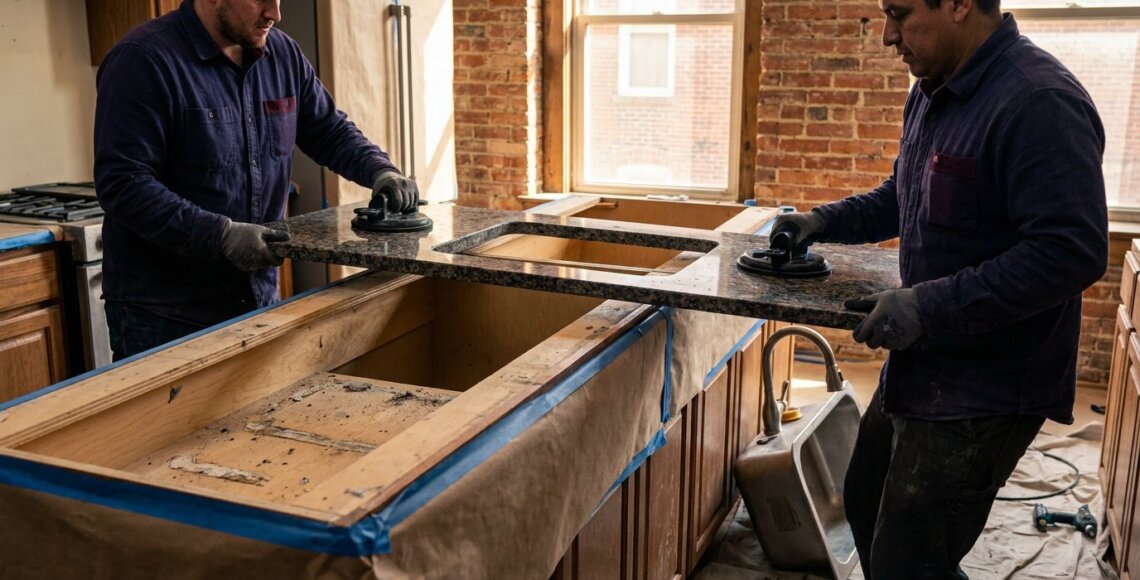
Installers lift a removed granite countertop section from a Richmond kitchen cabinet run.

Granite Counters Near Me in Richmond for Installation and Removal

A countertop project involves more than choosing a beautiful slab. In Richmond, a search for granite counters near me can lead to decisions about material, installation, and removing an existing countertop. The right choice balances the look you want with the practical needs of your space.

It’s natural to want clarity before updating a kitchen or bathroom. Learn how granite compares with quartz, marble, quartzite, and porcelain, what affects installation and removal, and which decisions to make before the project begins.

Customer projects, material samples, and showroom visits can help you picture the finished space. From natural stone’s distinctive character to the details of replacing an old surface, this guide will help you plan your Richmond countertop project with confidence.

Key Takeaways

  • Understand the main stages of countertop installation and removal so you can plan the transition to a new surface.
  • Compare granite, quartz, marble, quartzite, and porcelain by their appearance and practical characteristics.
  • Use customer project galleries to explore design possibilities and see how different materials look in finished spaces.
  • Make samples and a showroom visit part of your decision process to assess how countertop choices suit your home.

Countertop installation and old-countertop removal

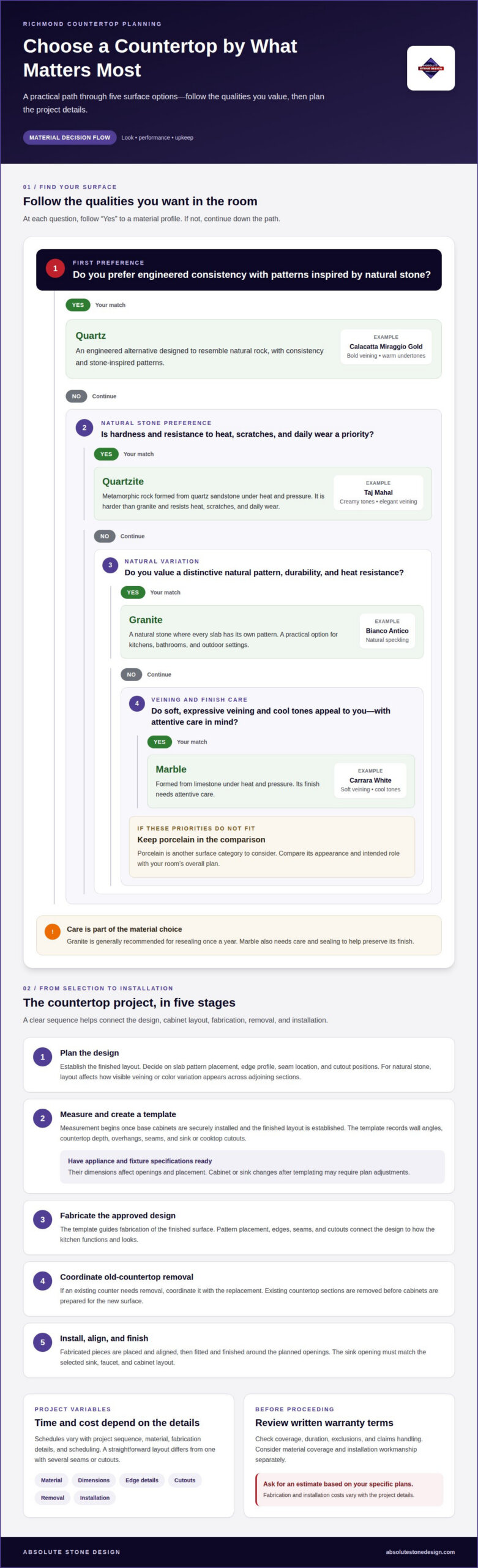
A Richmond kitchen countertop project follows a clear sequence: plan the design, measure the cabinets, create a template, fabricate the surface, and install it. If an existing counter needs removal, coordinate that work with the replacement so the countertop and sink area transition cleanly. For example, the sink opening must match the selected sink, faucet, and cabinet layout.

Granite countertop measurement begins once the base cabinets are securely installed and the finished layout is established. A professional template records wall angles, countertop depth, overhangs, seams, and sink or cooktop cutouts. Have appliance and fixture specifications ready because their dimensions affect openings and placement. Changes to cabinets or sink selections after templating may require adjustments to the plan.

Fabrication turns the approved template into a finished surface. Key design decisions include slab pattern placement, edge profile, seam location, and cutout positions. With natural stone, the layout also determines how visible veining or color variation appears across adjoining sections. Good craftsmanship connects those choices to the kitchen’s function as well as its appearance.

Removal and installation schedules depend on the project sequence, material, fabrication details, and scheduling. A straightforward layout differs from one with several seams or cutouts, so project durations vary. During removal, existing countertop sections are taken away before the cabinets are prepared for the new surface. Installation then involves placing and aligning the fabricated pieces, followed by fitting and finishing around planned openings.

Fabrication and installation costs vary with the project, including material, dimensions, edge details, cutouts, removal, and installation. Ask for an estimate based on your specific plans. Before proceeding, review any warranty or installation-guarantee terms in writing, including coverage, duration, exclusions, and claims handling. Consider material coverage and installation workmanship separately when reviewing those terms.

Granite, quartz, marble, quartzite, and porcelain countertops

Each material brings a distinct character to a kitchen or bathroom. Granite is natural stone, so every slab has its own pattern. Its durability and heat resistance make it a practical option for kitchens, bathrooms, and outdoor settings. For example, Bianco Antico granite pairs natural speckling with traditional or transitional interiors.

Quartz is engineered to resemble natural rock, offering a manufactured alternative to stone’s individual patterns. Calacatta Miraggio Gold shows how bold veining and warm undertones can create a focal point. Marble, by contrast, forms from limestone under heat and pressure. Carrara White marble is known for soft veining and cool tones, and its finish needs attentive care.

Quartzite is metamorphic rock formed when quartz sandstone is exposed to heat and pressure. It is harder than granite and resists heat, scratches, and daily wear. Taj Mahal quartzite brings creamy tones and elegant veining to a design. Porcelain offers another option; consider how its appearance and intended role fit the room’s overall plan.

Compare materials by the qualities that matter most in your space:

  • Granite: natural variation, durability, and heat resistance.
  • Quartz: engineered consistency and patterns inspired by natural stone.
  • Marble: expressive veining and a finish that needs careful maintenance.
  • Quartzite: distinctive natural veining with hardness and wear resistance.
  • Porcelain: another surface category to consider alongside stone and quartz.

Granite countertops are generally recommended for resealing once a year. Marble also needs care and sealing to help preserve its finish, so consider upkeep alongside appearance when choosing a surface.

Seeing materials together can clarify the choice. Explore granite, quartz, and marble countertops as you consider which surface best suits your room and design.

Granite Counters Near Me in Richmond for Installation and Removal

Customer reviews and project galleries

Reviews and project photos offer different insights into a countertop project. A review may describe communication, scheduling, or installation, while a gallery lets you inspect visible details. For example, look at how a granite surface meets a backsplash, cabinet edge, or sink opening.

Look for specific project details in reviews rather than relying on a general rating alone. A useful account might describe removing an old countertop, changing the planned layout, or finishing an edge. Notice whether the reviewer explains the concern and how it was addressed. That context helps you identify which parts of the experience matter most for your kitchen or bathroom.

Project galleries connect design choices with finished rooms. Compare the stone pattern, cabinet color, backsplash, and countertop finish as a whole. A custom granite countertop may show natural variation across its surface, so photos can help you picture how a pattern looks in a real space. Keep in mind that lighting and screen settings affect how colors appear.

Prefab and custom-size countertops suit different project needs. A prefab piece comes in a pre-cut format, while a custom-size countertop is shaped for a particular layout. An island with an unusual edge or sink cutout, for example, may need measurements tailored to its design. The cabinet configuration and chosen surface help determine which approach fits.

Use reviews and images together, not as substitutes for project-specific planning. A gallery can reveal a finish or layout you like, while a review may highlight details to discuss in an estimate request. Save examples of features you prefer, such as a softly rounded edge, visible natural veining, or a continuous granite pattern. These references make your design goals easier to explain.

  • Reviews: Look for project details about communication, removal, and installation.
  • Photos: Note material appearance, finish, edges, and how the surface meets nearby features.
  • Design references: Save examples that reflect the layout and style you want.

Countertop samples and showroom visits

A sample lets you assess color and texture beyond a photograph. When choosing granite, compare its pattern with your cabinets, flooring, and backsplash. A small piece won’t show every variation in a full slab, but it can help you decide whether warm veining or cooler tones suit your kitchen.

Lighting affects how colors appear. Creamy stone beside a white cabinet may look different under warm indoor lighting than it does near a window. During a showroom visit, compare a sample in different lighting and view it beside finishes similar to your planned cabinets. This helps you judge whether the surface feels cohesive.

Bring design references into the decision. A cabinet-door finish, flooring sample, or room photo makes comparisons more specific. If you’re planning Carolina blue accents, for example, consider whether the countertop’s undertones complement that color or compete with it. Aim for a balanced palette rather than an exact match between every surface.

During a showroom visit, look beyond color. Examine the stone’s texture, veining, and polished or subdued appearance, then consider how those details suit the room’s daily use. Compare similar tones side by side. A subtle difference in pattern movement or contrast may affect the overall impression more than a small color shift.

Samples help narrow your choices, while viewing larger sections of material helps you understand natural variation. This is especially useful with granite, since a small sample cannot represent every feature of a full surface. Keep your preferred colors, edge style, and room references together when requesting an estimate. They provide a clear starting point for the design conversation.

  • Compare: View samples beside cabinet and flooring finishes.
  • Consider: Check how lighting changes color and texture.
  • Decide: Keep the palette and surface details that best suit your room.

Ready to connect your material selection with a project plan? Request a countertop estimate with your preferred colors and design references.

Absolute Stone Design: Granite

Absolute Stone Design helps plan Richmond countertop projects around your space, material preferences, and design goals. When you’re ready to move from comparing surfaces to planning granite countertops, the team provides measuring, fabrication, and installation. You can also consider marble, quartz, or quartzite.

Bring your preferred colors, room details, and project examples to the conversation. These references help clarify what matters most, whether you’re updating a kitchen surface or considering a different countertop look. With your material choices in mind, you can focus your estimate request on the project scope and finish that suit your home.

Contact Absolute Stone Design to discuss your countertop project.

Make Your Countertop Plan Personal

The next step is choosing what fits your home. Consider how you want the room to feel, which surfaces you use every day, and which details matter most. If you’re searching for granite counters near me in Richmond, let those priorities guide a project conversation rather than choosing a material based on appearance alone.

Absolute Stone Design fabricates and installs countertops in granite, marble, quartz, and quartzite, giving you several natural and engineered stone options for your space. Share the room you’re updating, the look you hope to create, and any design references that express your vision. These details help shape a countertop plan that feels distinctly yours.

Contact Absolute Stone Design to discuss your countertop project. Your next step can begin with a simple conversation and a clearer picture of the space you want to create.

Frequently Asked Questions

Where can I find granite countertop fabricators and installers near me?

For granite counters near me in Richmond, Absolute Stone Design fabricates and installs granite countertops in Richmond, Henrico, Glen Allen, Midlothian, Chesterfield, and Charlottesville. Precision measuring and templating tailor the finished surface to your layout. A kitchen island and perimeter counters, for example, can be measured as separate sections so the fabrication plan accounts for each area’s dimensions and intended use.

What does granite countertop installation cost per square foot near me?

Granite installation pricing depends on the project, and an estimate is provided after a quote request. The area being covered is only one factor: granite selection, layout, cutouts, edge details, removal, and installation can all affect the scope. A countertop with a sink opening and separate island, for example, involves different fabrication details from a simple run of counter. Use these factors to understand what shapes an estimate when comparing granite counters near me.

How much do granite countertop slabs cost near me?

Granite slab pricing depends on the material selected and the countertop project. Request an estimate based on your plans. The estimate considers the stone alongside the planned dimensions and fabrication needs. A slab’s pattern and its layout across connected counter sections can also influence your selection. When requesting an estimate, share the areas you’re updating and your preferred granite look.

What is the granite countertop installation process and timeline?

Granite installation proceeds from project planning and measurement to templating, fabrication, and installation. The schedule depends on the chosen stone, layout, cutouts, and coordination with removal of the existing counter. A kitchen with a separate island and sink opening needs those details included in the project plan. Absolute Stone Design provides measuring, delivery, and installation for countertop projects.

Where can I read granite countertop contractor reviews and ratings near me?

Look for reviews describing a specific countertop experience rather than relying on a rating alone. Absolute Stone Design customer feedback includes Lorraine K., who described work on four kitchens, and Nathan D., who shared positive feedback about granite countertop installation. Their comments offer different perspectives: one reflects multiple kitchen projects, while the other focuses on a granite installation in the Richmond area.

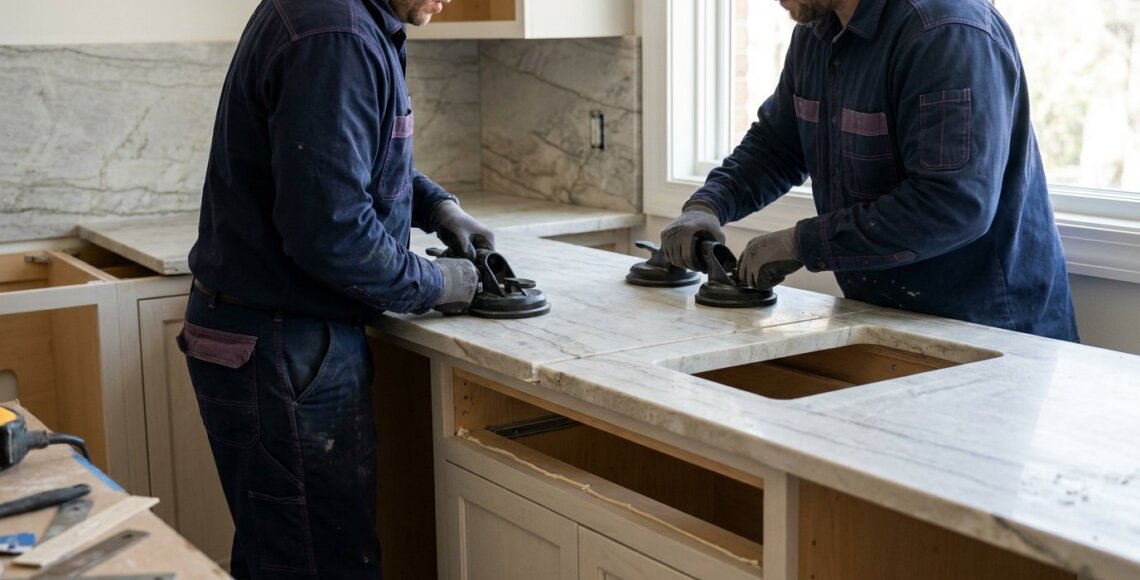
Installers fit a veined quartzite worktop onto kitchen cabinets in a Richmond-area home.

Stone Worktop Supply, Fabrication and Installation

Need a stone slab for pickup or a worktop made to fit your space? Stone worktop suppliers can help with slab selection, fabrication and installation. Options include natural stone such as granite, marble and quartzite, as well as engineered quartz. Pickup depends on whether an uncut slab is available; a made-to-measure worktop follows a project-specific process.

Choosing the stone is only one part of creating a worktop that suits your home and everyday needs. This guide covers material options, what supply, fabrication and installation involve, and factors that affect the project and its cost. You’ll also see how the process moves from material selection and measurements to cutting and fitting, helping you make informed decisions.

Key Takeaways

  • Compare granite, marble, quartzite, limestone, travertine, and onyx by their appearance and suitability for your project.
  • Understand how slab selection, fabrication, and installation come together to create a worktop that fits your space.
  • Learn what shapes slab distribution and availability, and how natural and engineered stone differ.
  • Consider how stone surfaces can serve kitchens, bathrooms, and other interiors, including when bathroom tile work may suit your plans.

Granite, marble, quartzite, limestone, travertine, and onyx

Natural stone varies from slab to slab, so the pattern matters as much as the material. Granite, marble, quartzite, limestone, travertine and onyx each have distinctive veining, color and movement. A dramatic marble vein can become a focal point, while granite’s varied patterns may suit a more understated design. View the full slab before planning custom cuts, especially if you want a feature vein to continue across adjoining surfaces.

Quartzite registers between 7 and 8 on the Moh’s hardness scale. Its natural patterns can resemble marble, making it a premium natural option for spaces where appearance guides the design. Marble offers its own recognizable veining, while granite ranges across varied patterns and colors. Limestone and travertine bring softer-looking textures; onyx can provide striking color variation. These visual differences help narrow choices before fabrication.

Other materials broaden the comparison. Dolomite and soapstone are natural stones, while quartz is engineered from stone materials. Granite, marble, quartzite, quartz and porcelain therefore differ in origin and appearance. Porcelain can have a more consistent pattern, while natural slabs show individual variation. Compare samples or slabs with cabinet colors and nearby finishes to see how each surface works in the room.

For a kitchen countertop, material selection affects the finished look and the fabrication plan. A prominent vein near a sink cutout, for example, may influence the slab’s orientation. Granite, quartz, marble and quartzite can all be used in residential spaces, but the chosen slab determines the pattern placement. Fabrication planning also accounts for edges, seams and openings.

Stone worktop suppliers can connect slab selection with a practical design. Start by comparing natural options such as granite, marble, quartzite, dolomite and soapstone with engineered quartz and porcelain. Then identify the color, pattern and focal area that matter most. This gives the fabrication plan a clear visual direction and helps ensure the finished countertop suits your space.

Stone countertop supply, fabrication, and installation

A stone countertop goes from slab selection to measurement, fabrication and fitting. Each stage affects the final fit, whether it’s for a kitchen island or bathroom vanity. For a local project, learn more about granite counters near me in Richmond for installation and removal.

Countertop Supply and Fabrication

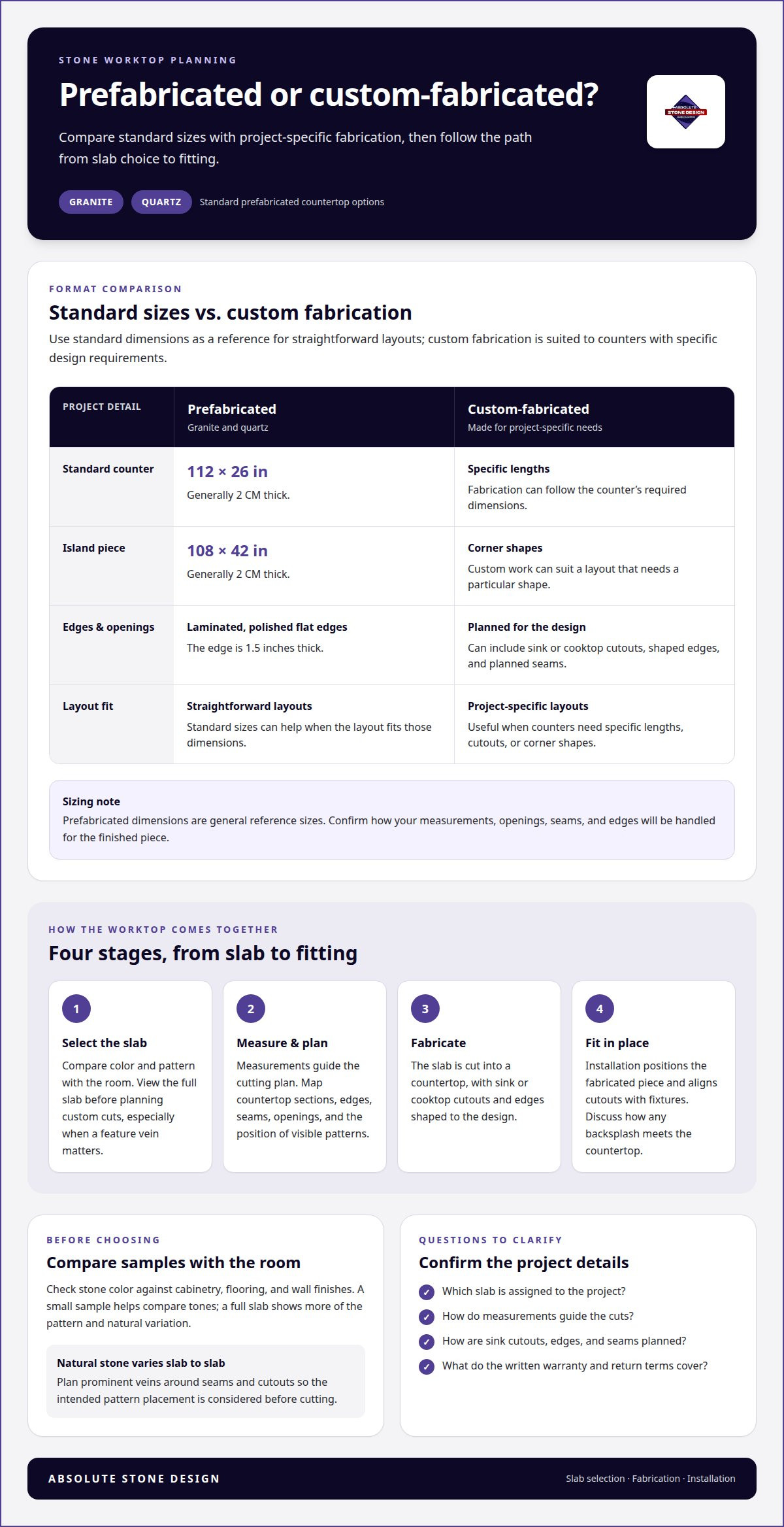
Supply starts with choosing a slab whose color and pattern suit the room. Fabrication turns it into a countertop, with cutouts for sinks and cooktops and edges shaped to the design. Ask which slab is assigned to your project, how measurements guide the cuts, and how seams and openings are planned. These details clarify what the finished piece will include.

Prefabricated Sizes and Thickness

Standard prefabricated granite and quartz countertops are generally 112 by 26 inches and 2 CM thick. Island pieces are generally 108 by 42 inches and 2 CM thick. These dimensions can help with straightforward layouts, while custom fabrication suits counters that need specific lengths, cutouts, or corner shapes. Prefabricated granite and quartz countertops have laminated, polished flat edges that are 1.5 inches thick.

Samples and Sample Pricing

A sample lets you compare a stone’s color with cabinetry, flooring and wall finishes before choosing a full slab. Sample pricing depends on the material and format and is provided after a quote request. A small quartz sample can help you compare tones, but a full slab reveals more of the stone’s pattern and variation. Use both views to guide your selection.

Before ordering, ask which slab is assigned to the project, what fabrication includes, and how sink cutouts, edges and seams are handled. The time from order to installation depends on sourcing the slab, templating, fabrication and scheduling the fitting. These steps shape the project timeline.

For kitchens and bathrooms, installation puts the fabricated piece in its final position, with cutouts aligned to fixtures. If the design includes a backsplash, discuss how it will meet the countertop. Written order terms set out warranty coverage and return conditions; review what they cover for the slab, fabrication and installation.

Stone Worktop Supply, Fabrication and Installation

Natural and engineered stone slab distribution

Slab distribution connects material selection with the surface to be fabricated for your project. The key is to match the chosen slab, finish and pattern to the intended design.

Natural and Engineered Selections

Natural stone and engineered surfaces offer different visual qualities. Granite and marble are natural options, while engineered quartz and porcelain have distinct appearances. Compare color, pattern and finish with your cabinetry or flooring. A softly patterned surface, for example, can complement detailed cabinets, while a bold natural vein can anchor a simpler room.

Distribution planning follows material selection: the slab chosen for the project is identified before fabrication begins. Connecting selection with fabrication helps preserve the intended pattern and finish in the completed countertop.

Natural Stone Slabs

Every natural stone slab has its own pattern, so pieces of the same stone can look different. Granite may show varied mineral patterns, while marble can have prominent veins. Before cutting, the fabricator considers how these features will appear across the countertop, including near seams and cutouts. A dramatic vein might be positioned as a focal detail rather than interrupted by a sink opening.

Choosing natural stone also means examining the slab’s surface and finish in the lighting of the intended space. A polished finish reflects light differently from a honed one, changing how the color and pattern appear.

To keep distribution and fabrication aligned, the selected slab is matched to the project before its dimensions are turned into cutting plans. The layout identifies countertop sections, edges, seams and openings. For a kitchen island, the plan can account for how a visible pattern runs across the surface; a bathroom vanity may need a different arrangement around its basin.

Engineered quartz and porcelain offer more options when a design calls for a consistent visual effect. Compare their colors and finishes with natural stone samples, then consider the full surface rather than a small detail alone. This helps connect the material’s appearance with the dimensions and design of the finished space.

Stone slabs for kitchens, bathrooms, and interior projects

Stone slabs can define a kitchen island, bathroom vanity or interior feature. Match the material and pattern to the room’s layout, lighting and intended use.

In a kitchen, quartz countertops can create a consistent look across an island and perimeter counters. A bathroom vanity may need a smaller surface, with the sink opening and edge profile planned around the cabinet. In either space, the slab’s pattern affects how seams and cutouts appear, so make layout decisions before fabrication.

A showroom display can help you compare finishes and colors with cabinetry samples. For a polished look, consider how a bold pattern will relate to nearby surfaces rather than choosing it in isolation. A kitchen visualization tool can illustrate how a selected color or pattern might look with cabinets. Use the image as a planning aid, then assess the stone’s natural variation on the actual slab.

Outdoor kitchens need a separate material assessment. Sun exposure, weather and location affect which surfaces are suitable, so consider these conditions before selecting a slab. Coordinate the countertop layout with the outdoor cabinets and cooking area, and plan cutouts around the chosen fixtures. This creates a clear fabrication plan without assuming every interior material suits an exterior space.

Stone works beyond countertops, too. A coordinated backsplash can extend the kitchen’s visual line, while bathroom tile work can carry a related finish through the room. For any interior project, decide whether the stone should blend with surrounding finishes or become a focal point. A quartz countertop with a restrained pattern, for example, can complement more expressive wall finishes.

Ready to plan a surface for your kitchen or bathroom? Explore countertop options and consider how the slab will fit your project’s layout and finishes.

Absolute Stone Design: Bathroom Tile Work

Absolute Stone Design provides bathroom tile work and coordinated stone surfaces. For a vanity countertop, granite and marble offer natural options that can shape the room’s color and character. If your bathroom refresh focuses on wall or floor finishes, bathroom tile work addresses those surfaces without expanding the project into unrelated remodeling.

Bring together the decisions that shape the finished space: the tile area, countertop material, and relationship between their colors and patterns. This helps you plan a considered bathroom, whether you’re updating tile, choosing a marble vanity top or combining both.

Contact Absolute Stone Design to discuss your bathroom tile work or countertop project.

Shape the Next Step for Your Space

A successful stone project starts with a clear idea of how you want the room to look and function. Before moving forward, consider which surface should lead the design, how it will relate to nearby finishes and which details matter in daily use. This gives conversations with stone worktop suppliers a practical starting point and helps turn inspiration into a well-considered plan.

Absolute Stone Design offers countertops in granite and marble, giving you natural material options to consider for your project. If you’re ready to discuss a surface for your home, share the space you’re planning and the look you hope to create. Contact Absolute Stone Design to talk through your countertop project and take a thoughtful next step toward a space that feels distinctly yours.

Frequently Asked Questions

Do You Have Slabs In Stock For Immediate Pickup?

Immediate pickup requires an uncut slab to be available for release; custom countertops follow a different process. A made-to-measure project involves selecting material, measuring the space, fabricating the piece and arranging installation. Slab distribution and fabrication affect whether pickup suits your plans. For a custom fit, the slab must be coordinated with the countertop’s dimensions and design.

What types of stone worktops do suppliers offer, including granite, marble, quartzite, and soapstone?

Common choices include natural granite, marble, quartzite and soapstone, as well as engineered quartz. Absolute Stone Design offers granite, marble, quartz and quartzite countertops. Each material has its own color and pattern, so start by comparing the look you want and how it will relate to cabinetry and other finishes. Soapstone is another natural-stone option.

How can I find reputable stone worktop suppliers near me in the United States?

For homeowners comparing stone worktop suppliers in Richmond and nearby communities, local service coverage is a practical starting point. Absolute Stone Design serves Richmond, Henrico, Glen Allen, Midlothian, Chesterfield and Charlottesville. The company focuses on countertops and related surfaces for local residential and commercial projects, with project measurements and installation within its service area.

What should I compare when choosing stone worktop suppliers?

Compare the material selection, how the slab’s natural variation is handled, and the details included in the written project scope. A sink cutout, edge finish, seam placement and installation responsibility can all affect the final result. Review care guidance for the chosen stone, too. These points clarify what the finished countertop includes before fabrication begins.

Do stone worktop suppliers provide samples, templating, fabrication, delivery, and installation?

Absolute Stone Design provides precision measuring and template services, countertop fabrication and installation. Samples can help with early color decisions, but a small piece won’t show every variation across a full slab. A broad vein, for instance, may look different across a kitchen island than on a sample, so consider the appearance of the whole surface.

What are the risks of buying stone worktops, such as hidden defects, sealing needs, or installation damage?

Natural stone can vary across a slab, and small samples may not show every feature. Fabrication or handling can also cause chips or damage, while care needs vary by material and finish. A sound project process includes reviewing the selected slab before cutting, planning visible features around openings and receiving care instructions for the specific surface. This helps set clear expectations for appearance and upkeep.

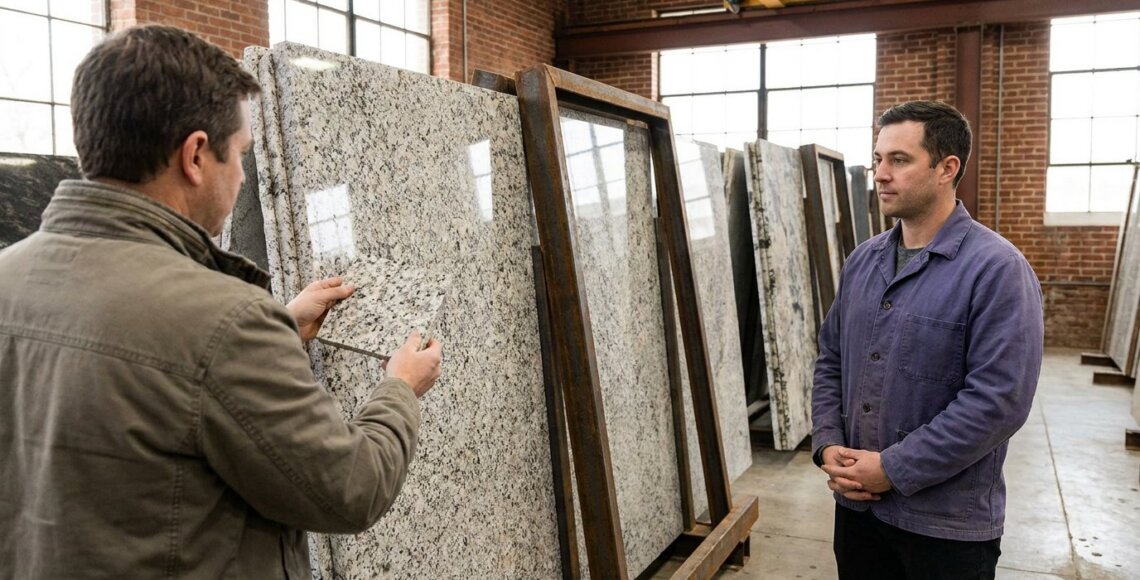
A Richmond homeowner compares a small sample with full-size granite slabs in a stone showroom.

Granite Countertops in Richmond, VA: Costs and Slab Selection

Yes, you can choose the exact natural-stone slab for your project. With granite countertops in Richmond, VA, each slab has its own pattern and color variation, so viewing the specific stone helps you picture the finished space. One Richmond customer review describes a project completed from the first phone call to installation in ten days.

The stone’s appearance is only one part of the decision. Project pricing depends on factors such as dimensions, material, cutouts, edge details, and backsplash work; a quote reflects the specific scope.

It’s natural to want a countertop that suits your home and a clear understanding of the practical details. This guide explains what affects custom countertop pricing, how to compare materials and select a slab, and what shapes installation timing, so you can plan your Richmond project with confidence.

Key Takeaways

  • See which project details shape a custom countertop quote, from the material and layout to the fabrication choices.
  • Learn how granite, marble, and quartz differ so you can narrow your material options to suit your home.
  • Understand which steps and project conditions can affect installation timing for kitchen, bathroom, fireplace, and outdoor countertops.
  • Get a clearer sense of how to plan a Richmond-area countertop project from material decisions through installation.

How much do custom countertops cost in Richmond, VA?

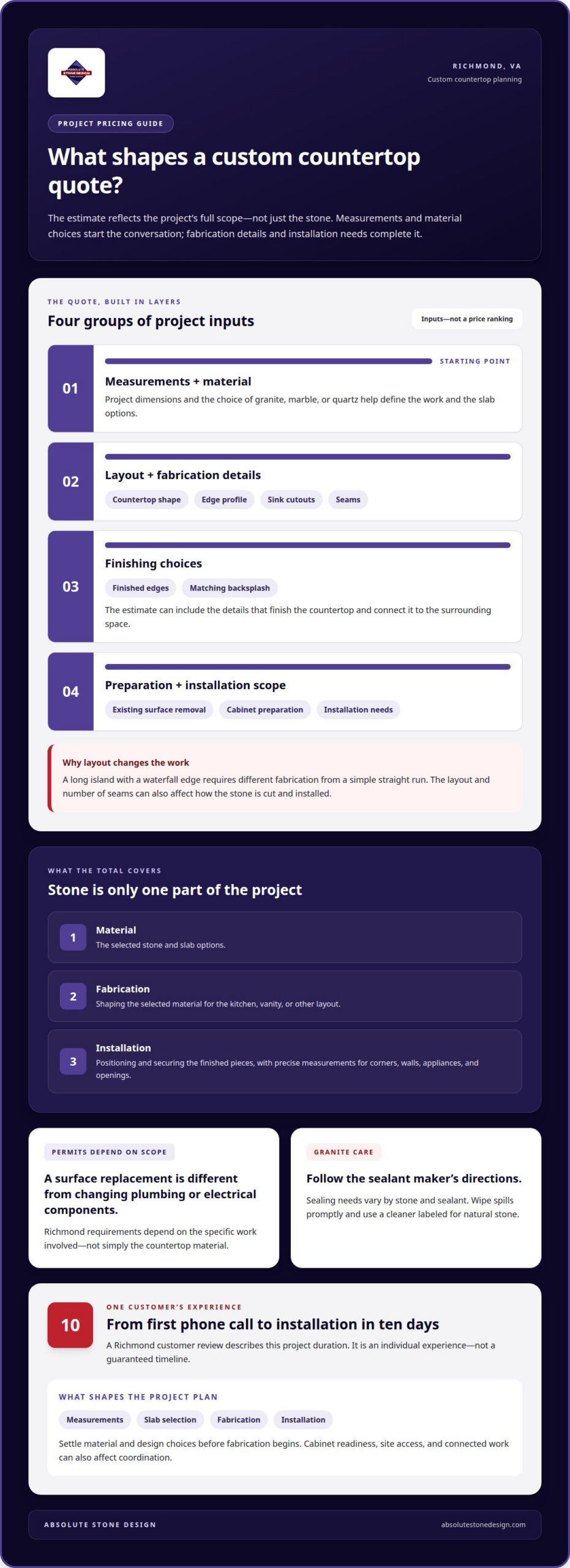
Custom countertop pricing starts with the project measurements and material choice. Granite, marble, and quartz each involve different slab options and fabrication needs. A quote also accounts for the countertop’s shape, edge profile, sink cutouts, and backsplash details. For example, a long island with a waterfall edge requires different fabrication from a simple straight run. The layout and number of seams can affect how the stone is cut and installed. Removing an existing surface or preparing cabinets may also change the project scope.

The total covers more than the stone itself. Fabrication shapes the selected material for your kitchen or vanity, while installation positions and secures the finished pieces. Precise measurements account for corners, walls, appliances, and openings. A custom countertop project can also include finished edges or a matching backsplash. The estimate depends on the material, dimensions, layout, cutouts, edges, backsplash, and installation needs.

Are permits required to replace kitchen countertops in Richmond, VA? It depends on the work involved, not simply the countertop material. A surface replacement differs from a project that also changes plumbing or electrical components, so Richmond requirements depend on the specific scope.

How should granite countertops be sealed and maintained? Sealing needs vary by stone and sealant, so follow the sealant maker’s directions. Wipe spills promptly and use a cleaner labeled for natural stone to care for granite.

Customer experiences can show how a project may unfold, but they don’t establish a standard schedule. One Richmond customer review describes a countertop project completed from the first phone call to installation in ten days. That is one customer’s experience, not a guaranteed timeline. For granite countertops in Richmond, VA, measurements, slab selection, fabrication, and installation all shape the project plan. Settling material and design choices helps define the work before fabrication begins.

Stone countertop materials and slab selection

Start with the material’s appearance, care needs, and how each slab will fit your design vision. Granite, marble, and quartzite are natural stone, so veining, color, and movement vary from slab to slab. For these materials, selecting the exact slab helps you see the pattern that will become your finished surface. A premium stone may have striking movement, while a quieter slab can keep attention on cabinetry and lighting.

How does granite compare with quartz and quartzite for cost, durability, and maintenance? Cost depends on the selected material, slab, layout, and fabrication, rather than a single statewide rate. Wiley describes engineered-stone countertops as durable, affordable, and easier to maintain than natural stone; granite and quartzite are natural stones with individual patterns.

Which granite colors and slab styles are popular in Richmond, VA? No single local style suits every kitchen, so consider how warm beige, gray, or darker tones work with your cabinets and floors. A broad, flowing pattern can make an island a focal point, while fine speckling gives surrounding surfaces a more restrained look. Bring a cabinet or flooring sample to compare colors directly.

Where can I view granite slabs near Richmond, VA? View the exact slab as part of your stone selection, rather than relying only on a small sample or photograph. This matters because natural stone’s pattern can shift across the full slab. For a project in Virginia, countertop material selection can help connect your preferred stone with the finished layout.

Quartz offers a different selection process because its engineered pattern is designed for a more consistent appearance. Compare samples in the room’s lighting, then consider edge shape, seams, and how the pattern will meet around a sink or corner. A responsive selection process keeps those details aligned with your design and practical needs. Highly recommend viewing full slabs before settling on natural stone, especially when a prominent vein or color contrast matters.

Granite Countertops in Richmond, VA: Costs and Slab Selection

How long does countertop installation take?

Countertop installation is one stage in a longer sequence: material selection, measurements, fabrication, delivery, and fitting. The time between stages depends on the material, layout, and preparation. A kitchen with an island, sink openings, and several corners requires different fabrication from a single straight bathroom vanity. Installation itself is only part of the overall schedule.

For a kitchen, accurate measurements account for cabinet edges, appliances, sink placement, and wall angles. After fabrication, installers position the pieces, join seams where needed, and fit the countertop around cutouts. A change in sink choice or cabinet setup can affect the sequence because the finished surface must match the final layout. A clear design and ready cabinets help keep each step coordinated.

Bathroom countertops may be smaller, but a vanity still needs precise sink and faucet openings. A remnant can suit a compact vanity if its dimensions and pattern work with the layout. The finished edge, backsplash, and wall alignment also shape fabrication. For a bathroom project that includes tile work, coordinating the countertop and wall finish helps the components meet cleanly.

Fireplace surrounds require careful attention to the opening, hearth, and adjacent wall surfaces. Measurements and cutouts must follow the design so the stone fits without disrupting the room’s lines. Outdoor countertops bring another consideration: the selected material and installation details need to suit the intended location. Site access and countertop shape also affect delivery and fitting.

To understand your project schedule, distinguish fabrication from installation day. Confirm the final material, layout, sink or appliance openings, and edge profile before fabrication begins. Then plan around cabinet readiness, site access, and connected work. A countertop in a prepared kitchen follows a different path from a bathroom vanity coordinated with tile or an outdoor surface requiring additional site planning. These steps clarify what must happen before the finished surface is ready for use.

Granite countertops in the Richmond area

Granite countertops in Richmond, VA, call for choices that connect the stone’s natural character with your room’s layout. A slab selected for a kitchen island may look very different from one used on a narrow bathroom vanity. Look at the full surface, not just a small sample, and note where strong veins or color changes fall. These details can guide seam placement, sink openings, and finished edges.

What granite countertop companies serve Richmond, VA? Fabricators and installers in the area handle steps such as measuring, cutting, and fitting stone. A useful project sequence is straightforward: choose the slab, confirm the layout, complete fabrication, then install the finished pieces. For a commercial counter or home kitchen, these steps connect the design to the actual space. Learn more about stone worktop supply, fabrication, and installation.

Richmond projects also benefit from decisions based on how the room will be used. A busy kitchen may call for a practical edge profile and a pattern that works with the cabinets and flooring. A bathroom vanity may put more emphasis on the sink opening and backsplash. Natural stone varies from slab to slab, so matching the specific piece to your design helps create a cohesive result. Careful fabrication and installation show in the alignment of edges, seams, and cutouts.

Before fabrication, settle the slab, layout, edge, and cutout positions. These choices give the finished surface a clear design direction and help avoid changes after cutting begins. The result can be beautiful without relying on elaborate details; a simple granite pattern can make an amazing focal point when it complements the surrounding room. For help planning a Richmond granite project, start a granite countertop project.

Absolute Stone Design: Countertops

Absolute Stone Design helps you choose countertops that suit your home, preferred material, and room design. If you’re weighing granite’s natural variation against marble’s distinctive veining or quartz’s more consistent appearance, the team can help you consider what fits your project. Choices about color, pattern, and edge detail bring the surface into harmony with your cabinets and flooring.

Turn to Absolute Stone Design when you’re ready to move from ideas to a countertop project. Whether you’re updating a kitchen surface or planning a bathroom vanity, you can discuss the material and look you have in mind. Start with how you want the room to feel and function.

Contact Absolute Stone Design to discuss your countertop project.

Shape a countertop plan around your home

A countertop is part of daily routines, from setting out breakfast to gathering around the kitchen island. Before moving forward, decide what matters most in your space: a distinctive natural pattern, a particular color relationship with your cabinets, or a surface suited to everyday use. That priority can guide your choices while keeping the room as a whole in view.

For granite countertops in Richmond, VA, consider how the stone will look beside existing finishes and where its most noticeable patterns should appear. Discuss your preferences, room, layout, and material with Absolute Stone Design. The company offers granite and marble countertops to suit a range of project plans.

Ready to take the next step? Contact Absolute Stone Design about your countertop project and begin shaping a surface that feels at home in your space.

Frequently Asked Questions

Can I pick my exact slab?

Yes, you can select the specific granite, marble, or quartzite slab for your project. Natural stone varies from slab to slab, so choosing the actual piece lets you consider its color and pattern. For example, you can choose veining that works with the direction of a kitchen island or the scale of a bathroom vanity. That choice helps shape the finished design.

Do you offer free estimates?

Request a quote for project-specific countertop pricing. The estimate reflects the scope, including material, measurements, cutouts, edge details, and installation needs. For example, a countertop with a sink opening and a full-wall backsplash involves different work from a simple vanity surface. Share the project details so the quote reflects its requirements.

What areas do you serve near Richmond?

Absolute Stone Design serves Richmond, Henrico, Glen Allen, Midlothian, Chesterfield, and Charlottesville. Local projects include kitchen countertops in Henrico and bathroom surfaces in Midlothian. Your project location helps shape planning for measurements, fabrication, and installation. Mention your city and the room you’re updating when you request project pricing.

What countertop materials do you offer?

Countertop materials include granite, marble, quartz, and quartzite. Granite, marble, and quartzite are natural stone, while quartz is engineered stone. Your choice can reflect the look you want, such as natural veining for a statement island or a more consistent pattern across adjoining counters. Material selection also shapes fabrication and care considerations for the finished surface.

How much do granite countertops cost per square foot in Richmond, VA?

Granite countertop pricing per square foot depends on the selected slab and the work required for your layout. Measurements, sink or cooktop cutouts, edge profiles, seams, and backsplash details all affect the project scope. A compact vanity and a kitchen with an island have different fabrication needs. Request a quote based on your specific design.

How long does granite countertop installation take in Richmond, VA?

The full project timeline depends on the sequence from final measurements and slab selection through fabrication and installation. Installation day is only one part of the process. A kitchen with an island, multiple cutouts, and several seams has different requirements from a straightforward bathroom counter. Finalized design choices and ready cabinets help establish the work sequence.