
Marble Bathroom Countertops: Slab Costs and Design Examples
Marble bathroom countertops bring natural veining and a refined feel to a vanity, while offering heat resistance that can be useful around shower steam and styling tools. Their beauty does come with care considerations: marble can be susceptible to staining, etching, and moisture intrusion, so choosing the right design also means thinking about how the surface will be used and maintained. If you’re drawn to marble, you’re likely weighing its timeless look against everyday practicality; this guide explores bathroom design ideas, the factors that shape slab selection, and how marble’s heat resistance fits into a real home, so you can make a more confident choice for your space.
Key Takeaways
- Compare marble colors, veining, and finishes to find a vanity surface that suits your bathroom’s style and everyday care needs.
- Explore design choices such as pairing a stone countertop with coordinated bathroom tile for a more unified look.
- Marble offers heat resistance, but its porous surface can be vulnerable to staining, etching, and moisture, so plan for thoughtful care.
- Weigh marble’s natural character against quartz and granite to choose a countertop material that fits your priorities.
Marble Slab Options for Bathroom Countertops
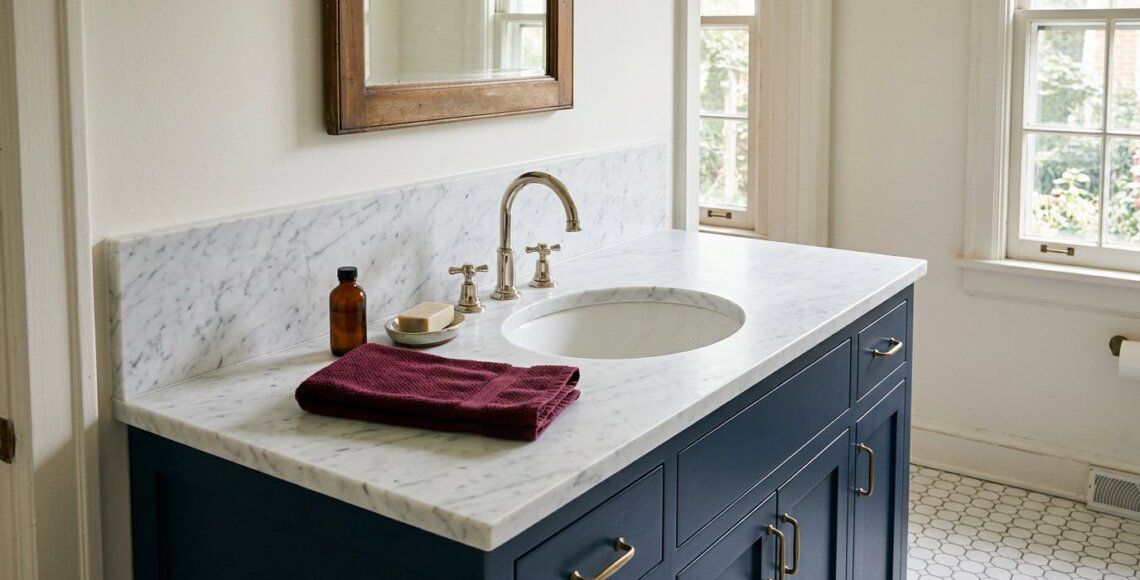
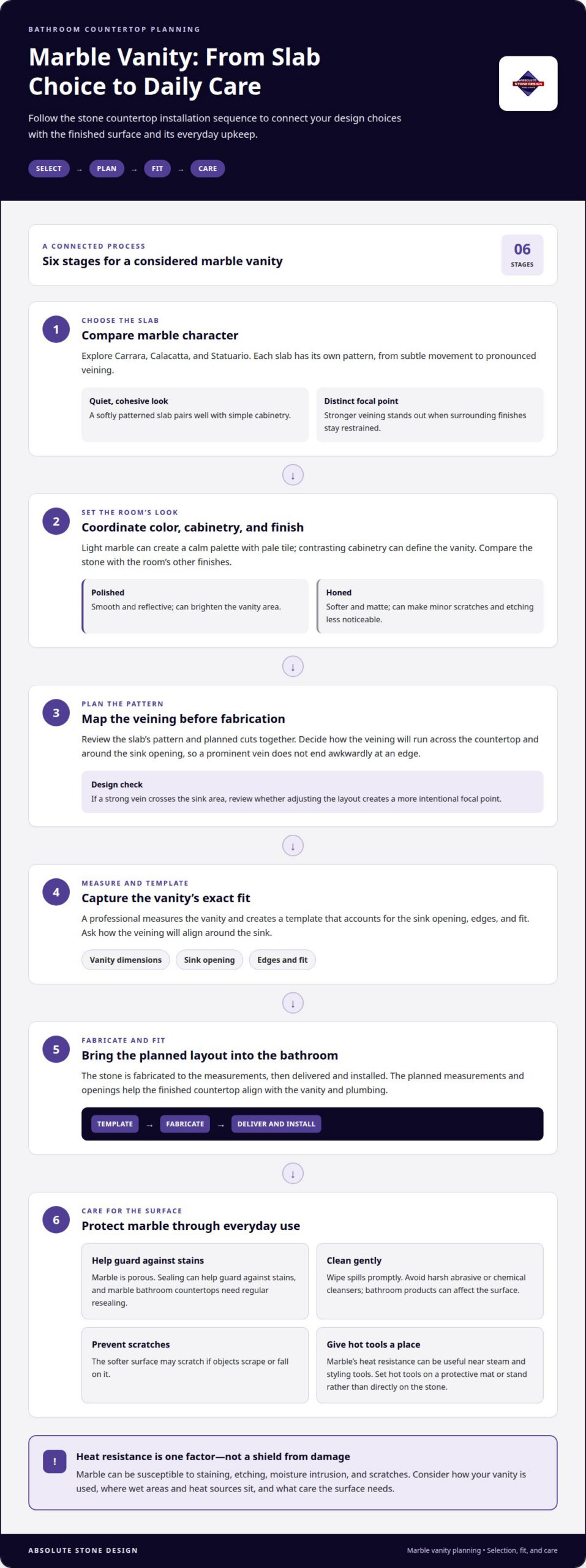
Carrara, Calacatta, and Statuario are familiar marble choices for bathroom vanities. Each slab has its own natural pattern, from subtle movement to pronounced veining. For a quiet, cohesive design, pair a softly patterned slab with simple cabinetry. To make the vanity a focal point, choose stronger veining and keep surrounding finishes restrained.
Finish affects both appearance and how minor wear shows. Polished marble has a smooth, reflective surface that can brighten a vanity area. Honed marble has a softer, matte look and can help conceal minor scratches and etching. In a busy shared bathroom, for example, a honed finish can make small marks less noticeable. It changes the look, but marble still needs care.
Color and layout work together. Light marble can complement pale tile for a calm, continuous palette, while contrasting cabinetry can define the vanity. Before fabrication, plan how the veining will run across the countertop and around the sink opening. This helps the finished surface look intentional, rather than leaving a prominent vein awkwardly cut at an edge.
Marble is porous, so moisture and staining are considerations in a bathroom. Sealing can help guard against stains, and marble bathroom countertops need regular resealing.
Marble can stain or etch, and its softer surface may scratch if objects scrape or fall on it. Avoid harsh abrasive or chemical cleansers. Wipe spills promptly and use gentle cleaning methods, since bathroom products can affect the surface.
Before buying, ask the countertop installer how the slab will be measured, how its veining will align around the sink, and what finish and sealing care it needs. Those details connect your design choice to fabrication and everyday maintenance.
Bathroom design inspiration featuring marble countertops
Marble brings natural pattern and a refined focal point to a bathroom. Its distinctive veining and heat resistance are advantages; susceptibility to staining, etching, moisture, and scratches are drawbacks to consider. In a calm, light-toned bathroom, for example, a marble vanity can add movement while simple surrounding finishes keep the space balanced.
For a cohesive look, coordinate the slab’s veining with the room’s other finishes. In a compact bathroom, a pale marble top paired with understated cabinetry can keep the vanity from feeling visually heavy. In a larger room, a more strongly veined slab can anchor the design. Simpler tile and fixtures allow the stone to stand out.
Care matters after installation. Marble is porous, so regular sealing can help guard against stains. A professional can renew the protective seal as part of ongoing maintenance; timing depends on the surface’s condition and exposure to moisture. For daily cleaning, wipe spills promptly and avoid harsh abrasive or chemical cleansers.
For installation, a professional measures the vanity and creates a template that accounts for the sink opening, edges, and fit. The stone is fabricated to those measurements, then delivered and installed. This process helps align the finished countertop with the vanity and planned plumbing openings. For homeowners undertaking a broader renovation, working with an experienced team like Black Bear Construction can help coordinate the vanity, plumbing, and surrounding finishes into a cohesive space.
Before fabrication, review the slab’s pattern and planned cuts together. If a prominent vein crosses the sink area, for instance, adjusting the layout may create a more intentional focal point. This connects material selection to the finished room.
Heat resistance
Marble’s heat resistance can be useful around shower steam and heat-styling tools. After a warm shower, for example, steam may linger near the vanity, making marble a suitable surface for this setting. Heat resistance does not make the countertop immune to damage, so thoughtful placement and care still matter.
Consider a morning routine that includes a curling iron or hair dryer. Set styling tools on a protective mat or stand rather than directly on the stone. This gives hot tools a dedicated resting place and keeps them off the vanity surface. Clearing space near the mirror can also make getting ready easier.
Heat is only one part of bathroom performance. Marble is porous and can be susceptible to staining, etching, and moisture intrusion, so pay attention to regular exposure to water and personal-care products. If a bottle leaks beside the faucet, wipe it up promptly and use gentle cleaners. These habits help protect the surface without changing its natural appearance.
During design planning, consider where heat sources and wet areas sit in relation to the countertop. If styling tools are kept beside the sink, include a safe resting spot in the vanity arrangement. If steam gathers around a mirror, consider how the countertop finish and surrounding materials work together. A well-planned layout reflects your routine as well as the slab’s appearance.
Marble’s heat resistance can make it a fitting option for a bathroom exposed to steam and styling tools. Pair that advantage with sensible care, especially around moisture and personal-care products. This balance lets you enjoy the stone’s distinctive look while accounting for everyday use.
How does marble compare with quartz and granite for bathroom countertops?
One difference you’ll notice first is marble’s natural veining, which gives each slab individual movement. Granite is also natural stone, while quartz countertops offer an engineered surface option. Marble can add distinctive pattern to a calm bathroom palette. If you prefer a more consistent look, compare quartz slabs alongside marble before choosing.
Marble’s beauty comes with care considerations. It is porous and may be susceptible to staining, etching, and moisture intrusion. Its softer surface can also scratch if an object drops or scrapes across it. In a busy family bathroom, for example, frequent spills and daily grooming may make maintenance an important part of your material decision.
Compare materials according to your priorities rather than assuming one always performs best. If natural variation matters to your design, review marble and granite slabs for their patterns. If you want to consider an engineered option, view quartz samples beside your tile and cabinetry. Seeing the materials together shows how each choice may shape the room.
Use a simple selection process: decide how much natural pattern you want, consider the care you’re comfortable providing, then compare samples in your bathroom’s lighting. Honed marble, for instance, can help conceal minor scratches and etching, but it still needs care. Choose a surface that balances appearance with how the vanity will be used.
For marble bathroom countertops, plan on regular resealing and avoid harsh abrasive or chemical cleansers. Granite and quartz have different material characteristics, so discuss the specific slab and finish during selection. Reviewing marble, granite, and quartz side by side can clarify which surface best suits your bathroom’s design and daily routine.
Marble can scratch when objects are dropped or scraped across it, so consider how the vanity is used when comparing it with granite or quartz. A countertop choice is about more than appearance: the possibility of surface marks may affect how comfortable you feel using the space. Weigh that concern against marble’s distinctive veining and the care routine you’re prepared to maintain.
Absolute Stone Design: Countertops
Absolute Stone Design helps you move from comparing marble and quartz to planning a bathroom countertop that fits your space. Its countertop work includes precision measuring, templating, in-house stone fabrication, delivery, and installation. That process is useful when you’ve chosen a marble look and need the slab shaped for your vanity and sink.
For a marble design, the slab’s veining and finish guide the visual plan. Measurements and a template shape the countertop to the vanity, while fabrication turns the selected stone into a fitted surface. Granite is another natural-stone option. Comparing both materials with your bathroom’s tile and cabinetry can help you choose a cohesive pattern.
Bathroom tile work can coordinate the surfaces around the vanity. A quieter tile, for example, lets expressive marble veining take the lead, while more detailed tile creates a layered look. Considering these finishes together helps clarify the room’s design direction.
Absolute Stone Design handles residential and commercial countertop projects. If you’re considering a marble or granite countertop, share your material preferences and project needs to plan a surface suited to your bathroom. The team’s process covers measurements, fabrication, delivery, and installation, with the details shaped around your space.
To discuss your bathroom countertop project, contact Absolute Stone Design.
Frequently Asked Questions
What types of marble are best for bathroom countertops?
Carrara, Calacatta, and Statuario are popular choices for marble bathroom countertops, each with distinctive natural veining. The right fit depends on the look you want and how much variation suits your room. Compare slab samples with your vanity cabinet and tile to see whether the stone’s pattern complements your planned finishes.
What project details shape a marble vanity installation?
The installation plan depends on the vanity’s dimensions, selected slab, edge design, sink opening, and site conditions. These details determine how the stone is measured, fabricated, and fitted. A vanity with an unusual shape, for example, needs a template that captures its full outline. Reviewing the layout before fabrication helps align the finished surface with the room.
What edge profiles and finishes are available for marble vanity tops?
Common marble edge choices include eased, rounded, and beveled profiles; finishes often include polished and honed. For marble bathroom countertops, a rounded edge can soften a vanity’s outline, while a crisp eased edge suits a simpler design. Review the profile alongside the slab and cabinet style before fabrication, since the edge affects the finished appearance and how the countertop thickness looks.
Can a marble vanity top be repaired if chipped or stained?
Some chips and stains can be treated, but the right approach depends on the damage and marble’s condition. A small edge chip, for example, differs from a stain that has penetrated the stone. Avoid abrasive cleaners and improvised repair products, which may worsen the surface. A stone professional can assess the affected area and recommend a suitable repair or cleaning approach.